Europe and the Indo-Pacific: Partners for a resilient future
Both regions need to work together for their stability, prosperity and sustainability
EUROPE and the Indo-Pacific find their futures increasingly interlinked in a world marked by geopolitical shifts, economic uncertainty and intensifying strategic competition.
Challenges – ranging from growing pressure on the multilateral system intensified by Russia’s war of aggression against Ukraine to the weaponisation of trade and technology and the accelerating climate crisis – are bringing us closer together, not dividing our regions. There is a greater need for collective action to effectively address these common challenges.
When the European Union launched its Strategy for Cooperation in the Indo-Pacific in September 2021, the world looked different. Four years on, the game plan has become the backbone of a stronger, more engaged European presence in the region.
The Fourth EU-Indo-Pacific Ministerial Forum in Brussels (Nov 20 to 21) is focusing on the European Union’s cooperation to support our joint stability, prosperity and sustainability, while upholding international law, open trade and shared values.
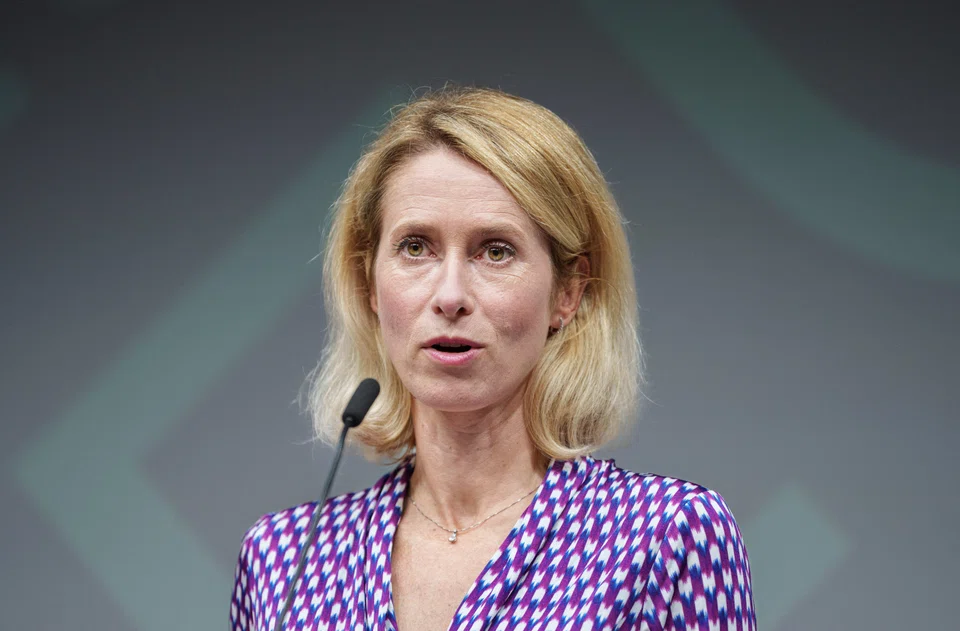
Within the forum, the EU high representative/vice-president Kaja Kallas will convene a high-level event on the protection of critical maritime infrastructure. This underscores Europe’s commitment to working with Indo-Pacific partners to safeguard vital sea lanes and undersea networks that underpin global stability and connectivity.
The EU is stepping up its contribution to the security of the Indo-Pacific through new security partnerships and regular security dialogues, including those on hybrid threats.
Cooperation in naval activities such as Operation Aspides and Operation Atalanta, as well as initiatives such as Critical Maritime Routes in the Indo-Pacific (Crimario) aim to ensure freedom of navigation and promote maritime security from Europe to the Indo-Pacific through the Red Sea.
Trade agreements in force with Japan, South Korea, Singapore, Vietnam, New Zealand and four Pacific states have already deepened economic integration between the EU and the Indo-Pacific. Trade negotiations recently finalised with Indonesia and advancing with Australia, India, Thailand, Malaysia and the Philippines will, once concluded, further deepen the economic partnership between the regions.
The forum offers a timely opportunity to strengthen Europe’s partnership with the Indo-Pacific. Singapore is a vital partner in advancing the regions’ shared goals of sustainable growth, digital innovation and regional security – key priorities in the run-up to the 50th anniversary of EU-Asean relations in 2027.
Singapore Foreign Minister Vivian Balakrishnan’s participation in the forum underscores the strength of EU-Singapore relations and the EU’s commitment to jointly shaping the future of the Indo-Pacific.
The EU’s Global Gateway initiative is delivering sustainable, high-quality infrastructure, working hand in hand with partners in the region and involving the private sector. Key regional connectivity projects such as the Asean Power Grid create avenues for collaboration with South-east Asian partners, including Singapore.
Together, the EU and the Indo-Pacific are promoting a model of growth that is environmentally sustainable, inclusive and climate resilient. The EU shares the Indo-Pacific’s ambition for a green and blue future.
This encompasses supporting the 2050 Strategy for the Blue Pacific Continent and advancing Green Alliances with Japan, the Philippines, South Korea and 15 Pacific Island countries, as well as Just Energy Transition Partnerships with Indonesia, South Africa and Vietnam. Europe stands with Indo-Pacific nations in their efforts to build climate resilience, protect biodiversity and achieve net-zero by 2050.
Europe’s engagement in the Indo-Pacific is not only about policies, but also about people. Over 23,000 students and professionals have already benefited from EU-funded exchanges since 2021.
The EU’s cultural, educational and health partnerships and the Erasmus+ mobility and research collaboration are building the foundations of lasting friendship and trust between our societies.
In Singapore, this is seen in our Team Europe initiatives, including our flagship higher-education fair, Study in Europe, which connects us with students; and the European Film Festival has enabled us to create a platform to showcase the work of emerging filmmakers alongside the main festival films.
In an increasingly fragmented and polarised geopolitical environment, building and consolidating partnerships that reduce the common vulnerabilities of the EU and the Indo-Pacific, and strengthening our mutual resilience are central pillars of the EU’s vision and engagement in the world.
The EU and its 27 member states recently reaffirmed that the EU’s strategic engagement in the Indo-Pacific aims to uphold the multilateral system and the rules-based international order, with full respect for international law, including the United Nations Convention on the Law of the Sea.
Respect for sovereignty and territorial integrity of all countries remains the cornerstone of a future stable and peaceful world. Russia’s illegal war of aggression against Ukraine is a stark reminder of the fundamental importance of standing up for international law together.
In an era of growing uncertainty, the EU and its member states are reliable, long-term partners. The Indo-Pacific Ministerial Forum in Brussels enables us to deepen cooperation between the two regions, and to work together to turn today’s challenges into opportunities for shared peace, resilience and prosperity.
The writer is the European Union ambassador to Singapore