Europe’s car giants are solving the wrong problem. And China knows it
Contrary to popular belief, the battle between legacy car companies and Chinese firms isn’t a technology race
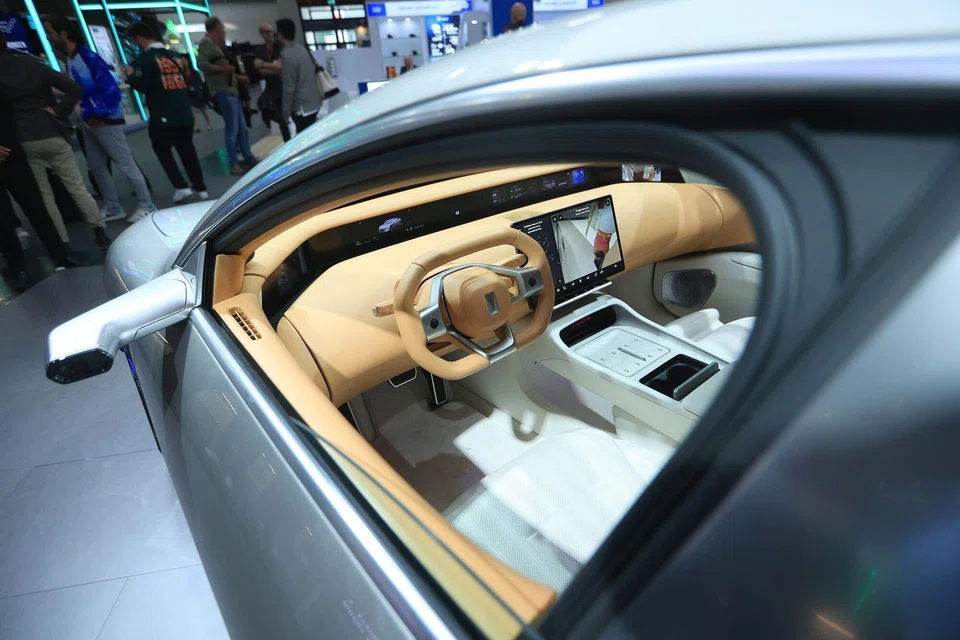
UNTIL recently, I believed that some legacy car brands stood on high ground that would save them from a tsunami of Chinese electric vehicles. Ask someone to trade his Porsche in for, say, an Avatr, and his reply is likely to be something along the lines of, “What in the world is an Avatr?”
But even Europe’s grandee car companies must be feeling the water slosh around their ankles, given how sharply their global sales have slowed down (or at best, stayed flat) this year, while the Chinese continue to gather steam.
It isn’t so much that one continent makes better cars than the other, but that they simply come from different worlds. The grand old names of the car world – Mercedes-Benz, Fiat, Ford and their ilk – were born when the leap from horse-drawn carriage to puttering roadsters and limousines must have felt like entering the rocket era. Driving was glamour itself, and promised freedom, discovery, exploration and the romance of the open road – without the smell of horse manure.
Fast forward to today and the open road is crammed with other drivers and lined with speed cameras. The humblest family hatchback can now blow past the speed limit with ease, so the state is always watching.
Driving clearly isn’t what it used to be, yet the old guard still designs and markets their products as if the world were one endless Alpine pass. They obsess over steering feel and smooth gear changes. BMW considers mechanical noise so important that it hired Hans Zimmer to create the soundtrack to its electric cars. All of those are lovely ideas, but they create attributes that aren’t easily savoured when you’re boxed in behind a Grab driver treating the overtaking lane like his personal meditation space.
By and large, China never had the romance of the open road to unlearn. Its car industry grew up when driving was already a chore, so its products skip the nostalgia entirely. Instead, Chinese car companies focus on palatial cabins, hospital-grade air filtration, screens fit for a Netflix marathon, massage chairs and other indulgences. They pursue self-driving tech relentlessly, and many of their cars roll down the road making less noise than an electric kettle.
These cars are not necessarily better than the ones that Europe and Japan make, but they are tailored to a new reality – one where a steering wheel is merely an annoying thing that comes between you and your TikTok feed.
The car business is not a technology war so much as a philosophical one: The old guard creates cars that are still predicated on the romance of driving, while China is designing cars for a world that’s moved on from that idea, in which the roads are hopelessly jammed and people derive joy from touchscreens rather than tachometers.
Legacy auto has enough heritage going for it that, even years from now, an Avatr driver is unlikely to ask what a Porsche is. But after settling into his car’s massage seat and filling the silent cabin with his favourite music through the 25-speaker sound system, he might well wonder what the fuss over those speedy German machines was all about.
Unless the old guard wakes up to this new reality, they will continue to strive to build the perfect cars for the wrong world.