
THE BOTTOM LINE

EU’s Asean pivot accelerates with landmark Indonesia trade deal

After 19 rounds of negotiations over nine years, the Comprehensive Economic Partnership Agreement marks the European Union’s latest significant pact in the region
Summarise
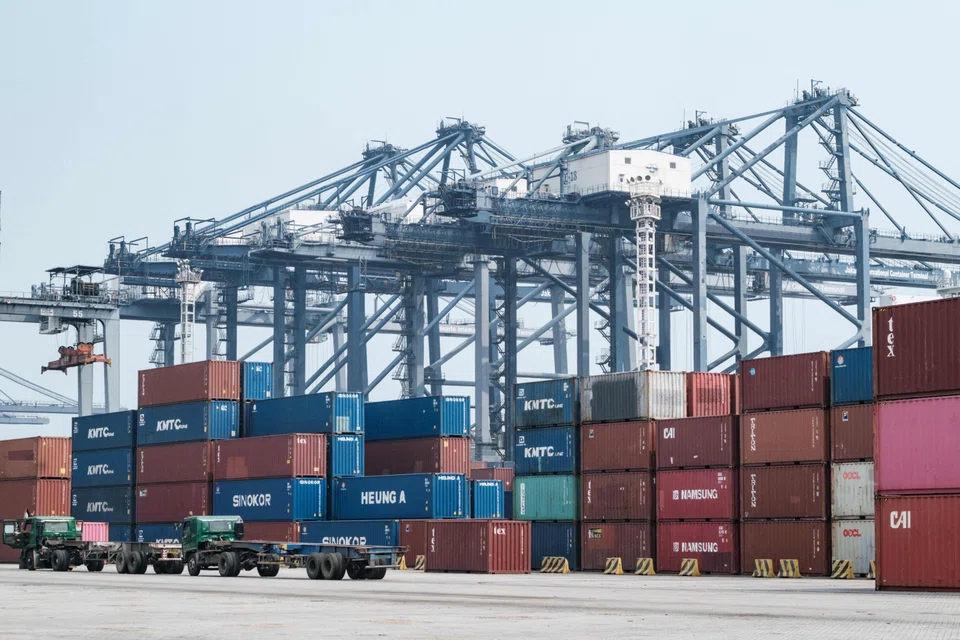
    • View of the Jakarta International Container Terminal. The EU is Indonesia’s fifth-biggest trade partner, with bilateral trade amounting to around US$30.1 billion last year.
    • View of the Jakarta International Container Terminal. The EU is Indonesia’s fifth-biggest trade partner, with bilateral trade amounting to around US$30.1 billion last year. PHOTO: AFP
    Published Tue, Sep 23, 2025 · 07:00 AM

    THE European Union, long criticised for its slow pace in securing new trade deals, appears to be decisively changing that perception. European Commission President Ursula von der Leyen’s top team this week will sign the bloc’s latest bilateral economic agreement with Indonesia.

    Dr von der Leyen’s second term as president, which started on Dec 1, 2024, has been marked by a flurry of trade activity.

    Soon after Donald Trump’s second US presidential election win, she agreed a new trade deal with the Mercosur bloc in Latin America. This was followed in 2025 with a new post-Brexit reset with the UK and a tariff agreement with the US. Further negotiations are under way with the Gulf Cooperation Council states and multiple countries in Asia, including India.  

    The latest success for the EU is a landmark Comprehensive Economic Partnership Agreement (Cepa) deal with Indonesia, finalised after nine years and 19 rounds of negotiations. The agreement, to be signed on Tuesday (Sep 23), aims to create new market access, increase trade and investment, and promote sustainable development. 

    This deal strengthens the EU’s growing footprint in Asean. Within the region, the EU has already concluded agreements with Singapore and Vietnam, which entered into force in 2019 and 2020, respectively. Negotiations with the Philippines resumed last year, and negotiations with Thailand were announced in 2023, with progress hoped on both soon.

    Talks between the EU and Thailand began more than a decade ago, but paused after the coup in Bangkok in 2014 as the EU would not negotiate with a military government. An end-2025 goal had been set, but next year seems more likely.

    Several benefits

    The EU is Indonesia’s fifth-biggest trade partner, with bilateral trade amounting to around US$30.1 billion last year, and Indonesia holding a US$4.5 billion trade surplus. Under the Cepa, South-east Asia’s largest economy will get zero tariffs for 80 per cent of its export products to the EU, plus the removal of many non-tariff barriers.

    The agreement will also increase market access for European agricultural and manufactured goods. For the EU, a key benefit is strengthening the supply chains of critical raw materials, vital for Europe’s cleantech and steel industry.

    Beyond trade, the deal has several strategic benefits. Indonesia has welcomed the extension of the EU’s Just Energy Transition Partnership and the Global Gateway programme to support Jakarta’s long-term economic goals. Jakarta hopes the EU can accelerate the ratification process, meaning that the deal might take effect by late 2026 or 2027.

    Both sides also reaffirmed a broader partnership, committing to shared values of democracy, human rights and a rules-based international order. They also vowed to cooperate on climate change and security challenges, from Ukraine to the wider Asia-Pacific. This includes a “visa cascade” decision to grant Indonesians quicker access to multiple-entry visas.

    The EU’s underlying goal is to build economic competitive advantage and reinforce its strategic presence in a region of prime importance.

    This formalised Asia-Pacific strategy, developed during Dr von der Leyen’s first term, frames Europe as a reliable defender of the international rules-based order. It is a message that French President Emmanuel Macron reiterated on a recent visit to Jakarta, drawing a contrast with that from other world powers, including the US under Trump.

    This engagement also extends to security. Free and open maritime supply routes in full compliance with international law are key. Europe is working increasingly closely with partners in the Asia-Pacific on security and defence, tackling everything from malicious cyberactivities to terrorism and organised crime.

    The EU has also announced the extension of its coordinated maritime presence in the north-west Indian Ocean, allowing it to better support regional stability through joint exercises and port calls, and promote coherence of European action in the region.

    While Asean is a priority, this pivot is part of a wider engagement with Asia.

    European intent towards the Asia-Pacific is manifest in the wider, growing number of EU annual conferences with key emerging market giants such as India, and major industrialised nations like Japan. The EU is pursuing a major trade deal with India, already its largest trading partner. The bloc’s agenda with Japan is also growing, with both powers stepping up their leadership on international trade.

    Taken together, the Cepa is more than a stand-alone agreement. It reaffirms the EU’s belief that there is a significant opportunity in Asean in particular and Asia in general, making the region a clear priority for driving Europe’s economic and strategic interests in the years ahead.

    The writer is an associate at LSE IDEAS at the London School of Economics



