Fallout zone: Singapore and Apac brace for impact of US-China trade conflict
The escalation of trade tensions will accelerate supply chain reconfiguration and push regional economies towards strategic hedging
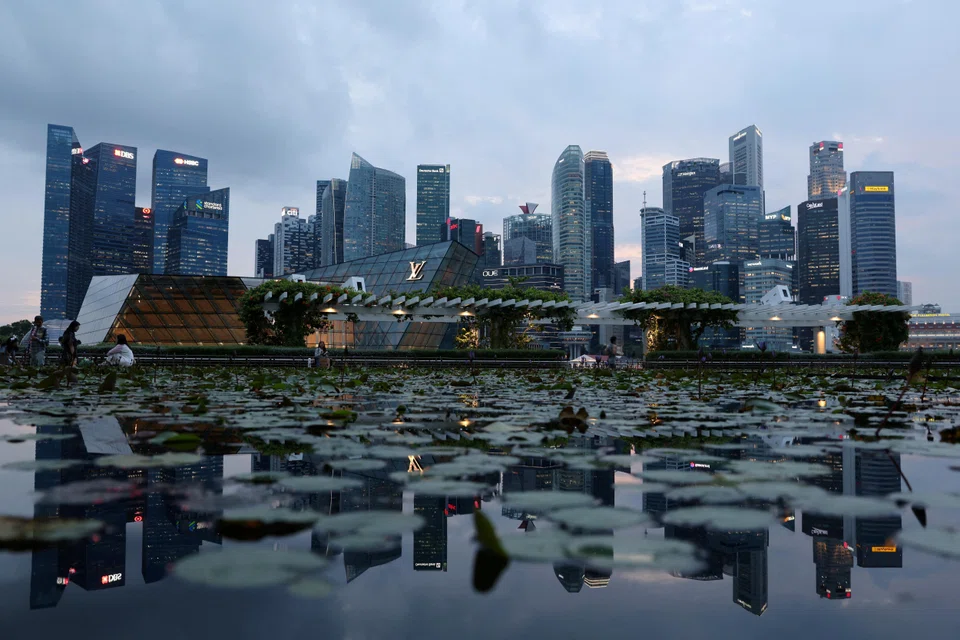
US PRESIDENT Donald Trump’s new 100 per cent tariff on Chinese imports marks a dramatic escalation in US-China trade tensions, with substantial and multifaceted ripple effects across Singapore and the broader Asia-Pacific (Apac) region.
Singapore faces a uniquely delicate position in this escalating trade conflict. As a major financial hub and transhipment centre, it is both vulnerable and strategically important. Under current frameworks, the city-state has been subject to a relatively low 10 per cent baseline tariff rate. However, this relative favourability may be misleading. Singapore’s economy is fundamentally dependent on the regional trade flows that will be severely disrupted.
Singapore has historically served as a gateway for goods entering and leaving China. Trump’s administration has already signalled a crackdown on transhipment schemes designed to circumvent tariffs. The new 100 per cent rate will intensify scrutiny of Singapore-based operations, potentially forcing local authorities to implement stricter monitoring to avoid being dragged into enforcement actions.
For Singapore’s financial services sector, the tariff escalation introduces significant uncertainty. The banking and insurance industries that service trade finance will face disrupted cash flows, reduced transaction volumes and increased volatility, as companies delay investment and consumption.
Broader trend
This development will accelerate a broader trend already underway: the reconfiguration of regional supply chains away from China. Multinational corporations have been looking to South-east Asia – particularly Vietnam, Thailand and Cambodia – as alternatives. However, these economies face their own pressures from prevailing US tariffs.
Even with the new tariffs on China, the existing 19 to 20 per cent tariffs on these South-east Asian countries, combined with their less-developed infrastructure, may not fully offset China’s production advantages. The result could be a complex patchwork of production networks, as companies attempt to optimise costs while minimising tariff exposure.
While Singapore may benefit modestly as firms reroute goods through its ports and warehouses, the benefit will be limited and could be easily reversed if the Trump administration targets transhipment operations more aggressively.
The Apac region faces several structural vulnerabilities. First, many regional economies are highly dependent on exports to the massive US consumer market.
Second, China remains a critical source of intermediate goods and raw materials for Apac manufacturing. Even companies that do not directly export to the US may be disrupted by changes in Chinese export volumes and pricing. The 100 per cent tariff may create shortages or price spikes for certain critical materials, affecting regional producers.
Third, the sheer unpredictability of Trump’s policies creates a climate of economic uncertainty. This dampens investment and delays business decisions even before the tariffs take full effect.
One of the most significant implications of the recent escalation is the potential for a geopolitical shift. As US tariffs constrain economic opportunities, some Apac nations may intensify their economic engagement with China. This could include deeper participation in Chinese-led regional initiatives, greater reliance on Chinese finance and investment, and closer coordination on regional issues.
For the US, this represents a strategic loss: Washington’s primary geopolitical objective in Asia is containing China’s rise, yet its tariff policies may inadvertently push the region closer to Beijing.
Across Apac, currency traders, equity markets and bond investors may be reassessing their portfolios, while companies with significant exposure to US markets or US supply chains face reduced revenue forecasts and higher risk premiums. This cascading effect could ripple through the region’s banking sector, particularly affecting institutions with significant corporate lending exposure to trade-dependent industries.
Critical juncture
Apac policymakers and businesses face a critical juncture. Multinational corporations need to reassess their supply chain strategies, diversifying sourcing and developing more flexible production networks. Regional governments, meanwhile, should work to strengthen intra-Asean trade and reduce their collective dependence on US market access.
Diversifying trade partners, strengthening ties with India and other emerging economies, and developing regional value chains less dependent on external markets are critical long-term objectives.
For its part, Singapore should leverage its financial services and logistics expertise to help regional companies navigate the tariff maze, while engaging diplomatically with Washington and Beijing to preserve its status as a trusted economic partner.
In summary, the 100 per cent China tariff represents a watershed moment for the Apac region. It will accelerate supply chain reconfiguration, create financial market instability, and push regional economies towards strategic hedging – including potentially closer economic ties with China.
The region faces a choice: accept further economic fragmentation under continued US tariff pressure, or work to build more integrated and resilient regional trade networks less dependent on any single external power.