

From fairways to courts: Is pickleball the new golf?
More companies and entrepreneurs are turning to the racquet sport for client engagement and networking


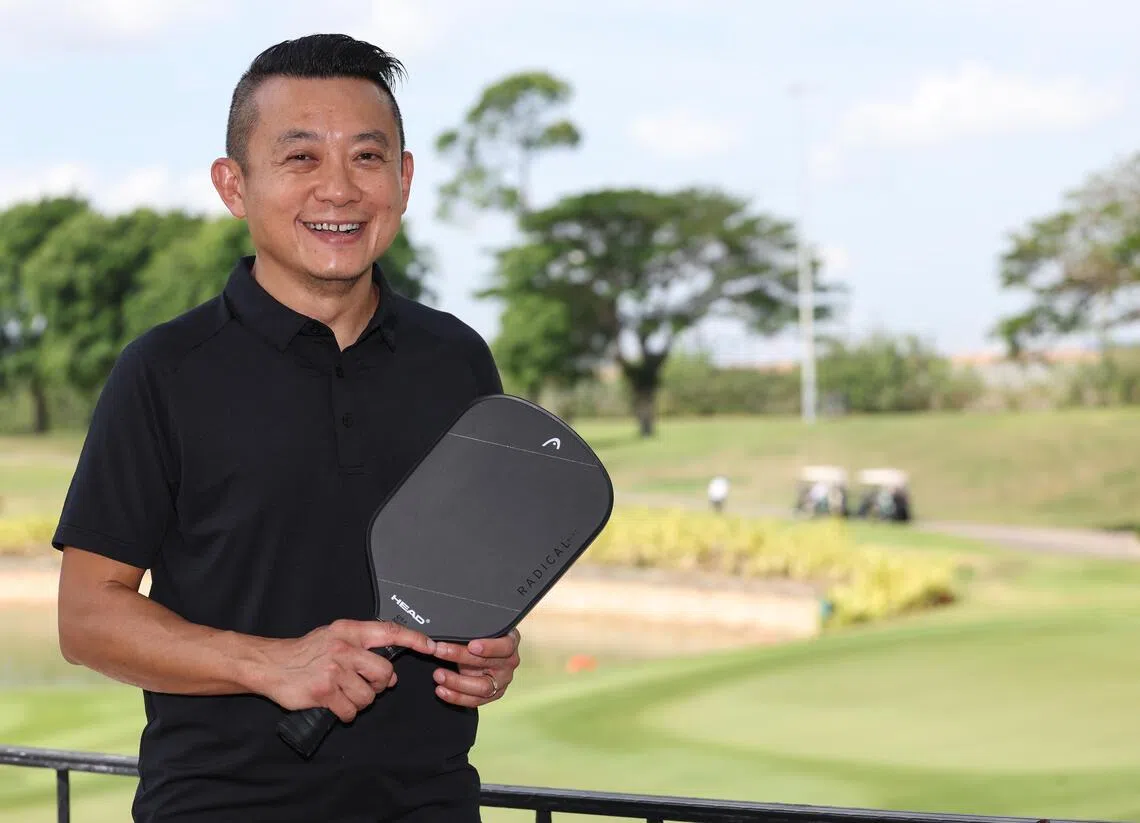
[SINGAPORE] For more than two decades, golf and corporate life were intertwined for Jeffrey Seah, whether he was hosting clients on the green or being invited to games during business trips overseas.
But last year, the 56-year-old found a different sport that plays that role: pickleball.
“Compared to golf, I find pickleball a much more effective, time-efficient way to network and build business partnerships,” says Seah, general partner at venture capital firm MSW Ventures.
Since late 2025, Seah has held regular pickleball networking sessions at Tanah Merah Country Club for business contacts – from investors and partners to startup founders.
Over these games, he has made business decisions from investments and hiring of senior talent, to significant purchases of assets.
Golf has historically been the premier networking sport, with relationships built and deals sealed on the course. But pickleball is emerging as a fresh alternative, as companies and entrepreneurs warm to its social, fast-paced nature.
Pickleball in the corporate world
Invented in 1965, pickleball has surged in popularity in recent years, including in Singapore. The racquet sport blends elements of badminton, tennis and table tennis.
While popular as an everyday pursuit, the sport also plays various roles in the corporate world.
One is team building. The sport’s inclusivity is a big draw, say pickleball facility operators, as its low barriers to entry allow employees across ranks and ages to participate.
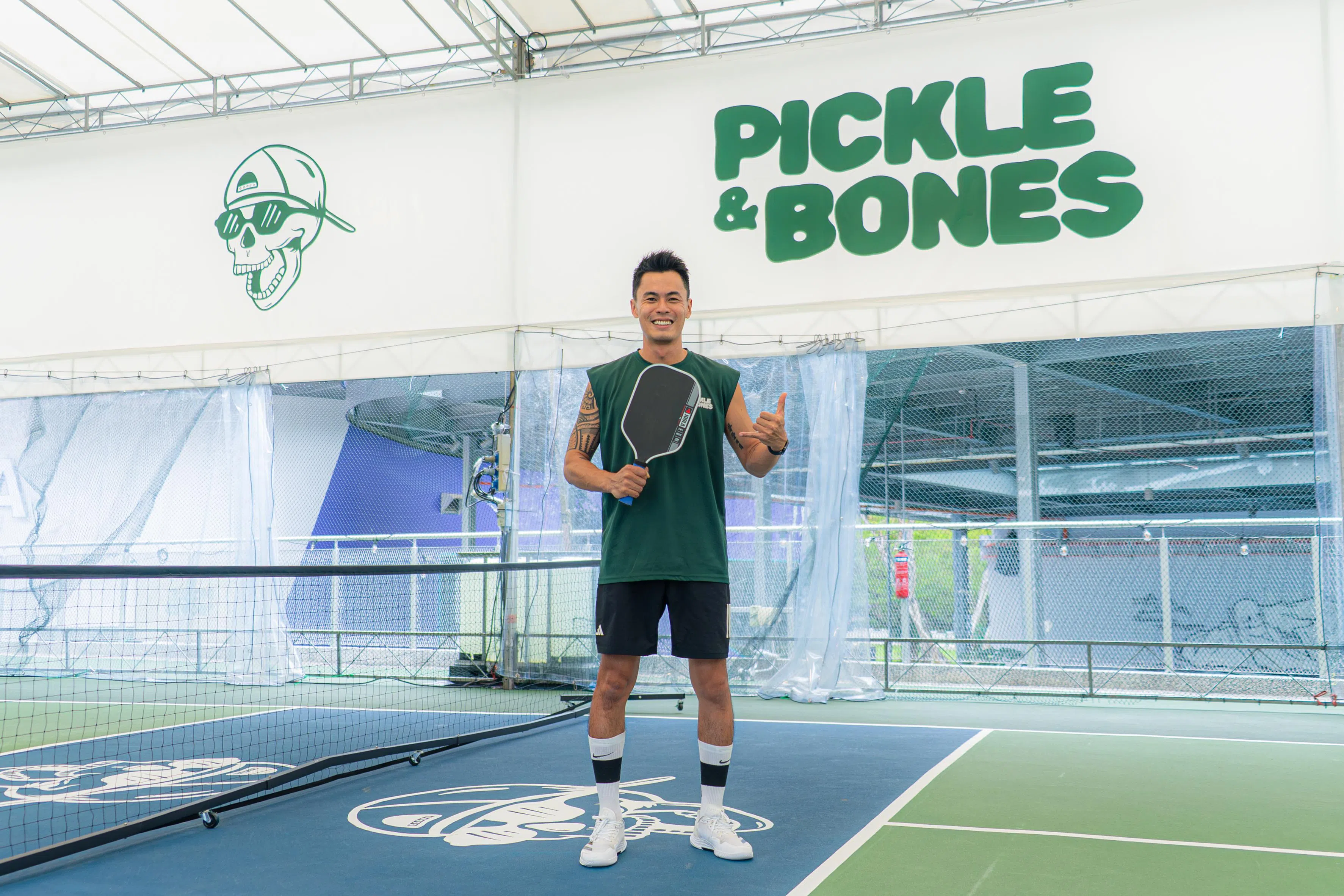
Adrian Ang, founder of pickleball court Pickle & Bones, says: “Pickleball is incredibly easy to pick up. The court is small; the paddle and balls are light.”
The small court size also makes interaction easier, with players in close proximity to each other, he adds.
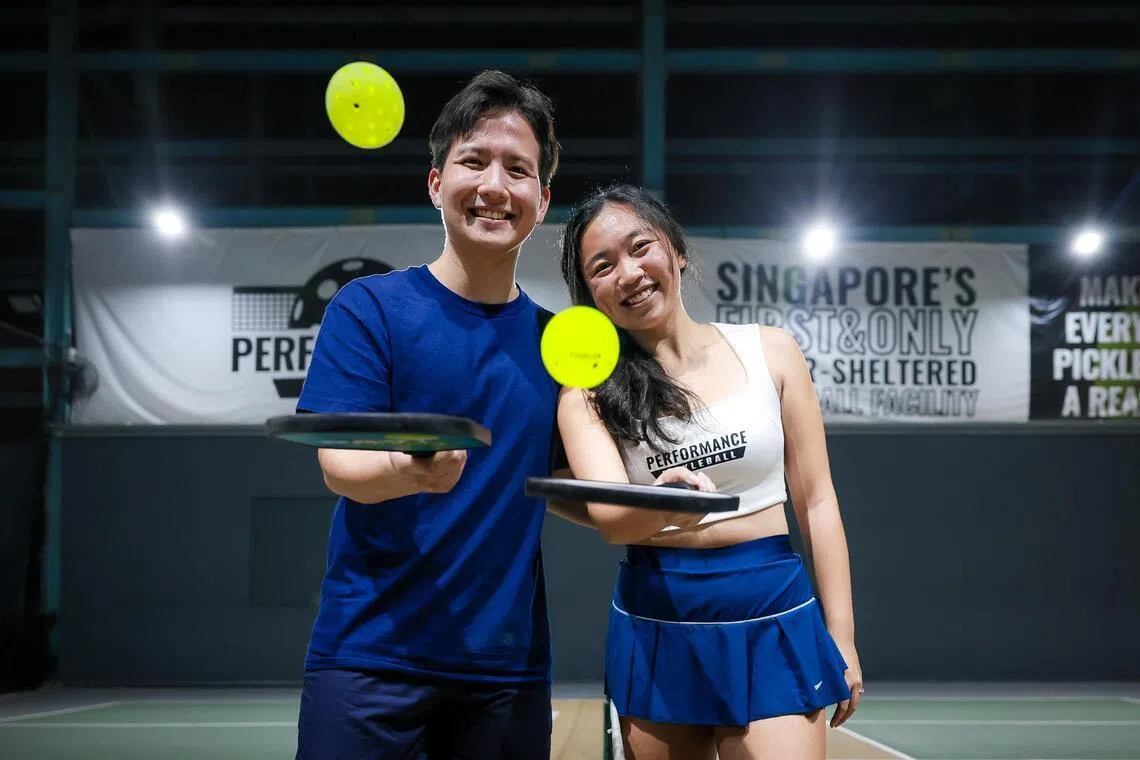
Jeremy Soh, co-founder of pickleball club Performance Pickleball, has seen team-bonding sessions where C-suite executives in their fifties play alongside interns.
Another role is client engagement. An increasing number of companies are holding small-scale pickleball networking events for clients.
These firms are from industries such as financial services, banking, insurance and real estate, say Ang and Soh.
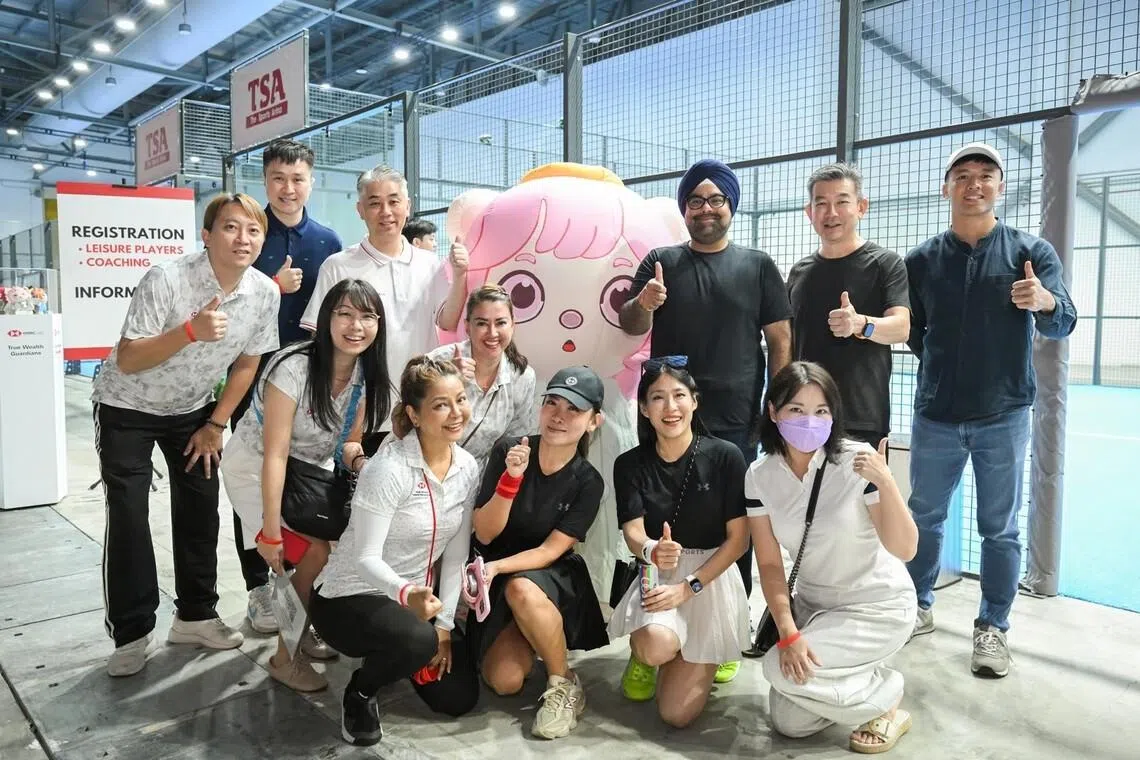
Since the start of 2025, HSBC in Singapore has held sessions of pickleball and padel – a racquet sport similar to tennis and squash – as part of its client engagement programme.
On Friday (May 8), it will hold a pickleball and padel networking event for selected clients from its private banking arm and corporate banking franchise.
This follows an April pickleball event organised by its insurance business, HSBC Life, for agents and customers.
Faye Tan, head of private bank marketing for South Asia at HSBC, says both games are easy to pick up, time-efficient and inclusive – making them “a practical format for modern client schedules, while still enabling high-quality time”.
For similar reasons, Australian-based institutional bank ANZ Singapore held its first pickleball client event in November 2025. The two-hour session was attended by 12 clients from professional services firms.
“The event was intended as a relaxed, relationship-focused networking activity to help strengthen client and colleague connectivity,” says Bruce McKenzie, ANZ’s head of Australia, New Zealand and Asia multinationals.
He adds that event costs were “modest”, largely limited to court booking fees.
Since opening in November 2025, Pickle & Bones has seen around 20 to 30 per cent of its court bookings coming from corporates, split evenly between client engagement and team bonding.
Ang had anticipated such demand when opening his business, and chose the site – a sheltered court on the rooftop of sports-themed attraction Trifecta in Somerset – to cater to corporates.
The central location is convenient, and the single-court layout affords privacy for those hosting clients or business partners, he explains.
Players can access Trifecta’s other facilities too, including ice baths, an outdoor sauna and a lounge with a restaurant.
Pickle & Bones also offers customised pickleball corporate packages for a fuller experience, such as a recent four-hour session which included coaching as well as bar food and alcohol from Trifecta’s lounge.
Fostering business ties
Beyond client engagement, pickleball corporate tournaments are being organised – by facility operators or corporates themselves – to build rapport with industry peers.
One such event was the PickleX Cup Finance Invitational at the Singapore Expo on Mar 26. It was jointly organised by Pickle & Bones, digital marketing agency Stratgeist and corporate apparel printing firm Ark Industries, at the request of pickleball enthusiasts from DBS, OCBC and HSBC.
The tournament involved eight financial institutions and took place over six courts, with S$2,000 in prize money for the winning team. There were breakout spaces and a “VIP zone” for players to network between games, as well as a buffet dinner and wine.
The event focused on a single industry to maximise the level of engagement and value of connections, says Ang.
“For instance, someone from company A may not necessarily want to meet someone from company B if he or she is from a completely different industry. The value of the connection is no longer there,” he explains.
An extension of the PickleX Cup will be held this October for 20 companies from the broader financial services industry, including audit and insurance.
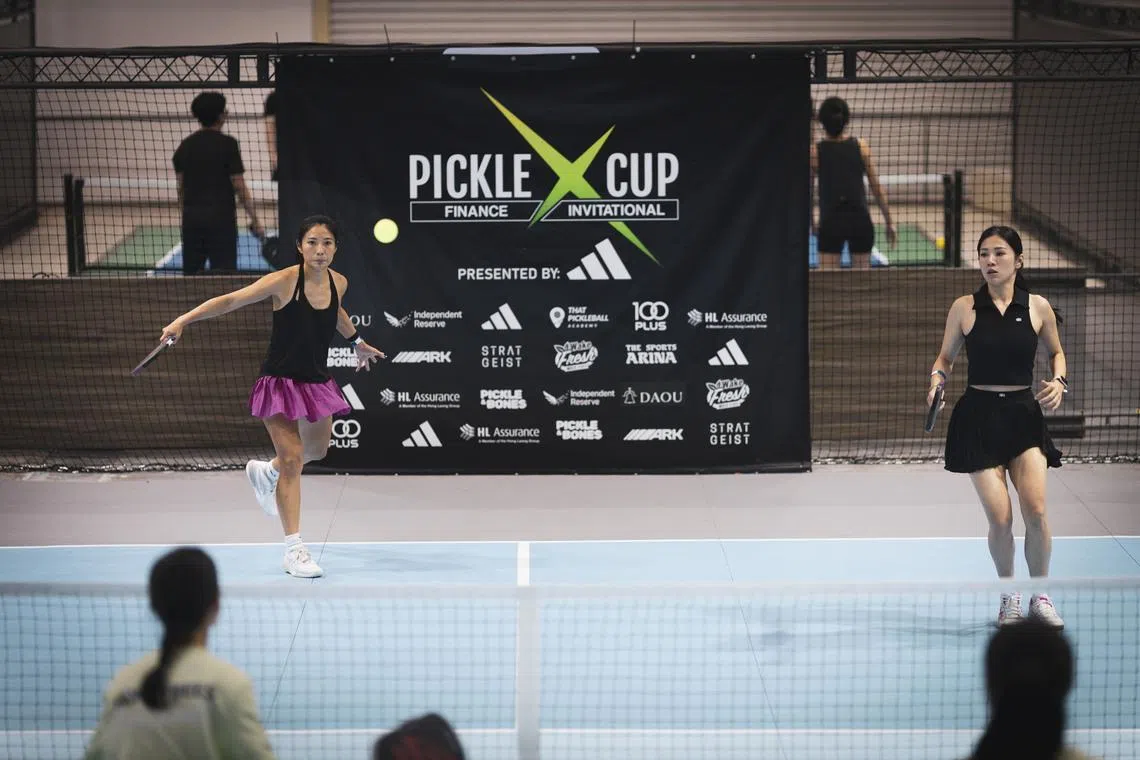
Interest from other fields has also grown. Over the past month, Ang has received inquiries from organisations – from those in the public sector to companies in cryptocurrency and private healthcare – to hold similar sector-specific tournaments.
He estimates that a corporate pickleball tournament could cost S$10,000 to S$100,000 to stage, depending on the scale, number of participants and additional activities.
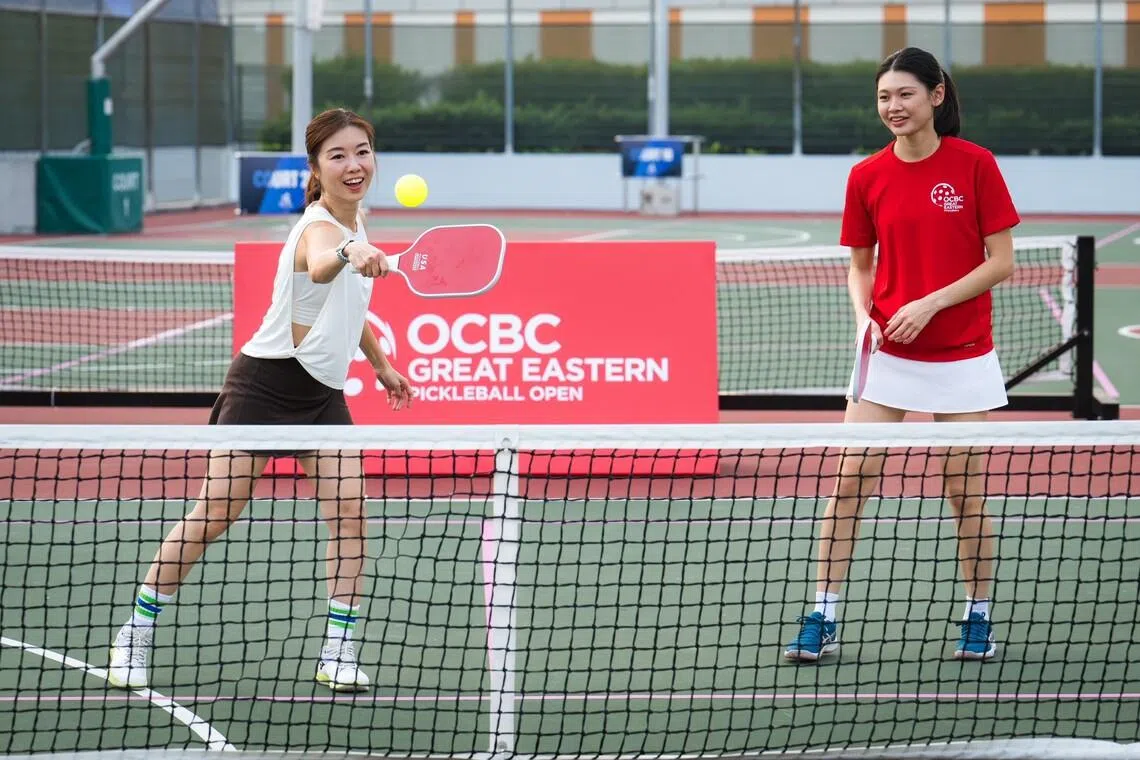
On an even larger scale is the upcoming OCBC-Great Eastern Pickleball Open, to be held from Oct 23 to 25.
Billed as one of South-east Asia’s largest pickleball tournaments, it expects to draw 1,600 players across four categories: recreational and competitive categories for the general public, and two corporate categories.
The corporate categories are hosted by the Bank of Singapore, OCBC’s private banking subsidiary. One is open to teams from any company, while the other is an invite-only championship for 128 teams, drawn from OCBC Group’s clients, partners and guests.
Though registration opens only on Jul 27, the bank has already seen “strong interest” in both corporate categories, says Koh Ching Ching, head of group brand and communications at OCBC.
Invited championship teams include those formed by Bank of Singapore’s high-net-worth clients, many of whom are business owners who have expressed interest in participating with their staff.
Tournaments are not the only networking format. Content creator Koocester, who declined to reveal his real name, has held four founders’ pickleball events: three in Singapore and one in Malaysia. He runs a marketing firm that produces videos of interviews with entrepreneurs.
While the events are advertised on Koocester’s social media pages, participants are screened and must own a “credible business” with annual revenue of at least seven figures. Participation in each event costs S$50.
One of these was held this March in collaboration with Performance Pickleball: “40-under-40”, for 40 entrepreneurs under the age of 40.
It was one of four founders’ networking events that the pickleball club has hosted since 2025.
Says Soh: “There’s a lot of merit to these events. They create opportunities for partnerships and collaborations; we’ve seen business owners sharing details of their products and services with each other.”
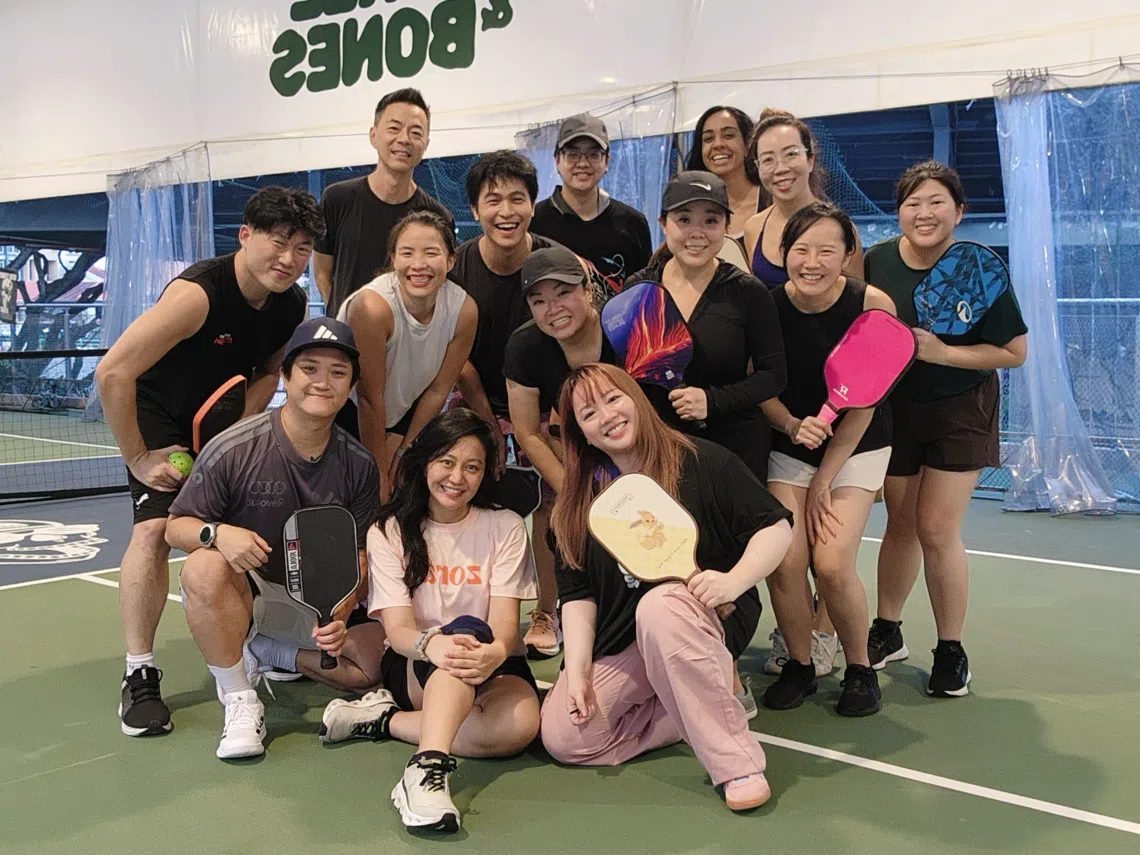
Anna Haotanto, founder and chief executive of femtech startup Zora Health, has hosted more than 15 pickleball sessions this year for friends as well as Zora Health subscribers.
Both groups include investors, startup founders or operators, and senior professionals. Sessions for subscribers cost S$30 each, which covers court costs and refreshments.
More accessible, less time-consuming
Enthusiasts say that pickleball’s core advantage over golf, as a networking sport, is its accessibility and efficient gameplay – delivering more bang for one’s buck.
First, golf is more expensive, due to equipment costs and green fees. Second, it requires much more time than pickleball.
Haotanto, who does not play golf, says: “Pickleball is faster-paced, more accessible, and more social. You can get 12 to 16 people interacting within a couple of hours.”
Venture capitalist Seah agrees that pickleball enables a “greater intensity” of networking, as players interact with more people in a shorter period of time.
While a session can last two hours, individual games usually take 15 to 25 minutes. The quick turnaround means that more players can take part in each session, rotating in and out of games.
In contrast, a standard round of golf may take four hours and is typically played in groups of four.

A decade ago, as the CEO of a multinational corporation, Seah was invited to golf games by business contacts at least once a week. However, he gave up his clubs due to the game’s time-consuming nature, as well as a persistent back injury.
He notes: “In today’s fast-paced business environment, people want to meet as many others as possible. Few are willing to spend four hours on a round of golf just to network with three other people.”
The less-competitive nature of pickleball also makes it easier to build relationships, he adds.
“There’s less display of one-upmanship on the court. You see people playing and laughing with one another; they show more vulnerability. Whereas in golf, players are constantly trying to project their skills.”
Ang believes it is only a matter of time before pickleball replaces golf as the go-to networking sport, with more venues combining court infrastructure and lifestyle amenities.
Country clubs and hotels are reconfiguring tennis courts into pickleball courts, he notes. These spaces come with other facilities – such as lounges, bars and restaurants – for players to “sit around, chill out and have a drink” before and after games.
“Some conversations can happen on the court. But when it comes to high-level networking, like closing a deal or striking a business partnership – the environment and atmosphere beyond the court matters, because important conversations are likely to take place there.”
Is golf still relevant?
Still, others say that even as pickleball makes inroads into the corporate world, golf is not fading away – certainly not at the C-suite level.
OCBC’s Koh notes that golf remains widely embraced by professionals and senior management.
The very attributes that pickleball enthusiasts may see as disadvantages of golf – long games and small groups – allow for deeper interaction, say golfers.
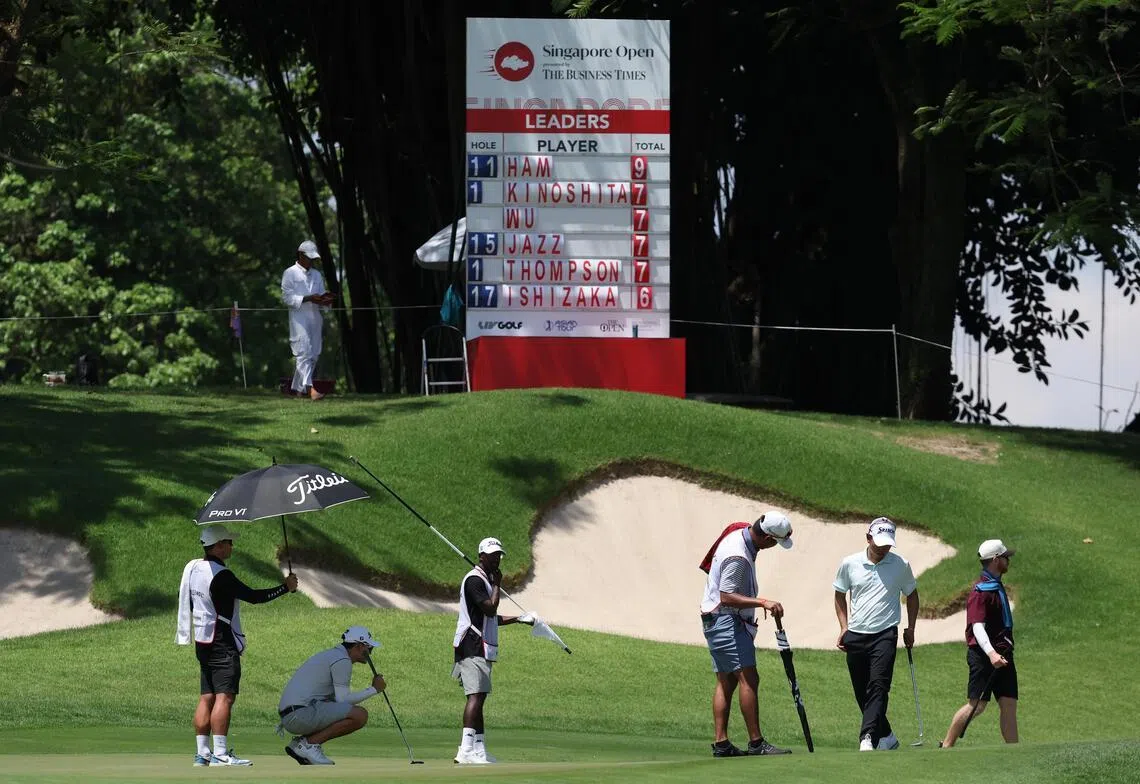
Singapore Golf Association (SGA) CEO Joshua Ho says that golf continues to play a “meaningful role” in the business world, “especially where long-form interaction and relationship-building are important”.
“Golf provides a shared experience over four to five hours, where conversations can flow naturally while enjoying the game in an unrushed setting.”
Danny Chong, who runs several lifestyle and digital asset businesses, finds golf effective in advancing deeper conversations and strategic decision-making, particularly at a higher corporate or institutional level.
He picked up golf in 2005, during his first job at a global investment bank.
“With the four hours spent together, you get to build up a very good understanding of the person you’re playing with, whether a possible partnership can be formed.”
While Chong has tried pickleball, he likens it to “speed dating” – meeting “many people in one single session”. This prioritises breadth of interactions, but not necessarily depth, he adds.
SGA’s Ho says Singapore’s corporate golf landscape “remains active and engaged”, citing a “strong number” of events.
Local tournaments such as The Straits Times and The Business Times Corporate Golf League – as well as corporate and charity golf events – continue to register “strong participation”, he adds.
Meanwhile, international golf events such as the Singapore Open “continue to serve as important platforms” to host corporates and build relationships.
“The combination of time, environment, and shared experience continues to make golf a unique and effective platform for business engagement,” says Ho.

Alternative golf formats have also emerged. SGA has seen corporates “becoming more creative” in how they engage through golf, such as having indoor simulator-based golf events.
This comes amid a decline in golf courses here. By 2035, at least four courses – including at Orchid Country Club and Tanah Merah Country Club – will have closed permanently, leaving Singapore with 12 courses.
Still, Ho says these closures will have “no major impact on the longevity of corporate golf games, as there will still be sufficient golf courses in Singapore to host these events”.
Both OCBC and HSBC continue to include golf as part of client engagement activities.
Tan says HSBC remains “strongly committed” to golf globally and in Singapore, noting that the bank recently renewed its long-term title partnership for the annual HSBC Women’s World Championship through to 2030.
“Ultimately it is not about the sport, but about creating the experience that is curated for our client’s needs and interests,” she says.
Although Seah has long given up golf, he believes the sport still has a place in the corporate world. He quips: “As the saying goes, different strokes for different folks.”
TRENDING NOW

Government to bring forward raising of retirement age, give employers more financial support to create flexi-load jobs

If Europe goes to war, the fallout will be felt in East Asia

Former minister Maliki Osman, Revolut chairman join Asia Gulf Holdings advisory board

Small nuclear reactors could boost the Asean Power Grid: GE Vernova executive

