
Greening architecture

Patrick Bellew talks about the design and engineering challenges his firm Atelier Ten faced coming up with the Esplanade's spikes, and why a seeming "lack of focus" is a strength for the practice.

Uma Devi
Published Fri, Jan 15, 2021 · 09:50 PM

    PATRICK Bellew - or his firm Atelier Ten - may not quite be household names here but their projects in Singapore stand among the city's most iconic landmarks: Esplanade, Gardens by the Bay, and Jewel Changi Airport.

    Like many other businesses, the London-headquartered architectural and engineering practice had been drawn to set up shop in Singapore for its top-notch infrastructure. In November 2020, the firm was acquired by Singapore's Surbana Jurong Group. And with sustainability now a big play in the region and beyond, Mr Bellew, founding director of Atelier Ten, sees even greater opportunities as the firm - now part of a group that's involved in over 7,000 built environment projects around the world at any time - looks to inject sustainable elements into key pieces of infrastructure.

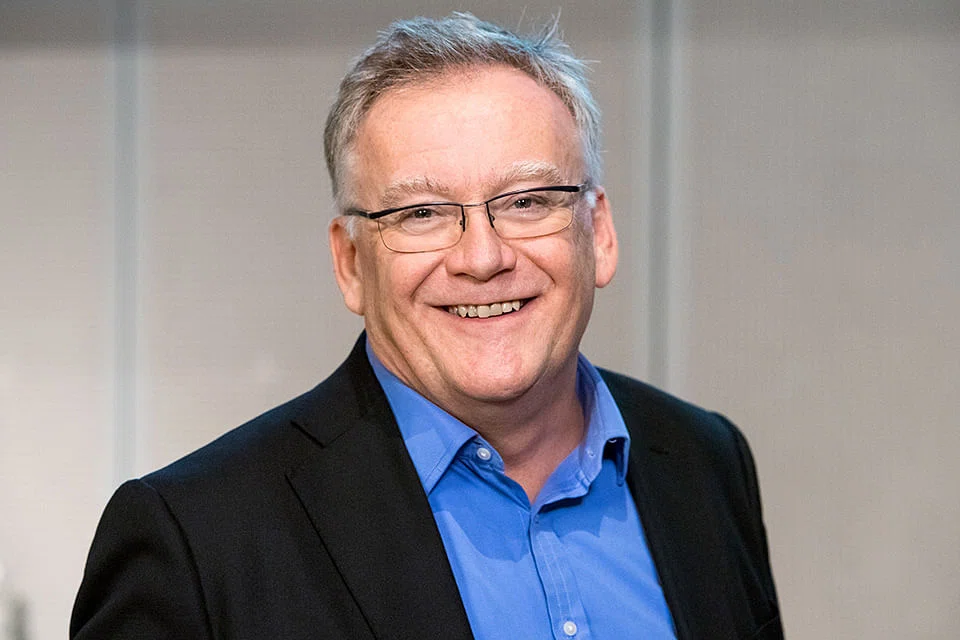
    Speaking with The Business Times, Mr Bellew, 61, a Chartered Building Services Engineer, recalls how he founded Atelier Ten in 1990 in a bid to follow his "great interest" in integrating environmental sustainability and architecture. Three decades on, he says his vision for the design consultancy remains the same as when it first began as a fledgling London practice.


    In fact, the word "atelier" is French for workshop. The firm prides itself on solving problems, regardless of the scale, and taking ordinary projects to the next level by "doing more with less".

    Atelier Ten has grown from just three employees to more than 320 today, with offices across Asia, Australia, the United States and the United Kingdom, and has completed projects across 75 countries.

    Mr Bellew attributes the firm's growth to it being a "game changer" in the way it responds to clients.

    Asean Intelligence

    Get insights into businesses across South-east Asia

    Get the free report

    "We set out as a practice to try and work with architects in a different way compared to traditional engineers," he says, noting that engineers would begin filling buildings with pipes and ducts from the get-go.

    "We turned the conversation around. From the very beginning, we said how can we make the building do more - how can we optimise the structure and make it more efficient."

    Spiky shading

    Atelier Ten's first project in Singapore was the now iconic "durian building" - Esplanade, Theatres on the Bay. The firm designed and developed the spiky shading system that gives the building a durian-like appearance.

    Mr Bellew recalls how the architects of the Esplanade project - Michael Wilford and Partners, and DP Architects - were looking for a technical collaborator to work with to develop a "logical and integrated structural and environmental solution".

    Atelier Ten and three other consultants were invited to come up with concepts to illustrate how they could design a structure that would filter sunlight in order to let only a proportion of light through into the building.

    The firm arrived at a solution that involved the folded leaves sitting in a diagrid, which seemed to meet all the requirements. Atelier Ten was then asked to develop and build out the idea, which although it evolved over time, remained true to the original idea. It was a breakthrough for the firm, but the project was not easy by any stretch, says Mr Bellew.

    Till this day, he remembers how the intricacy of the structure was made exponentially more difficult due to the lack of technology.

    "Twenty five years ago, we were working partly by instinct and partly by the very basic help of computers," he notes.

    He remembers how the Esplanade began with hand-drawn sketches. He had to use a protractor to work out the lines of sun rays and calculate the angles manually.

    But things have since changed.

    "Now of course, we would get an architect model and develop a script for it to analyse it. In a few hours, we would have analysed this thing to death and come up with an optimised structure," he notes.

    The firm has since gone on to secure more "exotic" projects in Singapore. These include the multi-award winning Gardens by the Bay in 2006 and Jewel Changi Airport in 2014. The focus on sustainability, Mr Bellew says, remained throughout.

    The thermal and daylight analysis that went into Jewel Changi Airport allows the building's environmental performance to ensure energy efficiency and thermal comfort for visitors. Meanwhile, Gardens by the Bay is a "zero carbon in operation" project which also sports zero-carbon gardens and biomes.

    While each project brings its own set of challenges, Jewel Changi Airport presented an "enormous technical challenge" due mainly to the waterfall located in the middle of the building, according to Mr Bellew.

    "This feature creates enormous disturbance to the airflow within the building as it drags the hot air down from the top of the building. The trains running through the building draw air through the outside," he explains.

    The glass roof that never ceases to amaze people passing through the airport was not an easy one to pull off - it introduced heat gain - and Atelier Ten had to carefully balance the light needed to support vegetation, and thermal comfort for people.

    Another challenge he encountered was to make all the systems within the structure invisible so visitors could see only the surrounding landscape, and not ducts.

    While all projects are etched in his mind for one reason or another, Mr Bellew says Gardens by the Bay remains his most memorable project to date. "If I could have retired after designing that building, I probably would have wished I had," he laughs.

    "We really enjoyed delivering that project. It was painful at times, but there is never gain without pain."

    Despite the "incredible environmental challenges" that really stretched the firm, he says those adversities were completely worth their while.

    With these major projects done and dusted, Atelier Ten is not dialling back on its focus in Singapore. Its jobs in the pipeline here include the American School, and extensions of Mandai Zoo and Sentosa.

    Apart from what he terms "exotic projects", Mr Bellew says the company is also aiming to have more influence in residential and commercial sectors, such as university residential projects.

    "But even those sectors in Singapore are rarely normal, they're usually a little exotic - which is great," he adds.

    Greener focus

    The recent floods in China and wildfires in Australia, says Mr Bellew, are "direct costs of (people) making bad decisions in everything they do". He believes that climate change poses a much-bigger threat than the Covid-19 pandemic that continues to roil the global economy.

    Although one might have expected the focus on sustainability to let up as governments focus on repairing their economies, Mr Bellew argues that the pandemic has made people think more about what matters.

    "Sustainability seems to be the trump card despite all this, and people are recognising that it's something that needs attention, and needs to be dealt with," he says.

    To be sure, he has observed changes in the way clients think and work. He has noticed that clients have begun to pay more attention to climate change and sustainability when selecting partners.

    Yet when it comes to Asian markets, clients are always concerned about how attention to sustainability comes with a higher price.

    And Mr Bellew acknowledges that this is sometimes the case.

    "Clients can sometimes get a little bit afraid that we're going to bring them things that they can't afford, or expose them to extra costs that they don't necessarily want to invest in.

    "To be brutally honest, yes the amount of analysis and care it takes to deliver these projects with a degree of thoroughness inevitably comes with a higher cost in terms of design and research than just sticking to an air-conditioning system," he says, adding that building costs could also increase with a focus on sustainability.

    But he points out that these costs are "a drop in the ocean" compared to the cost of making wrong decisions. For instance, if a company were to set targets for cooling systems that are half that of traditional buildings, it could cut the size of a building in half and potentially save millions of dollars.

    "The biggest problem we get is when people are small-minded enough to say it will cost $200,000 to do a study, but we might save them $20 million if they spend a little bit of money now to understand what the issues are," he says.

    Atelier Ten prides itself on its "interrogation" tactics with clients by probing and asking questions about making sustainable choices, and offering them opportunities.

    And to be able to offer choices to clients, the firm's research-backed approach is what helps it stand out from the crowd.

    "We spend a lot of time on research and development," Mr Bellew says. "One change over the last 30 years has been about shifting from being pretty instinctive about how we design things to being incredibly technical."

    Positive despite pandemic

    Around the world, the Covid-19 pandemic has upended many industries, engineering included. Many construction projects have been put on hold, pushed back or even cancelled. Although a few of Atelier Ten's projects have temporarily been suspended as countries around the world try to curb the spread of the virus, Mr Bellew feels the firm has been "very lucky".

    The company has added around 15 to 20 employees to its global workforce, and its order book is "looking fine" through 2021 although some projects in Asia have had a few hiccups.

    "We're doing okay, but I don't think we're out of it yet, there's more pain ahead for everyone," says Mr Bellew. "As a leader in the business, the minute you hang up your hat, you're in trouble...We need to be pulling the industry along with us, and we shouldn't lose sight of the objective."

    After the pandemic blows over, the firm is looking to Asia and China as key markets, Mr Bellew tells BT. In fact, he is looking to build on a recent project in China to get more projects there.

    The thing about Atelier Ten that puts it in pole position to capitalise on changing trends and demands, according to him, is its ability to work on a broad range of building types from gardens to office towers without limiting itself to any one specific kind.

    "I know it sounds like we're not focused, but in a way it's that kind of a lack of focus that allows us to offer a broad range of services across a broad range of building types and that helps us to be involved in all these projects."

    But entering a new market, Mr Bellew stresses, is never an easy thing for an international firm like Atelier Ten to do. He estimates that it takes about five years for a company to be accepted as a "local one"; it also takes some time for a firm to build its portfolio and reputation.

    But banish any thought that the pandemic would stop Atelier Ten from setting its sights on more "exotic" projects around the world. Mr Bellew is quick to assure that the firm is forging ahead.

    Upcoming projects include Google's headquarters (HQ) in London, Disney's HQ in New York, as well as a hotel inside a mountain in Saudi Arabia. And with governments around the world setting their sights on sustainability, Mr Bellew is cautiously optimistic.

    "We used to have to go into institutions that have no interest in trying to drive things in the right direction," he says. "But the increasing focus from governments in terms of regulations and the way they do their projects have been enormously significant."

    For instance, he adds, the American government's efforts to integrate sustainability into infrastructure have led to the firm doing "a lot more work" on embassies and international buildings. "(These projects) probably would not have come our way if the government had not pushed for these requirements."

    Looking ahead, Mr Bellew says Atelier Ten will continue to take on the same "challenging and sustainable projects" that have earned the firm its design and engineering chops.

    PATRICK BELLEW

    Founding Director Atelier Ten

    Born in Yorkshire, UK

    BSc (Hons), School of Architecture & Building Engineering, University of Bath

    CAREER HIGHLIGHTS

    2004: Elected a Fellow of the Royal Academy of Engineering

    2006: Co-founded UK Green Building Council

    2008: Received Happold Medal from Construction Industry Council and Happold Foundation

    2010: Named a Royal Designer for Industry by UK's Faculty of Royal Designers

    2010: Key member of Task Force that established the Step (Sustainable Training and Education Programme)

    2013: Recipient of CIBSE President Silver Medal

    Since 2010: Visiting Professor at Yale University School of Architecture

    Decoding Asia newsletter: your guide to navigating Asia in a new global order. Sign up here to get Decoding Asia newsletter. Delivered to your inbox. Free.

    Copyright SPH Media. All rights reserved.


