Singapore fans play the K-pop merch game
Korean pop acts have long been popular here, but newer groups have fanned fervour to new heights – and the merchandise industry has mirrored the meteoric rise of the music

Elysia Tan
WHILE the K-pop industry is a global behemoth, its rise in Singapore has been driven, not just by star power and corporate giants, but the gamification of the merchandise (“merch”) and enterprising fans-turned-resellers.
“We do see a more prominent presence of K-pop official merchandising in Singapore (now),” says Dr Liew Kai Khiun, assistant professor of applied social studies at Hong Kong Metropolitan University, who noted the trend has been noticeable in the past five years.
K-pop agencies can be massive: Hybe, which is behind global sensation BTS, raised 962.6 billion won (S$976 million) in its initial public offering. Yet in Singapore, albums and merchandise are often bought, not just from official and licensed web-stores, but also from fellow fans and small businesses.
Multiple sources
Group orders are a major source of merchandise for Singapore-based fans. Order managers – usually fans themselves – work with proxy buyers in South Korea, says Michelle Wong, who runs a group-order channel with over 2,100 subscribers on messaging app Telegram.
To lower shipping costs for individual buyers, orders are consolidated to be shipped to a Korean address, then jointly forwarded to Singapore.
Security is a concern in group orders, says K-pop fan Koh Kang Jun, who usually checks order managers’ reputations among fellow buyers and friends. “But it’s cheaper for us to order from them.”
Some shops operate similarly. K-pop shop krmerch in Tai Seng, run by university student Felicia Kee, secures its stock the same way the public does – by buying it from authorised online channels.
“I’m still like a customer, still snatching to get the merch. Sometimes it can sell out in, like, 30 seconds,” she says. She gauges demand based on orders from her website. For limited releases, she takes a “buy first, sell later” approach.
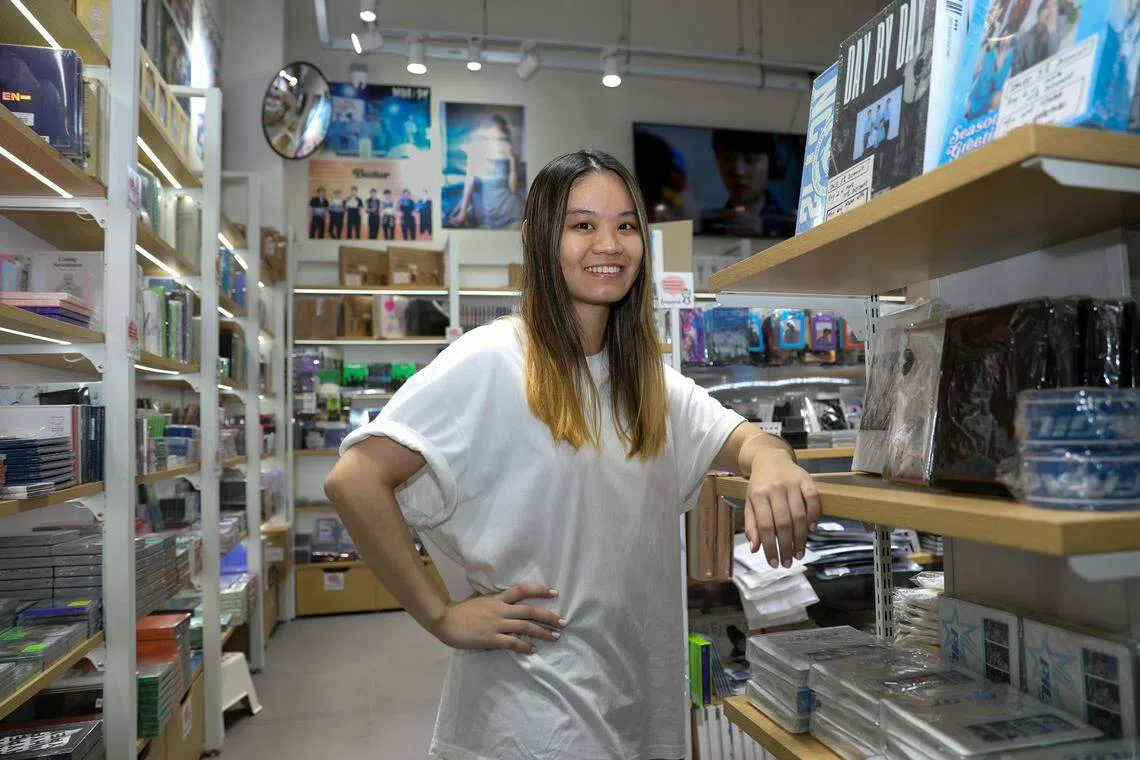
Other brick-and-mortar stores source directly from Korean merchandisers.
“You must have a long-term working relationship with them,” says House of Kpop owner Erika Chong. “They’ll give you priority, they’ll inform you they have this item coming up: ‘Do you want it? How many do you want?’... If your monthly volume is not high enough, they’re not interested in you.”
To receive such friendly treatment, buyers must hit at least S$100,000 in orders per month, she says, adding that she does not receive any bulk discount.
Karin Chan, owner of Infinity Kpop at Suntec City, is close enough to merchandisers that she can buy some goods a month ahead of their public release – and at wholesale prices. “Our order is quite huge, and it keeps going,” she says.
All three physical retailers also take orders on their websites; krmerch dipped its toes into selling on TikTok a few months ago, with over 500 sales clocked since then.
Going in blind
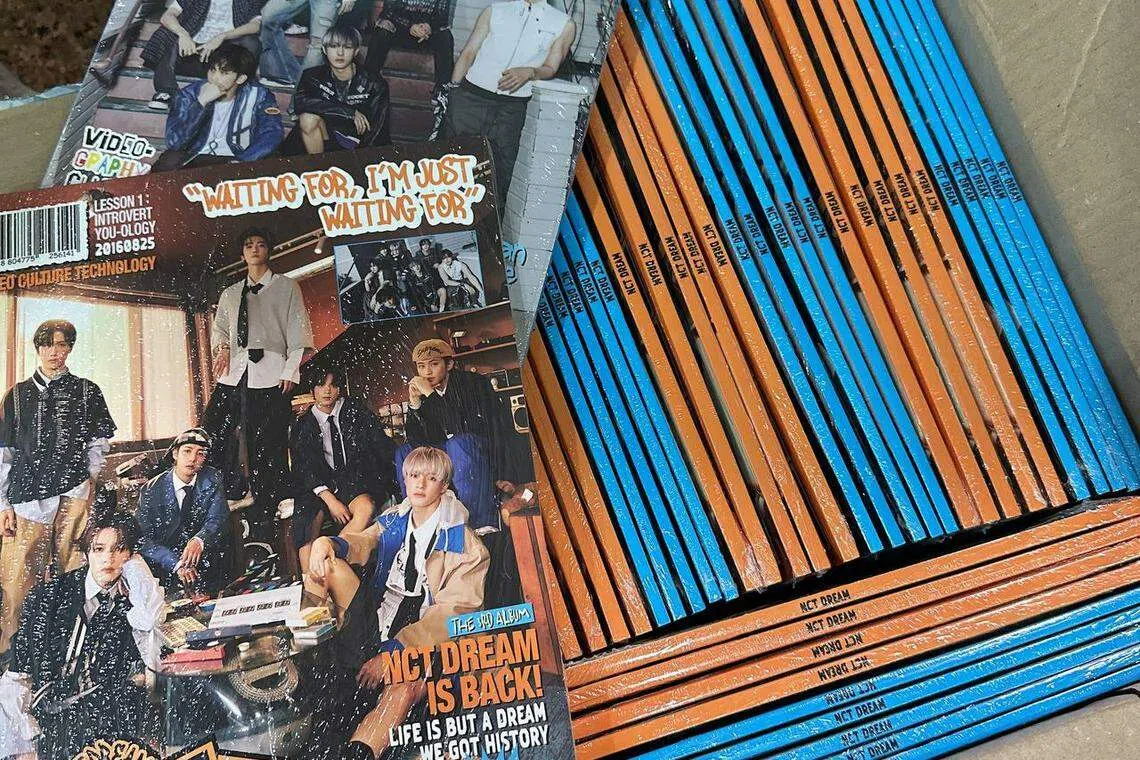
Despite the rise of music streaming, physical K-pop album sales are going strong. Boy group Seventeen’s Seventeenth Heaven, for example, sold 5.1 million copies in its first week.
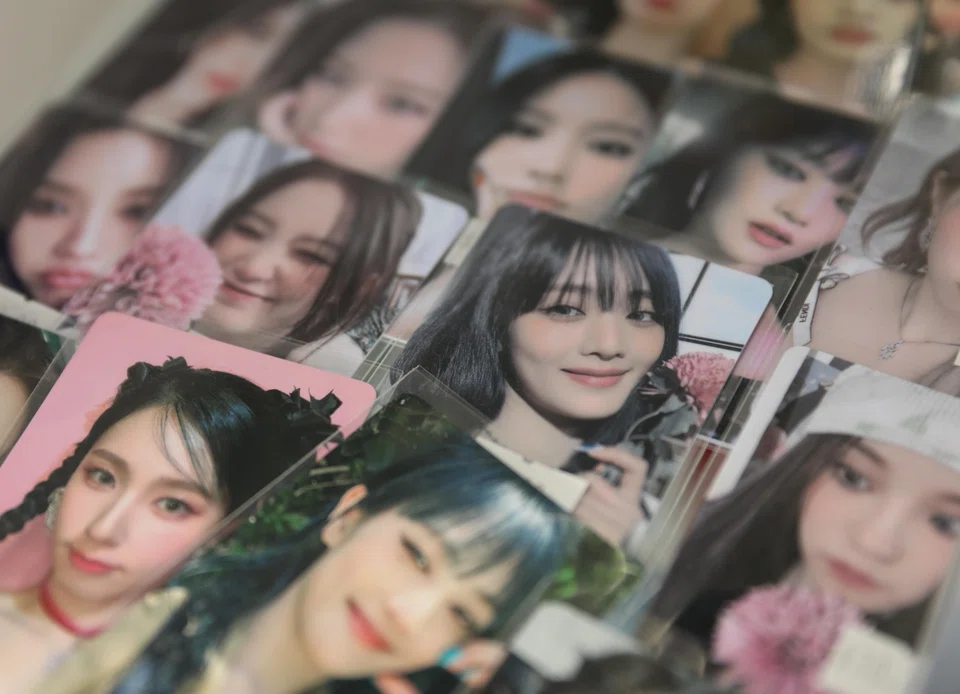
These albums can be CDs with attached photobooks, cards with QR codes to access digital copies of the songs, or can take other forms. Demand for them is driven partly by the cornerstone of K-pop merchandise – the photocards included in the packaging. These wallet-sized cards, bearing individual or group shots of the artistes, are regarded as collectors’ items. Introduced with girl group Girls’ Generation’s album Oh! in 2010, they have since created market dynamics of their own.
Different designs are randomly distributed with each album. Fans must thus buy multiple copies to increase their chances of getting the designs they want – a phenomenon which both fans and retailers say has contributed to astronomical album sales.
“Some fans are looking for a specific member, so they’ll need to try their luck,” says Chong. She has had to ration albums on display at House of Kpop – groups of fans sometimes “sweep everything away”, clearing shelves to split photocards among themselves.
For Wong, the random aspect is part of the appeal: “You feel the thrill when you open it.”
But for buyers who want photocards depicting a specific member, she sometimes unseals albums to allocate them accordingly.
Different versions of albums may include version-exclusive photocards. So, too, may pre-order or first-press copies. Photocards from first-press copies may be limited editions of as few as 500, some of which might even be autographed.
“(The photocards) are very, very valuable – people throw the album away,” Infinity Kpop’s Chan says. She adds that some buy albums in the cheaper, smaller forms instead, so that they can still collect photocards while saving money and space.
The number of photocards included per copy varies, but most albums have one to four. BTS has released albums with just one photocard each. In contrast, girl group NewJeans has had albums in which a single copy contains a full set of photocards, notes House of Kpop’s Chong. This helps to grow the “very new” group’s popularity.
Retailers themselves only see brief descriptions and blurred-out images of albums and photocards, leaving them unable to judge what might sell. They can only choose what to order “by imagination”, says Chan. “It’s very tricky.”
Seeking their fortunes
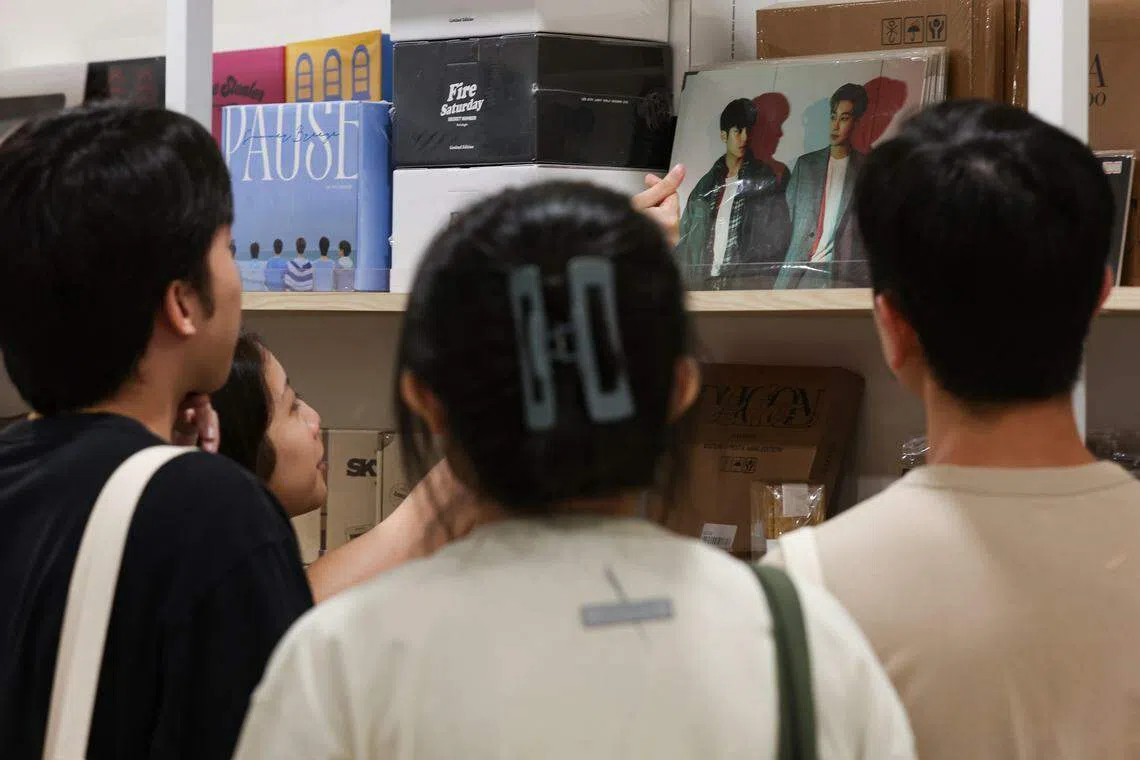
Lottery-based “fansigns” are another chance-based feature that boosts merchandise sales. For every album bought from a platform – say, a specific web-store – fans get one lottery chance to meet their idols at a “fansign” event. These meetings can occur in person or through video calls, the latter practice having begun during Covid.
In-person meetings are generally for domestic fans, but video calls are global, and there is intense competition – so fans tend to spend a lot for these lottery chances, says K-pop fan Brian Lim. University student Tan Wei Jun estimates that one needs to spend at least S$1,000 to stand a real chance at winning.
“I’ve watched TikToks of people buying cartons of albums for all the fansigns,” says Wong. Some fans may sell the albums and accompanying photocards to recoup some of their burned cash, she adds.
Chan agrees: “They buy 100, 200, to get the chance for the fansigns, and end up stranded with the albums.”
Her regular customers sometimes “offload” the albums at Infinity Kpop, where they are given away with other purchases, so they do not go to waste.
University student Melvin Chua notes that some group-order managers keep the lottery slots from their consolidated orders, offering subscribers lower prices or their choice of photocards.
Feeling Fomo
Beyond the rush of completing their collections through random draws, fans are also driven by the fear of missing out (Fomo). As Wong’s favourite member in boy group NCT is popular, the price of his merch may double or even triple when resold, she notes: “And you’ll be worried – what if it goes out of stock and you can’t find it anywhere?”
Besides photocards, lightsticks are another K-pop merch mainstay. Says Chua: “It’s kind of like the fanclub’s identity.”
Fans can bring official lightsticks into concerts – which may not be true of fan-made merchandise, says group-order manager Wong. She should know, because she was once told by a security guard to dispose of her non-official merchandise before she was allowed in.
Concerts boost lightstick sales, says Chong. Fans agree that it is a “social norm” to buy the latest-version lightstick for concerts.
“I think there’s this… unspoken rule, that you’re expected to have (the new version),” says K-pop fan Isaac Wong.
Newer lightsticks often have Bluetooth technology that syncs them with the music during concerts, so they flash or change colours in unison to certain songs. But this comes at a price: lightsticks used to retail for S$40 or S$50, but the going price is now between S$60 and S$90, say Chan and Chong.
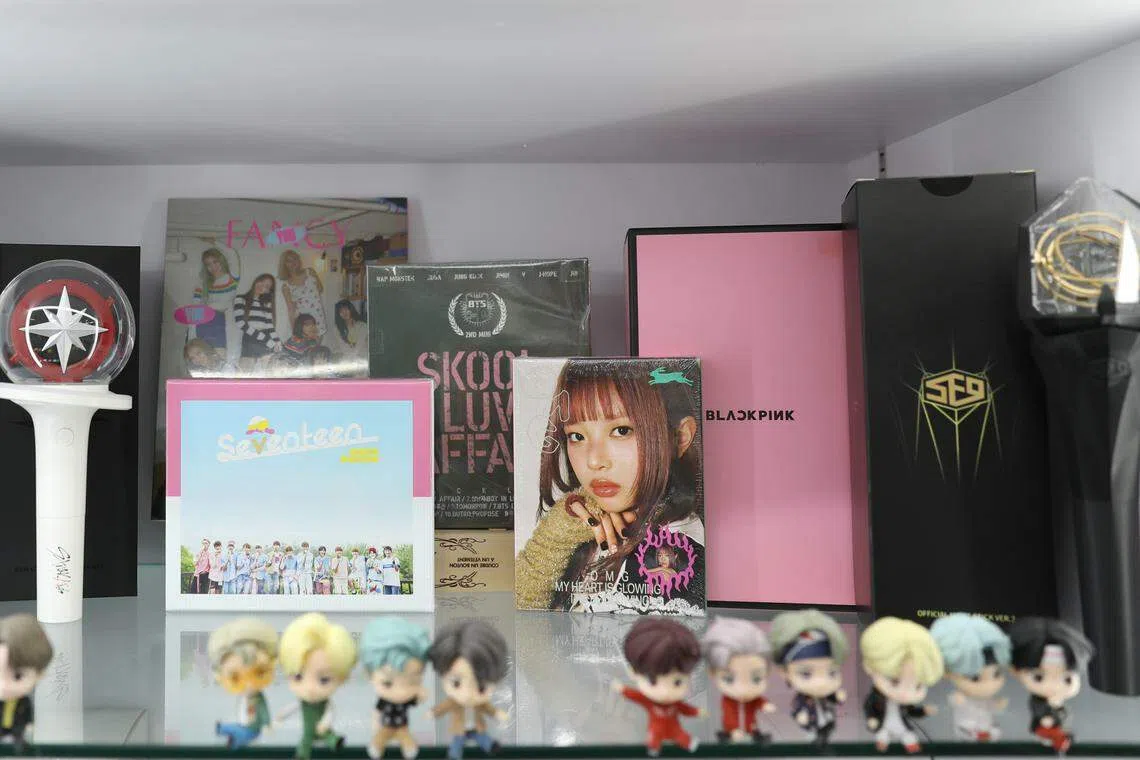
In addition to technological advancement, general cost increases – for shipping or storage, for example – also contribute to higher prices, says Chan.
“Because K-pop is so popular now, they almost double the price (of some items),” Chong says. “Retailers can’t absorb everything.”
But they both say that though prices have gone up, their own profit margins have not changed.
Another trend is merchandise made by the artists themselves. Krmerch’s Kee highlights the popularity of a collection designed by BTS members, which ranged from hoodies and brooch sets to mood lamps.
“It’s very crazy. I know that Jungkook’s lamp sold out in, like, five seconds,” she says, referring to one of the BTS members. “The company doesn’t tell you how many (they make). They just release them, and within a second, when you refresh (the webpage), it’s gone.”
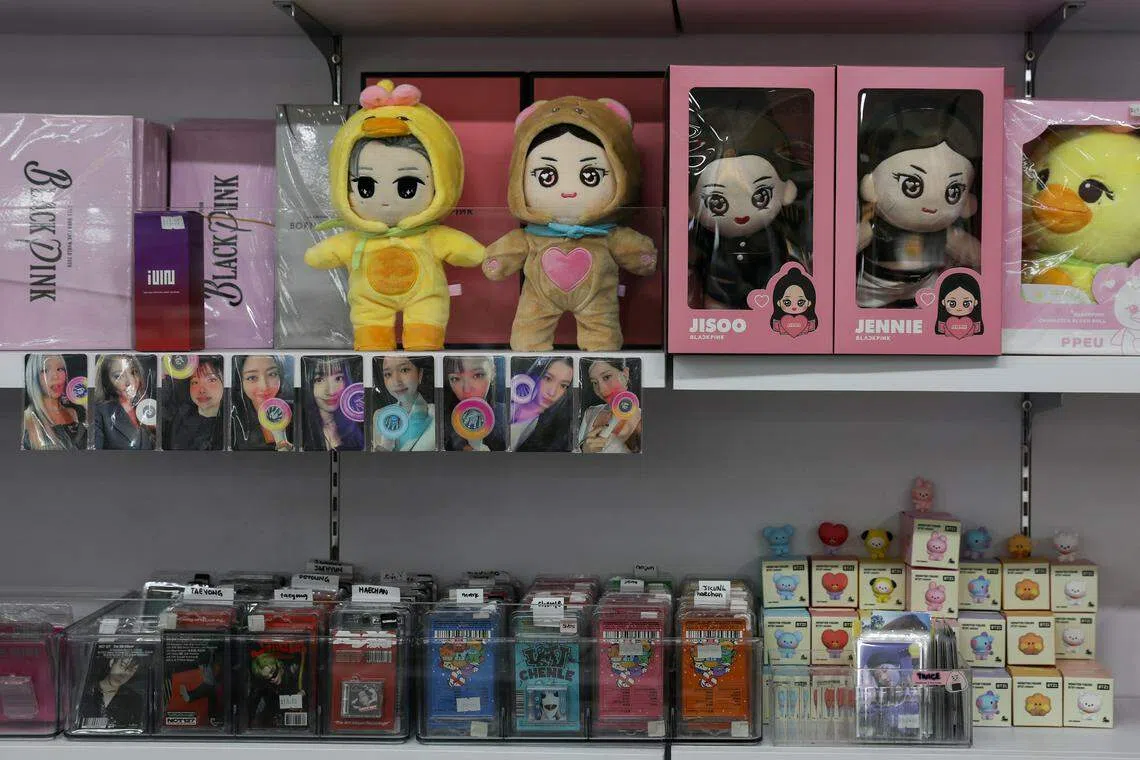
Tan notes that girl group Ive recently released a plushie series, with one for each member. “They personally named it and helped in the design,” he says. “They put in the effort. So, as a fan, you’ve got to repay it, right?”
Merchandise featuring mascots and characters are similarly trendy, popularised by BTS’ BT21 series. NCT’s first official doll series, designed in the likenesses of the group members, went on sale this year and was “quite popular”, says group-order manager Wong.
Slipping into the everyday
Besides specialised products, K-pop merch is also increasingly going mainstream, especially through collaborations.
“Previously, K-pop merchandise was mainly targeted at fan communities. But they have expanded into the mainstream, with K-pop brands more actively leveraging their popularity,” says Dr Liew.
“This is not only in the more traditional area of fashion, like the latest partnership between NewJeans and Levi’s, but even in that of F&B (food and beverage), like the exclusive Blackpink gift set from Haidilao.”
In Blackpink’s tie-up with the hotpot chain’s Singapore branches, a Blackpink merch set was given away free with a minimum spend, or for purchase at the outlets.
Skincare and perfume tie-ups are also common, notes group manager Wong. New boy group Zerobaseone recently collaborated with beauty brand Bring Green to include photocards with its products.
Too much of a good thing?
For Wong, managing group orders brings in enough income to sustain her lifestyle. In a good month, she can get orders from 100 buyers, she says.
Her prices may be higher than those of other group-order managers, but this is to account for her trustworthy proxy’s higher fees and logistical costs, plus her time and effort, she adds.
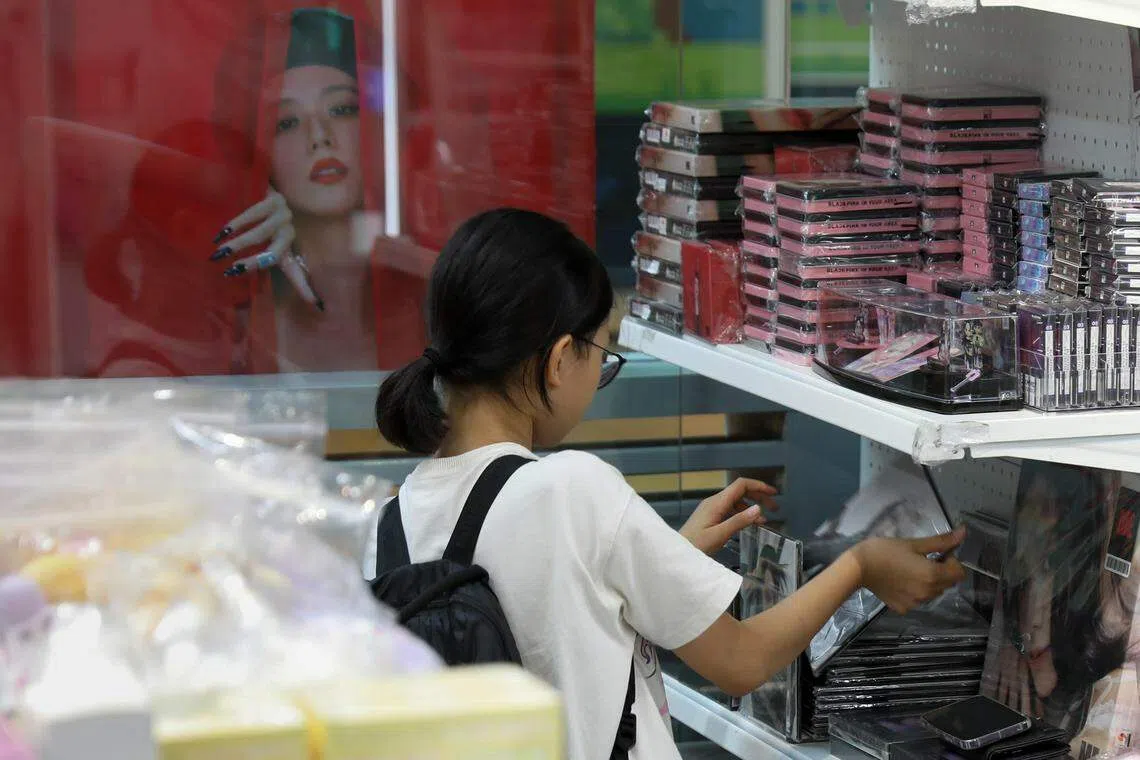
Though the majority of buyers are teenagers and young adults, fans span the age spectrum, industry players say.
“With the popularity of K-pop in Singapore stretching back more than two decades… the fan community is also becoming older,” Dr Liew says.
At the same time, more children of primary-school age or younger are contributing to demand for merch, Kee adds, recalling a customer buying S$1,200 worth of BTS merch for his five-year-old grand-nephew.
But buyer fatigue could set in. Fans have taken to social media with complaints about low-quality goods, such as brand-new photobooks falling apart. Girl group Fifty Fifty’s photobook, released in September, garnered backlash when more than half the pages were blank.
But if buyers don’t lose steam, that raises the risk of exploitation. A hoodie with just a K-pop group’s logo can be marked up to S$150, far higher than the price of a similar item from a clothing store – and it will still sell, says Kee. “They take advantage sometimes, I feel, but this is how the industry is… we can’t do anything.”
Agencies have also been accused of encouraging excessive buying. Korea’s antitrust agency recently launched investigations into major entertainment agencies for alleged unfair trade practices, such as increasing the number of photocard types to induce album purchases.
There may also be ethical considerations when minors are targeted as consumers, notes Dr Liew. But regulatory caution “would be potentially ineffective and moralistic”, he adds: “One would assume that these are private considerations, with parents having supervisory oversight.”
Despite these concerns, the outlook still seems bright for the K-pop merch industry.
With merchandising spreading to daily consumer items, more collectibles will become available, while concerts are returning as a main source of expenditure post-Covid, says Dr Liew.
Assuming that much of the demand comes from teens, parents are likely the main financial source, he notes. “So, as long as the macroeconomic conditions are stable, the market for K-pop merch will continue to be healthy.”