Is there a happy ever after for cinema operators?
As they emerge from the pandemic, Singapore’s cinemas hope to draw back the crowds with a greater focus on alternative programming and premium experiences.

Paige Lim


WHEN Covid-19 struck in 2020, some wondered if it would sound the death knell for cinemas. Theatres across the world had to shut or run at reduced capacity for months. Streaming services reached their peak, entertaining millions stuck at home during lockdowns.
Today, with Covid curbs lifted, the buzz has returned to theatres. Star-studded gala premieres are back. Yet the pandemic’s impact on cinemas, including in Singapore, has been undeniable.
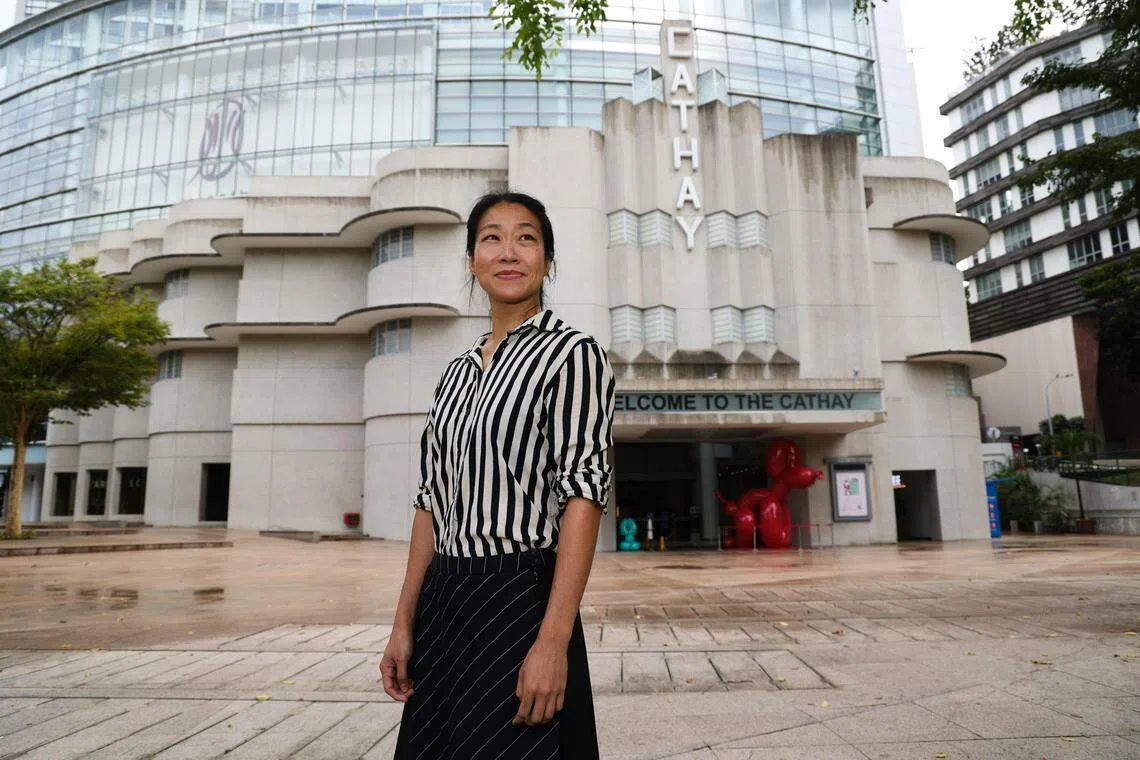
Cinemas have lost favour with mall operators as anchor tenants. In early 2022, Filmgarde Cineplexes shut its cinemas at Bugis+ and Century Square, retaining only its Kallang location. In June, mainboard-listed mm2 Asia announced the closure of its historic Cathay Cineplex at Handy Road, as part of “cost rationalisation for its cinema operations”.
For Singapore’s biggest cinema operators Golden Village (GV) and Shaw Theatres, attendance is not yet back to pre-pandemic levels – though both are optimistic about further recovery.
With cinemas able to run at full capacity since April 2022, Shaw’s attendances have returned to 80 per cent of pre-Covid numbers and are “on track” to a full recovery, said Mark Shaw, director of Shaw Organisation, which owns Shaw Theatres.
At the group level, admissions are expected to get a boost when the revamped Shaw Theatres Balestier reopens this March with 11 screens, up from six before.
A spokesperson from GV said admissions have been “steadily increasing” and should improve further this year, with several blockbusters lined up – though it might be “some time” before they reach pre-Covid levels.
mm2 Asia declined to reveal figures for Cathay Cineplexes, which it operates. For the nine months ended Dec 31, 2022, revenue from the group’s cinema operations rose to S$37.6 million – up from S$21.4 million in the year-ago period, but short of pre-Covid levels. Cathay’s cinema operations saw more revenue in six months in 2019 – S$49.5 million for the half-year ended Sep 30 – than this latest nine-month figure.
mm2 Asia noted in its financial report that its cinema business “is still lagging behind in profitability, due to a lack of strong Hollywood films needed to bring in audiences”. Besides Singapore, the group operates cinemas in Malaysia under the brand mmCineplexes.
Box office numbers similarly suggest a slow recovery. According to media measurement and analytics firm Comscore, Singapore’s box office receipts were S$107.4 million in 2022, down 43.2 per cent from the pre-pandemic annual average of S$189 million across 2017, 2018 and 2019.
“We were hoping that the recovery would have been faster, but what everyone didn’t expect was the extent of revenge travelling that took place,” said Karen Tan, founder of independent cinema The Projector. “People were taking longer breaks because they hadn’t left the country for three years – in June, July, August, and then in December again.”
Based on January ticket sales, The Projector is still 20 per cent below pre-Covid levels.
With pandemic curbs lifted, audiences are no longer kept away from the cinema – but the question is how to draw them back.
Diversified programming here to stay
Films are not all that cinemas can offer. Alternative content – from concert screenings to e-sports events – now forms a bigger part of post-pandemic programming, said mainstream operators.
While not new, alternative content gained prominence at the height of Covid-19 when releases of Hollywood tent-poles were delayed. “Cinema operators then had no choice but to look elsewhere for content,” said Shaw.
Scrambling to fill screens, local cinemas turned to K-pop documentaries, concert livestreams, and kid-centric singalong films. During the pandemic, Cathay Cineplexes had “more room” to experiment with content such as e-sports and anime showcases, said a spokesperson.
Hollywood blockbuster releases are back on schedule, but alternative content has kept its spot. Today, Shaw Theatres screens such content almost monthly, up from once every six months before the pandemic. “We’ve proven that it works for us, so we can try it out more,” said Shaw.
K-pop concert films by popular groups such as BTS, Blackpink and Seventeen have been the biggest hits, he added.

Since the pandemic, GV has hosted more non-film events in cinemas, said a spokesperson. In August 2022, it staged ticketed busking performances within a GV Vivocity hall, for the first time. That same month, it made a foray into e-sports, physically hosting the Mobile Legends: Bang Bang Community Tournament at GV Katong.
“This year, we hope to embark on more projects like this, crossing verticals to showcase the flexibility of our halls,” added the GV spokesperson.
Kenneth Tan, chairman of the Singapore Film Society (SFS), believes alternative content has evolved into a deliberate business strategy. This is unlike his time at GV as managing director from 2003 to 2008, when such programming was ad-hoc and “purely opportunistic”, to generate revenue during off-peak times.
Technological advancements have improved the experience of watching concerts or events – especially live broadcasts – in cinemas, he added.
Even traditional feature films have been further diversified. Since cinemas first reopened in July 2020, Shaw Theatres has been playing “a lot more” South Asian and regional films from Malaysia and Indonesia, compared to pre-pandemic, said Shaw.
It is also releasing more non-Hollywood titles – which form about 30 per cent of its overall programming – on the larger Imax format, including its first such screenings of films from South Korea and South Asia as well as anime.

Eternality Tan, film studies lecturer and managing director of film education initiative The Filmic Eye, sees this as a case of operators “not putting too many eggs in one basket”.
“During the pandemic, they realised that Hollywood has the power to shift release dates anytime; for instance, the last James Bond film was delayed for one-and-a-half years. That’s why they have been actively trying to source content from other regions, especially Asia.”
Pay-per-view platforms are another pandemic move that have endured. In 2020, Shaw Theatres, The Projector and Cathay Cineplexes launched KinoLounge, The Projector Plus (P+), and Cathay CineHome, respectively.
All three have maintained these platforms. P+ makes up a “low percentage” of The Projector’s sales, but has attracted a new audience of young parents who cannot make peak showtimes, said general manager Prashant Somosundram.
Sales from KinoLounge have dropped off as Shaw Theatres holds fewer online film festivals, which accounted for the bulk of films on the platform. But it still “gets pickups from time to time” from viewers who miss a film’s theatrical run, said Shaw.
More demand for premium experiences
Facing competition from streaming services, cinemas are not banking on good content alone. Instead, they are responding to growing demand for premium experiences: screening formats such as Imax and 3D as well as luxurious viewing environments.

There is “a high demand for experiences that are more all-encompassing”, said GV’s spokesperson: “Patrons are looking for more reasons to step out of home and make their journey to the cinema worthwhile.”
Since 1999, GV Gold Class has offered private lounge access, recliner seats and concierge food service. In 2019, the Gold Class Express hall in GV Funan was introduced, offering a similar experience – except with food ordered through an app – at a lower cost.
While Gold Class remains popular, Gold Class Express has been “very well received” and seen higher patronage post-pandemic, said the spokesperson. To meet this demand, GV’s newest Bugis+ outlet – which takes over Filmgarde’s cineplex space – has two Gold Class Express halls.
Ticket sales for Shaw Theatres’ three premium halls – Imax, Premiere and Lumiere – are up 30 per cent compared to pre-pandemic. The latter two offer more luxurious seating.
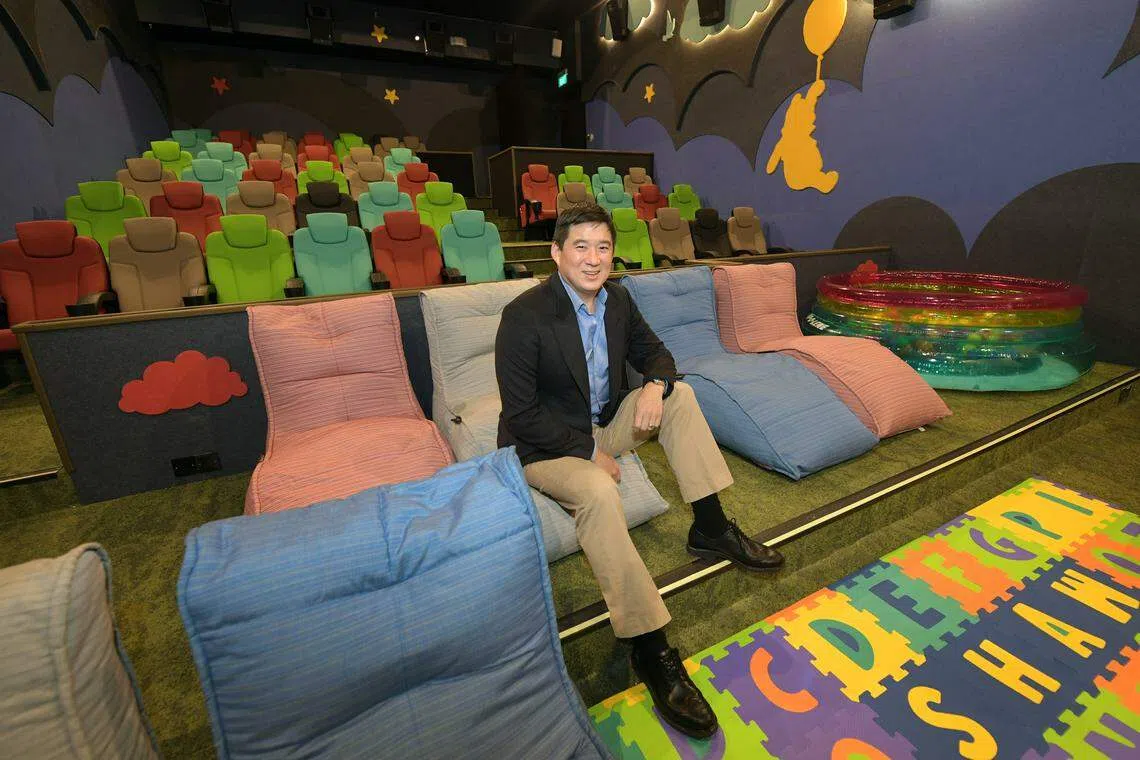
Meanwhile, the reception of The Projector’s premium seating concept has exceeded expectations, said Tan. This was launched last October at the operator’s pop-up in the former Cathay Cineplex. Projector X: Picturehouse Xtra offers lounge access, a free alcoholic beverage and a film screening in a 25-seater hall with plush recliners.
In December, the hall was also used for The Projector’s first Savour Cinema concept: screenings of black comedy The Menu, accompanied by a film-inspired six-course meal. At S$$79.90 per person, the screenings sold out within a day.
“It’s been interesting, because we saw that people were willing to spend a bit more per head for comfort, or better F&B,” said Tan. The next Savour Cinema offering is in the works.
Operators have increased their food and beverage offerings more generally. In February, GV brought bubble tea chain Wanpo Tea to GV Tampines; its Bugis+ outlet will feature a cafe serving Spanish-Mexican fusion cuisine.
F&B sales make up 30 per cent of revenue for boutique cinema EagleWings Cinematics, up from 18 per cent in 2019, said Julian Theng, founder of Eagle Wings group. Patrons can order food and drinks from full-service restaurant EagleWings Loft, to be served during the film.
“What we have noticed post-pandemic is more customers ordering full meals – starter, main, dessert – while catching a movie, as opposed to a light snack. We also noticed that guests like to order glasses of wine as well,” said Dr Theng.
EagleWings has tweaked dish presentation and portion sizes for ease of consumption in a dark cinema hall, and more than doubled its wine inventory since June.

Outside the cinema, mm2 Asia hopes to engage filmgoers through its non-fungible token (NFT) marketplace Metaviva, launched in January 2022. Last year, its subsidiary mm2 Entertainment – together with production company J Team – gave out free NFTs on Metaviva to buyers of advance tickets to local film Ah Girls Go Army.
“The film was a modest hit for the pandemic period, but NFTs certainly added to the hype,” said a mm2 Asia spokesperson. While “not specifically tied” to mm2 Asia’s cinema business, Metaviva will be “instrumental” in marketing the group’s films to audiences, they added.
The goal is for Metaviva to become a “curated entertainment community” with exclusive metaverse content and real-world fan events. “This will create a flywheel for our content creation teams to connect and engage with fans, which feeds back into the movies that get made.”
The Projector is “actively looking” at Web3 and the metaverse, said Tan: “It could be a loyalty programme. It could be a means of how people can support initiatives that we do, or a means of bringing creators and funders together.”
Lagging the region
Despite these efforts, Singapore’s cinema recovery lags those of its South-east Asia counterparts, said industry players. mm2 Asia has seen Malaysian audiences return “more readily to cinemas”, if only marginally.
Joyce Lee, managing director of distributor Encore Films, is most concerned about Singapore out of all her South-east Asian markets.
For instance, South Korean disaster film Emergency Declaration made S$750,000 in Singapore across a 12-week run last August – below her projections of at least S$1.1 million to S$1.2 million, which she believes the film would have made in pre-pandemic times. In contrast, Emergency Declaration did “really well” in Malaysia and Vietnam, with box-office takings outperforming her estimates.
In Lee’s view, cinemas in Singapore need to innovate further. She notes that Malaysia, Indonesia and Vietnam have 4DX and ScreenX screen formats – neither of which Singapore offers. The former complements on-screen visuals with motion seats and effects such as water, wind, fog, snow and scent; the latter delivers a 270-degree viewing experience.
“This gives audiences greater choice. In comparison, Singapore’s cinemas are much more conservative; the movie-going experience here is still very traditional,” Lee said. GV Bishan’s D-Box motion seats are the closest to 4DX, though without environmental effects.
4DX and ScreenX screenings typically contribute 5 to 8 per cent of Encore Films’ overall sales per film in each market.
Lim Teck, managing director of distributor Clover Films, sees a more fundamental reason for Singapore’s declining cinema scene: a lack of “strong” local content.
Elsewhere in the region, home-grown films such as Malaysian biopic Mat Kilau and Indonesian horror film Curse Of The Dancing Village smashed records upon their release in 2022, and are now the all-time highest-grossing Malaysian and Indonesian films, respectively.
SFC’s Tan recalls huge crowds at GV’s gala premieres in pre-pandemic times, attesting to the power of local films in drawing people to the cinema.
Said Lim: “There’s nothing that mobilises audiences more than good local content. Back in those days we had Money No Enough, 881... even last year’s Ajoomma, to a certain extent. But we don’t have enough of such films.”

Long live the cinema?
Still, industry players and watchers remain positive about the future of Singapore’s cinemas. They expect growth to be driven by their range of programming and provision of an experience that cannot be had at home.
Rather than cinema, the players hardest-hit by streaming have been home video, cable and free-to-air television operators, said Shaw.
“The threat from on-the-table and video-on-demand platforms is that there’s so much content to watch on them, that people have become really picky about what they watch in the cinema. It just means that we have to pick the films we want shown in our theatres more carefully.”
SFS’s Tan expects that consumers’ appetites will keep growing for a wider range of media – and cinemas must meet these demands. Alternative content has given people more reason to come to the theatre, as it “bundles the appeal of going out, with the appeal of better sound and bigger screens”.
“If cinema operators keep showing the same old thing, that’s not going to draw people. But if they can give people what they want to experience and enjoy, I believe our numbers can even go above pre-pandemic levels.”