Next change: As anchor tenants evolve, so must mall operators
Cinemas were once a crowd puller for shopping centres. The most popular malls were often also those with a box office – typically spanning the top floor like a crown jewel. More recently, however, it appears the silver screen has lost some of its appeal. How does this change the way mall operators try to draw the crowds?

Jude Chan

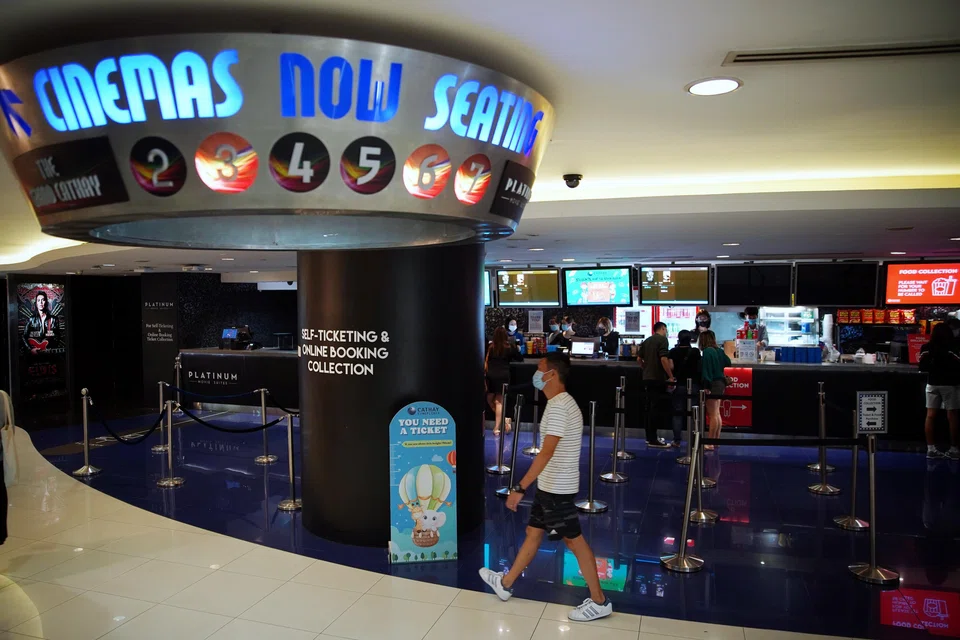



WHEN the curtain came down mid-last year on the iconic The Cathay Cineplex at Handy Road, something changed forever in the city-state’s landscape. One of Singapore’s oldest cinemas, in operation since 1939, The Cathay Cineplex hosted more than a few hot dates as the first air-conditioned theatre on the island.
Of course, there is still a market for cinemas. And it might be premature to herald the end times for film theatres.
But The Cathay Cineplex’s closure is a symbol of the declining attraction of cinemas within shopping centres. They are no longer a big draw for shoppers, and no longer a differentiator for mall operators.
“While cinemas still remain a relevant part of a mall, they are no longer an effective crowd puller compared to the past due to the growing popularity of streaming services,” said RHB analyst Vijay Natarajan.
The decline has been hastened somewhat by the pandemic, but goes back longer than that.

“Cinemas have seen slower demand as compared to five to 10 years ago,” said DBS analyst Geraldine Wong.
She points out that cinemas are no longer the sole platform for new film releases, with some movies now making their debuts on online streaming platforms such as Amazon Prime Video, Netflix and Disney+.
Nevertheless, Wong believes cinemas still act as important anchor tenants for retail malls and do manage to draw crowds at times.
“Cinema demand is still strong for blockbuster movies, especially within the first month of release or so,” she said.
Even if cinemas do eventually die out, the best mall operators will adapt to the change. After all, anchor tenants have been lost before thanks to changing consumer trends.
Wong noted a trend of department stores departing as anchor tenants for shopping malls over the past five years. These examples include the exit of Robinsons from Raffles City Shopping Centre and The Heeren.
“Department stores do not hold a strong appeal with the younger generation of shoppers, who prefer single-brand format stores that are better able to cater to a unique shopper or brand experience,” Wong said.
“This trade category of anchor tenants is also less compatible with the shift to online spending,” she added.
Greying of the silver screen?
Mainboard-listed film producer and distributor mm2 Asia , which operates the Cathay Cineplexes chain in Singapore, chalked up the closure of the long-serving cinema to a “cost rationalisation process for its cinema operations”.
Indeed, the closure does make business sense for the cinema operator.
The Cathay Building is a stone’s throw away from a Golden Village cinema located in the Plaza Singapura shopping mall.
And mm2 Asia operates another Cathay Cineplex outlet at Grange Road, which is barely 1.5 km away from the Cathay Building.
Meanwhile, the cinema business has slowed over the years – and taken a turn for the worse since the start of the Covid-19 pandemic.
Chang Long Jong, chief executive officer of mm2 Asia, said last year that the cinema’s closure came as “retail traffic demographics have changed” over recent years.
The cinema at the Cathay Building is not the only one to have been shuttered in recent times.
Filmgarde Cineplexes in early 2022 also announced the shutting down of two of its cinemas: at Bugis+ and Century Square.
Sherman Ong, head of cinema operations at Filmgarde, said then that the closures come amid a “general decline” in overall cinema attendance since 2013 – even as the number of screens and seating capacity increased over the same period.
Ong added that the decline was “accelerated and exacerbated” by the onset of pandemic precautions in 2020, which saw the halving of seating capacities to meet social-distancing regulations.
According to professional services firm PwC, the total number of global cinema admissions fell to 1.9 billion in 2020 – from 7.9 billion in the year before. Cinema revenues tumbled in tandem to US$12.7 billion, from US$45.2 billion in 2019.
PwC forecasts a rebound in global cinema revenues to record highs this year, but expects admission numbers will take a longer time to catch up to pre-pandemic levels.
Global cinema admissions are expected to rise by roughly 200 million each year from 7.1 billion in 2023 to hit 7.7 billion in 2026, according to PwC’s Global Entertainment & Media Outlook 2022–2026.
This means that despite an anticipated steady recovery in global cinema admissions, the number of box office tickets sold – even four years from now – is expected to fall short of the figure achieved in 2019.
“We are seeing the emergence of a global entertainment and media consumer base for the coming years that is younger, more digital and more into streaming and gaming than the current consumer population,” said Werner Ballhaus, global entertainment and media industry leader at PwC Germany.
“This is shaping the future of the industry,” he added.
Mm2 Asia, Singapore’s main stock market proxy for the cinema business, reported a 71 per cent rise in revenue to S$79 million for the first half of FY2023 (the company has a March year-end), from S$46.3 million in the year-ago period.
Revenue from its cinema segment jumped to S$26.7 million from S$10.1 million, thanks to the lifting of Covid-19 related seating capacity restrictions.
The jump in revenue was not enough to return the company to profitability, though: mm2 Asia’s net loss for H1 FY2023 was S$5.4 million, compared with a net loss of S$11.4 million in H1 FY2022.
“Going forward, we expect to continue the upward trend; with strong demand for cinema entertainment during the holiday season through to Chinese New Year,” said mm2 Asia executive chairman Melvin Ang in the group’s last results announcement in November 2022.
For comparison, for its H1 FY2020 ended September 2019 – before the pandemic – the group raked in earnings of S$9.2 million. Group revenue stood at S$117.4 million for the six-month period, with its cinema business contributing S$49.5 million.
The bigger picture
Hypothetically, market observers said, it might not be a bad thing for mall operators to lose cinemas and large department stores as their anchor tenants – from a rent perspective, at least.
As these businesses occupy a larger space, they could get competitively lower rental rates from the mall operators.
Splitting this space up could therefore give retail landlords higher overall rents, while also giving consumers more tenants to choose from.
“Key anchor tenant crowd pullers these days tend to be not one, but a good mix of discount store chains; popular food and beverage (F&B) chains; fitness and sports chains; beauty, health and wellness operators; and educational sector players,” said RHB’s Natarajan.

Some of the popular anchor tenants currently include brands such as Japanese supermarket Don Don Donki; fast food chains Shake Shack and Five Guys; and sporting goods store Decathlon, Natarajan said. But he warned that mall operators need to pay attention as “popularity keeps changing with time”.
“With the rapidly changing retail dynamics and threat of e-commerce, mall curation, differentiation and customisation to the catchment population are becoming more and more pertinent in order to stay relevant,” Natarajan added.
DBS’ Wong agreed that it has become more important for mall operators to keep up with consumer preferences and trends that remain relevant – and stay one step ahead of online retail trends.
“Brands can fade and go in the matter of months, with consumers becoming more brand conscious and selective in their consumption choices,” she said. “Mall operators will do well to follow consumer trends and preferences (in order) to remain relevant to shoppers and consumption trends.”
Curating experiences
Real estate players such as CapitaLand are paying heed to the advice – and warnings.
Tapping its extensive network of malls, the group said it continues to draw retailers looking to launch their flagship stores or new-to-market concepts in Singapore. Last year, CapitaLand malls added 270 new stores from diverse trade categories, it added.
“Experiential retail is key to attracting and engaging shoppers in a post-pandemic world, and this is part of a holistic strategy that retailers are increasingly adopting,” said a CapitaLand Investment spokesperson.
“We have been actively positioning our downtown properties across our retail portfolio to stay ahead of the curve as we welcome the return of more shoppers and tourists with experiential lifestyle concepts, diverse and quality retail and dining offerings, and vibrant community events,” the spokesperson added.
The CapitaLand group said there are currently eight CapitaLand malls with cinemas. It added that the proportion of cinemas within its shopping mall portfolio has remained fairly stable through the years.
One of the major projects CapitaLand is embarking on is the transformation of Clarke Quay into “a day-and-night destination with a wide range of lifestyle and F&B offerings”. The enhanced development, called CQ @ Clarke Quay, is expected to be completed in the third quarter of this year.
CapitaLand Investment is the sponsor of CapitaLand Integrated Commercial Trust (CICT), a diversified real estate investment trust (Reit) whose assets include Bugis Junction, Bugis+, Plaza Singapura and Raffles City Singapore.
Real estate peer Frasers Property (FPL), which is the sponsor of Frasers Centrepoint Trust (FCT), said there were cinemas at about a quarter of its malls here.
Described as the “largest suburban retail landlord” in Singapore, FCT owns heartland malls including Waterway Point, Causeway Point, Century Square and Tiong Bahru Plaza.
FPL and FCT in January teamed up to acquire a 50 per cent stake in suburban mall Nex from a subsidiary of NTUC unit Mercatus Co-operative for S$652.5 million.
“Shoppers are constantly seeking interesting, novel retail and dining concepts as well as recreational and entertainment activities, evolving the role that shopping malls play today,” said a spokesperson from Frasers Property Retail.
“In response to the changing demographics and needs of the local community, we constantly rejuvenate our spaces, as well as curate and refresh our tenant mix,” the spokesperson added.
The group said it added more than 70 retail brands across its malls last year that were new to its portfolio.
Frasers Property Retail is also changing the mix of its malls to reflect community needs.
“Our malls encompass community-centric spatial designs, engaging mall activities and communal spaces such as public libraries, themed playgrounds, and green podiums,” the spokesperson said.
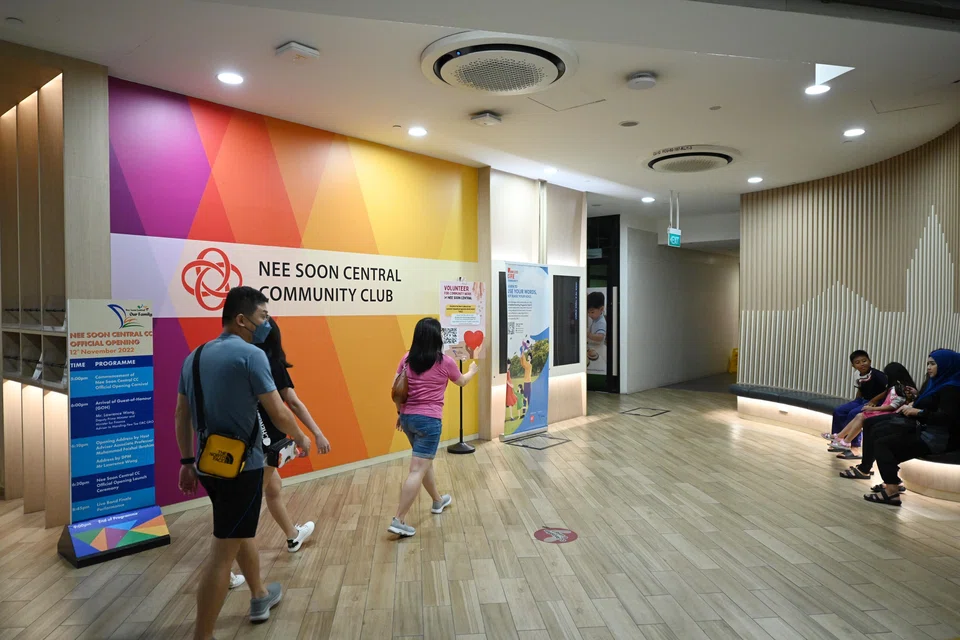
“For instance, our Northpoint City houses Singapore’s first community club to be located in a shopping mall. It is also the first to pilot a service centre that offers over 200 government services, providing more convenience to the community.”
While these community services centres and communal spaces are not seen as strong income generators, market watchers say they are anchor tenants of a different kind.
These community-centric activities help to draw footfall traffic to the malls – which is what cinemas used to do.
They won’t play host to as many hot dates, but the new malls are still meeting places.