Fed chair Kevin Warsh’s agenda clashes with reality
Inflation and political scrutiny are holding him in check
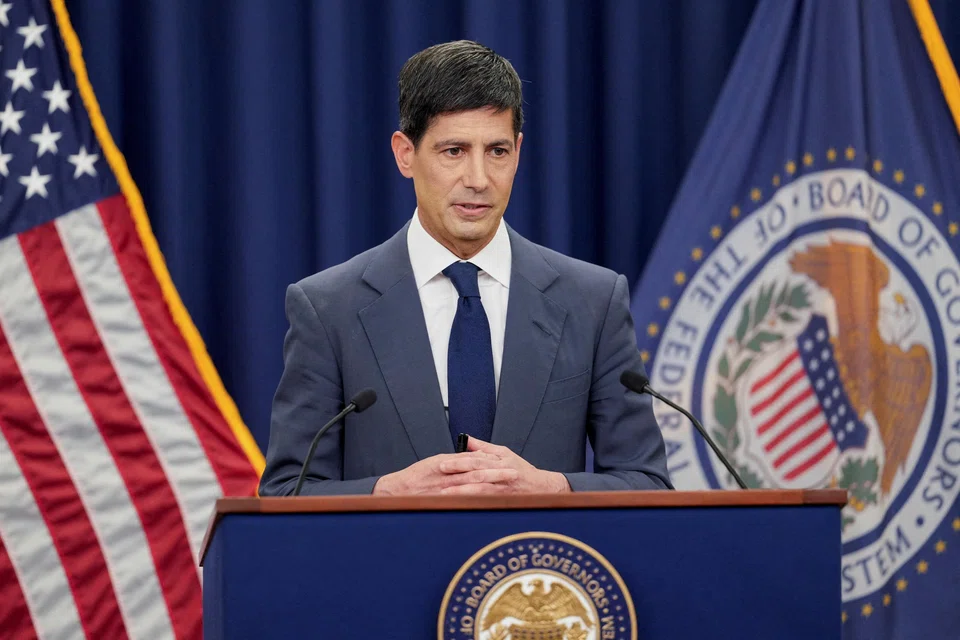
IT HAS been nearly two months since Kevin Warsh took office as the Federal Reserve’s 17th chairman. Since assuming the position, he has helmed his inaugural Federal Open Markets Committee meeting and spoken publicly for the first time at the European Central Bank’s (ECB) Forum on Central Banking.
The events have illuminated the tightrope the Fed chair has to walk, which was foreshadowed by his 54-45 confirmation vote in the Senate – the narrowest in US history.
Warsh arrived in Washington with a long list of things he wanted to change about how the Fed operates.
Six weeks in, reality is proving far more stubborn than his ambitions.
A dovish reputation meets inflation
Warsh’s appointment was widely read as a win for US President Donald Trump, who spent years attacking former Fed chair Jerome Powell for moving too slowly on rate cuts.
Markets assumed that Warsh, who had argued that the US economy was held back by “bad monetary policies” and needed to get back to basics, would tilt dovish and bring rates down from the 3.5 to 3.75 per cent range.
Inflation had other plans. The conflict in the Middle East pushed May’s inflation figure, as measured by the Fed’s preferred personal consumption expenditures index, to the highest since 2023.
The result is almost the opposite of what Warsh’s backers expected: futures markets now price in essentially no chance of a rate cut in 2026, and there is a real possibility his first major move as chair could be a hike. For a chairman who built his reputation on wanting lower rates, that would be a strikingly ironic start.
At his first press conference on Jun 17, Warsh emphasised “price stability” over any commitment to easing, and investors read the tone as more hawkish than they’d bet on. Two-year Treasury yields jumped in response.
In early July, he struck a similar note at the ECB forum, held in Sintra, Portugal, telling central bankers “we’ve all looked around, and we’ve seen that prices are too high”.
Independence under scrutiny
No incoming Fed chair in modern memory has faced more scrutiny over political independence than Warsh.
He was asked point-blank at his confirmation hearing whether he’d be a “sock puppet” for the president, an accusation he denied vigorously, insisting he’d never promised Trump rate cuts in exchange for the nomination.
That scepticism has not gone away just because he is in the job. Every rate decision he makes will now be read through a political lens: cut too fast, and it looks like he is doing Trump’s bidding; hold or hike, and he risks alienating the White House that put him there.
It is a bind that has less to do with economics than with the perception of economics, and there’s no clean way out of it.
Warsh faces an additional legal wrinkle: at the ECB forum, the new chair was asked directly about the Supreme Court case keeping Fed governor Lisa Cook in her seat despite Trump’s attempt to remove her.
His answer, “I believe in the rule of law”, and that the Fed would follow the court’s decision, was measured, but it underscores how entangled the Fed’s independence has become with the administration that installed its new chairman.
An unusual roommate
Perhaps the strangest structural challenge Warsh faces has nothing to do with monetary policy. Powell, his predecessor, announced he is staying on the Board of Governors, meaning he keeps his vote on rate policy even after handing over the gavel.
That makes Warsh the first new Fed chair in more than 70 years to take over with his immediate predecessor still sitting on the committee.
Powell has said he will keep a low profile, but any comments he does make will carry outsized weight, given his stature.
Warsh now has to build consensus, and his own authority, in a room that includes the man he replaced.
A slow-moving reform agenda
Beyond rates, Warsh has floated a broader institutional shake-up. He wants to shrink the Fed’s still-bloated balance sheet, change how the Fed communicates with markets and push back against “forward guidance”.
That’s the practice of signalling future rate moves, which he and a growing chorus of global central bankers – including the ECB’s Christine Lagarde and the Bank of England’s Andrew Bailey – now say boxed them in during the last rate-hike cycle.
He has also launched five internal task forces to study various functions of the Fed, with an eye towards using new technology and artificial intelligence to get a more real-time read on the economy. It is a genuinely novel bet; Warsh has argued that if AI meaningfully lifts productivity, it could open room for rate cuts without stoking inflation.
But task forces take time, and Warsh’s own aspiration is a nine-to-12-month runway before that shows results. That’s a long horizon for a chairman under constant political pressure for faster action.
Structural reform inside a 113-year-old institution with deep procedural traditions rarely moves at the pace an outsider wants. Warsh may find that changing how the Fed talks to markets, or how much of its balance sheet it holds, requires more internal buy-in than changing where interest rates sit.
A different Warsh in practice
Warsh took the job as the market’s preferred dove, promising a break from what he saw as Powell-era drift.
Six weeks later, he is boxed in by inflation that won’t cooperate, a sceptical Senate and a market watching for any sign of political capture, a former boss still voting in the room and a reform agenda that will likely take years, not months, to bear out. None of that makes him likely to fail, but it does mean the version of the Warsh Fed that markets priced in on his nomination looks very different from the one now taking shape in practice.