

As the Fed hikes interest rates, S-Reits sector could be overdue for consolidation
The case for fewer, bigger trusts keeps getting stronger, with interest rates going up and most S-Reits still trading below book

[SINGAPORE] Walk into any hawker centre at lunch and you will see the same thing: Two or three stalls have queues snaking past the drinks stand; the rest have stallholders staring at their phones.
The busy ones can raise prices and open a second outlet. The quiet ones hang on, dishing up one plate at a time.
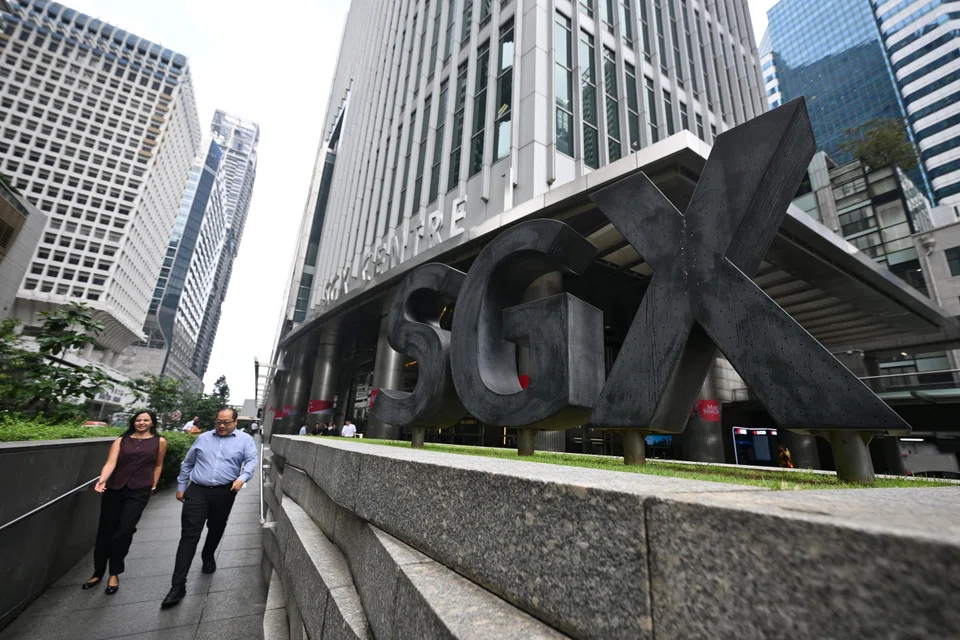
The Singapore-listed real estate investment trust (S-Reit) market looks a lot like this. There are 39 active Reits on the Singapore Exchange, worth US$76.7 billion in total, noted Cushman & Wakefield’s Asia Reit Market Insight report released on Monday (Sep 21).
This makes Singapore the second-largest Reit market in Asia, behind only Japan.
But now, the landlord has raised the rent.
Last week, the US Federal Reserve lifted its key rate by a quarter point to between 3.75 and 4 per cent, in the first increase since 2023. DBS economists expect one more in December and another in March 2027.
This matters more than it appears. S-Reits have been on a shopping spree, with 21 deals worth S$8.8 billion in 2025 and another 11 worth more than S$6.3 billion as at April 2026, Cushman & Wakefield noted. The global real estate services firm puts this down mainly to cheaper money and investors coming back.
But the easy money is leaving the building.
And this brings us to the elephant in the hawker centre: Are there simply too many S-Reits? I think there are.
But the more interesting question is why nobody is doing anything about it.
What the numbers show
The iEdge S-Reit index ended March 2026 just 2 per cent above its last close of 2024. Add back distributions, and the return stood at about 9 per cent over 15 months.
Tokyo’s Reit index gained 11.8 per cent over the same period, and Hong Kong’s rose 10 per cent. Singapore’s own Straits Times Index (STI) climbed 29 per cent, or 35.9 per cent with dividends reinvested.
This year, S-Reits have lost 6.6 per cent on a total-return basis. The STI has returned 27.7 per cent.
Cushman & Wakefield says the Singapore Reit market still grew in value – by about 14 per cent. Since prices barely moved, much of that could have come from new listings and new units. A firmer Singdollar may also have helped, since the market counts in US dollars.
But even as the sector has grown in size, unitholders collected their distributions and little else.
More worrying is that the average S-Reit was trading at 0.77 times book value, going by SGX data as at end-June. More than three-quarters of S-Reits trade below book; only nine trade at or above it.
This means that for every dollar of property an S-Reit owns, the market pays only 77 cents.
Now, look at the head count. Three new Reits listed during the period: NTT DC Reit, Centurion Accommodation Reit and UI Boustead Reit. Three left: Paragon Reit and Frasers Hospitality Trust were taken private, and Dasin Retail Trust was suspended.
So some stalls changed hands, but the number stayed at 39 – and the hawker centre was just as crowded.
Why does that matter? Because being small and cheap is now a trap.
Bigger is better?
A Reit grows by buying buildings, paid for with debt and new units. When the units trade at 77 cents on the dollar, issuing them hands value away to whoever takes them.
So the small Reit does not buy. Without new assets, distributions stay flat. And with flat distributions, the discount sticks. Round and round it goes.
Scale is the way out. It is no cure on its own, but a bigger trust borrows more cheaply, trades more often and gets into the indices that passive funds must buy. Bigger trusts are also the ones analysts cover. A trust worth a few hundred million dollars is too small for most institutions to touch without owning an awkward slice of it.
Higher rates raise the bar. In a report this week, DBS Group Research lifted its weighted average cost of capital assumptions by 30 to 50 basis points, and cut its S-Reit target prices by about 9.6 per cent on average. It said the cuts come from the higher return investors now want, and not from a drop in earnings.
Either way, a Reit that must clear a higher hurdle needs cheaper funding, and size is the cheapest way to get it.
To be fair, the sector is in decent shape. DBS notes that about three-quarters of S-Reit borrowings are fixed or hedged, and that only about a fifth of total debt matures between the second half of this year and the end of 2027.
Sora, at 1.3 to 1.5 per cent, sits well below US rates. It has kept its forecast for distribution growth of 3 per cent a year through 2028.
SGX market strategist Geoff Howie makes a similar point, arguing that many S-Reits used the lean years well and are now back on the front foot.
Both are right, and that is rather the problem. No crisis will force the issue. The squeeze is slow, which means consolidation has to be chosen.
The consolidation conundrum
So why do the quieter stalls not simply merge?
Most S-Reits are run by an external manager owned by the sponsor, and the manager earns a fee that is a slice of the assets it runs. A merger folds one manager into another, and one set of fees disappears.
There is also the pipeline to protect, since a sponsor’s Reit is a ready buyer for the buildings the sponsor builds.
S-Reits have merged before, but both big deals were family affairs. CapitaLand Mall Trust and CapitaLand Commercial Trust combined in 2020, and Mapletree Commercial Trust and Mapletree North Asia Commercial Trust followed in 2022. The same sponsors sat on both sides, and the fees stayed in the house.
What we get across sponsors is consolidation by the back door. Paragon Reit was taken private by Cuscaden Peak at a 7.1 per cent premium to adjusted net asset value. CapitaLand Integrated Commercial Trust then raised S$750 million, partly to buy Paragon.
The asset moved to the stall with the queue. That route needs a rich sponsor and a big Reit waiting next door, and most smaller S-Reits have neither.
What would move the needle? Sponsors could waive their fees on a merger. Fees could be tied to growth in distributions per unit rather than to asset size. Independent directors and large unit holders could push harder.
None of this needs new rules, but it does need someone to go first.
The rent is going up and the lunch crowd is thin. A stallholder paid whether there is a queue or not will not pull down his own signboard. Someone else will have to do it for him.
The only question is who.
TRENDING NOW

Once staunchly pro-China, Malaysian Chinese businesses are now distancing themselves from Beijing

Looking beyond looming CEO succession, should UOB potentially pursue a transformative merger?

Could stablecoins be the future of money?

Grab CEO’s wife Chloe Tong on life with Anthony Tan and finding her purpose

