

From Flappy Bird to e-sports: Can Vietnam’s gaming scene level up?
The country’s mobile games are second only to China’s for global downloads, yet most are lower-value casual games

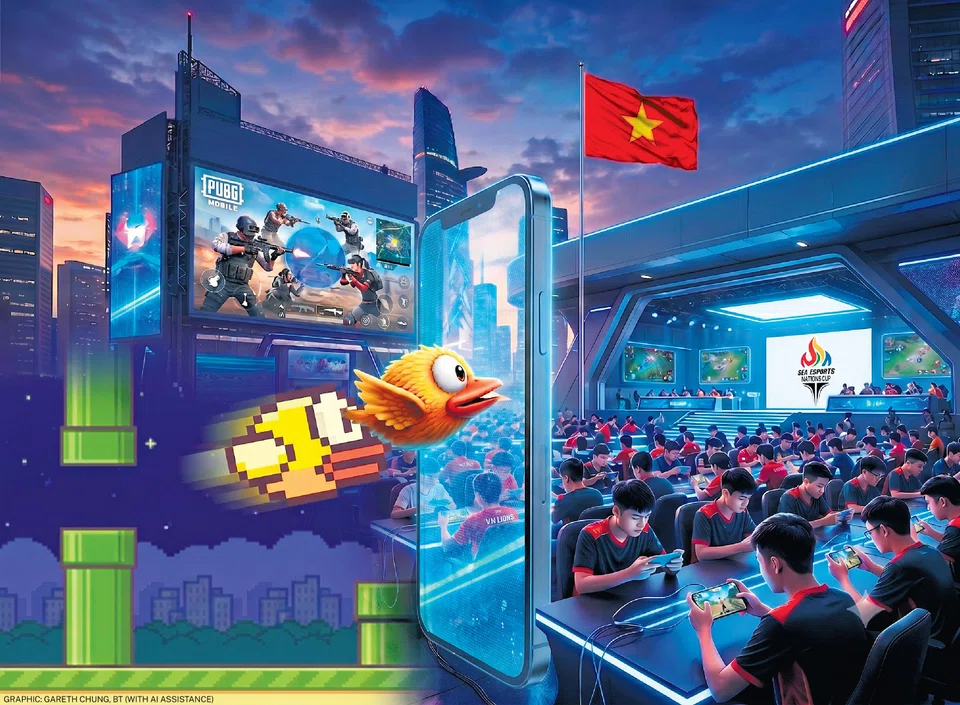
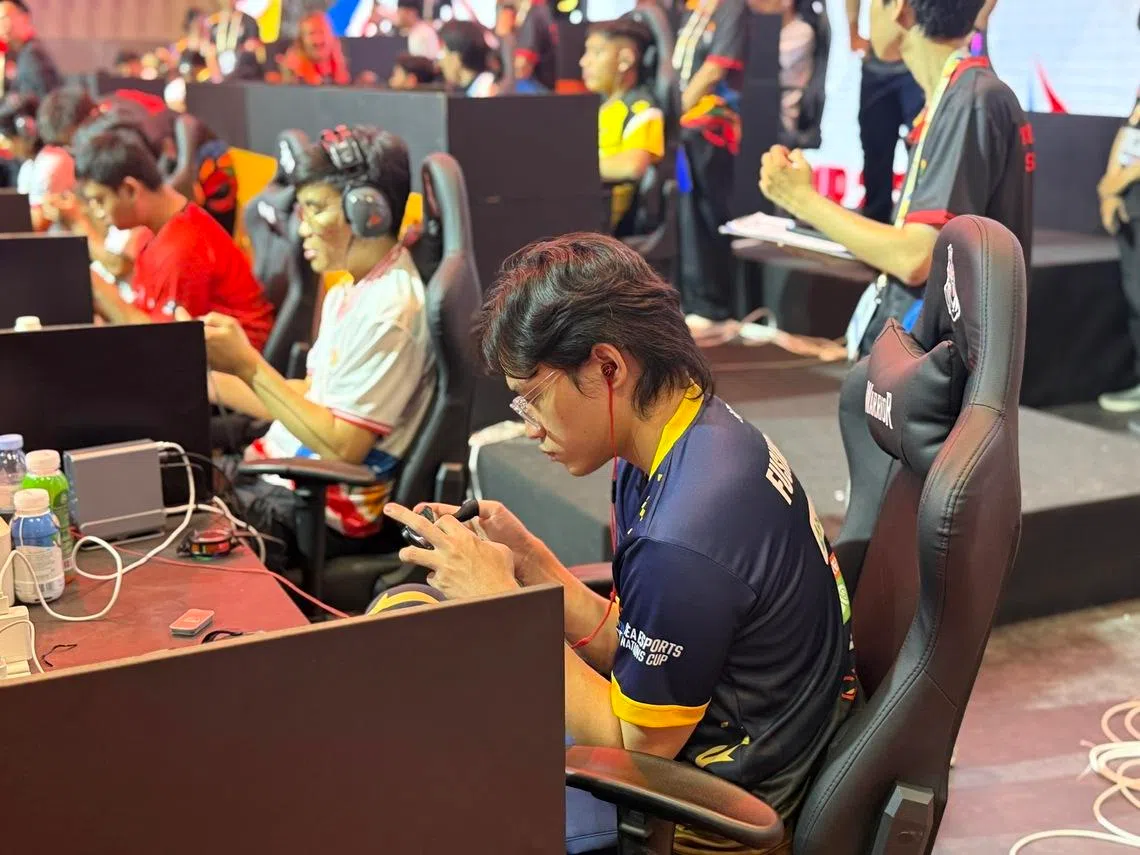
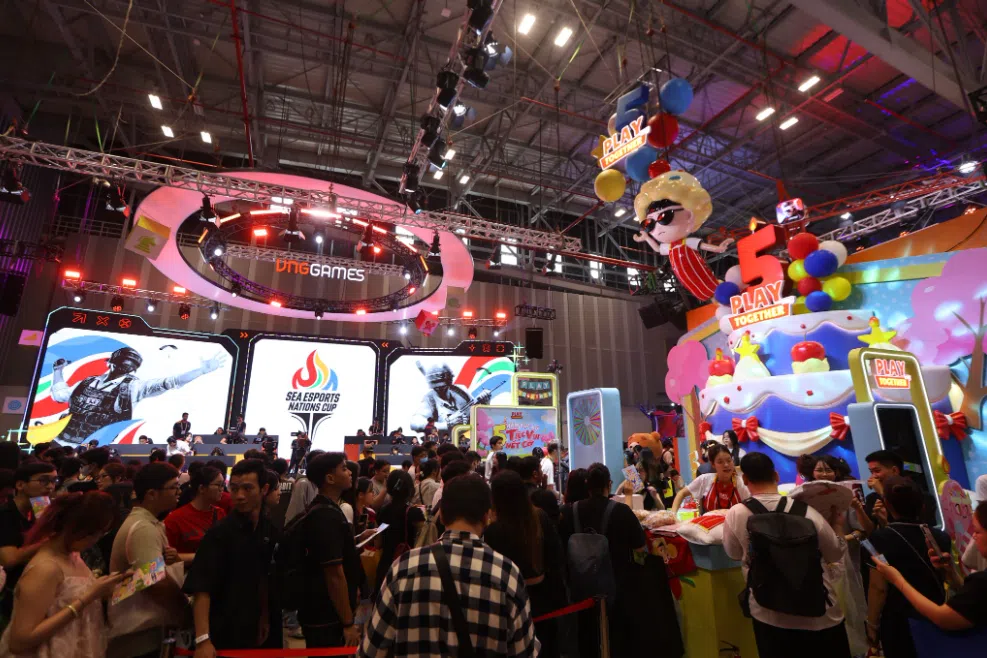
[HO CHI MINH CITY] Last month, in a colourful convention hall adorned with giant cut-outs and models of gaming characters, e-sports teams from across South-east Asia sat under bright stage lights, competing before a packed audience and live-stream viewers across the region.
However, unlike at tournaments in East Asia, Europe or North America, where teams have flashy computer rigs, most players were on their phones.
The inaugural SEA Esports Nations Cup, held in Ho Chi Minh City in May as part of gaming festival Vietnam GameVerse 2026, demonstrates both the region’s mobile-first nature and Vietnam’s push to become a gaming power.
E-sports scenes elsewhere tend to be dominated by PC and console franchises. South-east Asia’s e-sports ecosystem is overwhelmingly mobile-based, with smartphones being the device of choice for the region’s 290 million gamers.
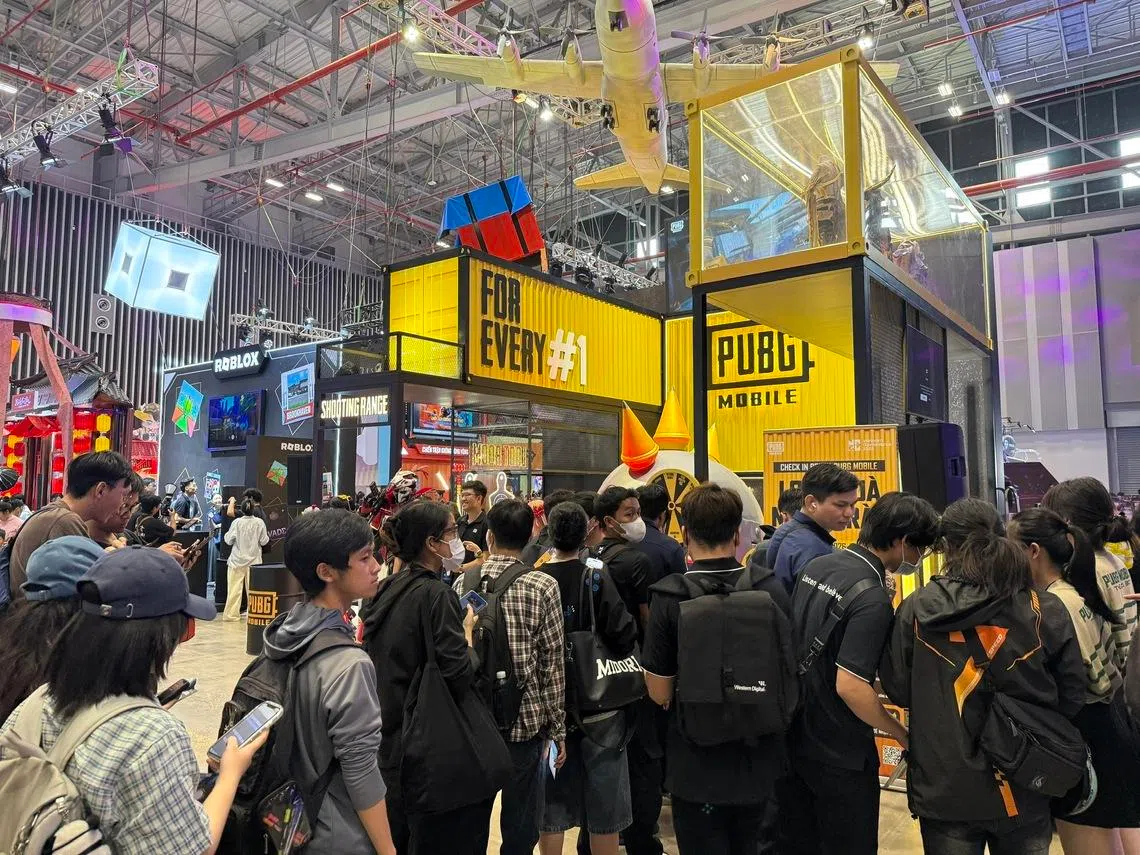
Four out of the five games in the SEA Esports Nations Cup were mobile titles: PUBG Mobile, Crossfire: Legends, Total Football and Teamfight Tactics.
These games were developed in China, South Korea and the US. But the Southeast Asia Esports Federation (SEAEF), which initiated the regional tournament, hopes to showcase locally developed titles some day.
“Mobile e-sports are the most popular in South-east Asia,” says Ng Chong Geng, president of the Singapore Esports Association and vice-president of SEAEF.
“Let’s say a new title from Vietnam or the Philippines emerges and we believe it has potential. We want to help promote it (through the tournament) so that the rest of the world can discover it.”
For now, most of the region’s e-sports ecosystem still revolves around international titles developed elsewhere, particularly mobile games from Chinese companies.
But Ng adds: “I do believe that we will have game developers from South-east Asia that can stand on the world stage.”
That ambition is shared by Vietnam, which has become one of the world’s largest mobile game producers.
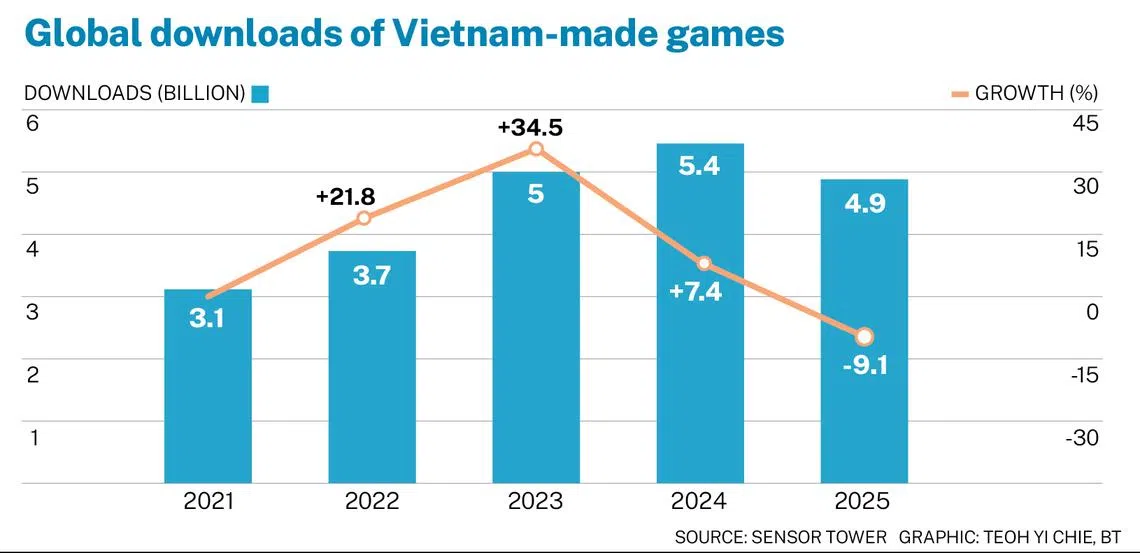
According to a GameGeek report citing Sensor Tower data, Vietnam-developed mobile games recorded 4.9 billion downloads globally in 2025, second only to China’s 5.3 billion downloads.
The domestic market accounts for just 5.5 per cent of those downloads, with the rest of the demand coming from overseas users, particularly those in developing markets such as India, Brazil and Indonesia.
But Vietnam has not created any games worthy of being included in e-sports thus far. Although a few developers are working on “mid-core” and “hardcore” games that could some day feature in tournaments, these are not yet the focus of the local industry.
Instead, the country is a global leader in “casual” genres such as simulation, puzzle and arcade games. These are a notch above “hyper-casual” titles – lightweight, easy-to-play games built around simple mechanics, and a segment once defined by Vietnam’s breakout hit Flappy Bird more than a decade ago.
Together, these three casual categories saw about 3.3 billion downloads in 2025. This accounted for two-thirds of the total downloads of Vietnam-developed games and nearly 11 per cent of global mobile game downloads.
From outsourcing to global scale
Vietnam’s gaming story began modestly.
In the early 2000s, much of South-east Asia’s role in the global gaming industry revolved around outsourced work, particularly artwork production and technical support.
However, the rapid proliferation of smartphones around 2010 radically altered the economics of game development, lowering barriers to entry and allowing small studios to reach global audiences through app stores.
Then came Flappy Bird. The deceptively simple tap-to-flap mobile game created by Vietnamese developer Nguyen Ha Dong became a global sensation almost overnight in early 2014. At its peak, the viral indie game generated around US$50,000 per day in advertising revenue.
Dong removed the game from app stores later that year, saying that he felt it had become too addictive and that he was uncomfortable with its impact.

Nonetheless, Flappy Bird’s success transformed perceptions within the local industry, as it proved that small Vietnamese teams could create products capable of reaching worldwide audiences.
The agility of small developers was especially valuable in the pandemic-era gaming boom between 2020 and 2022, when demand for digital entertainment surged globally.
Backed by strong distribution capabilities, Vietnam-made mobile games recorded a nearly 22 per cent rise in downloads in 2022 and a further growth of about 35 per cent in 2023.
GameGeek estimates that Vietnam has 210 active gaming studios, concentrated in Hanoi and Ho Chi Minh City, though the real number is likely to be much higher once thousands of indie developers are included.
About 42 per cent operate with lean teams of 15 to 50 employees. This makes Vietnam particularly competitive in casual and hyper-casual gaming, with lightweight titles designed for rapid global distribution and monetised largely through advertising.
“Vietnamese studios are often willing to accept lower margins because production costs here remain highly competitive,” notes Vu Minh Hanh, chief executive of GameGeek Asia and Replay, a venture builder for mobile game studios.
Many studios are comfortable with returns of around 10 to 15 per cent, whereas global ones often expect more than 30 per cent. “That’s why Vietnam developers rely on scale, producing games in high volumes to offset thinner margins.”
Limits of hyper-casual success
While a lot of Vietnam’s success so far has come from hyper-casual games, the country cannot rely on this segment forever, say industry watchers.
These lightweight titles suffer from short life cycles and high user churn. Generative artificial intelligence is also making hyper-casual game development far more crowded and commoditised.
“You’re going to see so much churn and AI slop on the market,” says SEAEF’s Ng. “The hyper-casual market will have trouble... The industry is moving away from hyper-casuals.”
In other segments, however, AI may help to level the playing field. “Everyone is starting from zero again with the emergence of AI,” adds Ng. “AI will make the development of more complicated games cheaper.”
In its report, GameGeek notes that Vietnamese studios remain strong in execution but are weaker in product definition, the development of original intellectual property (IP) and long-term live operations.
Around 40 per cent of founders come from programming backgrounds, while relatively few come from game design. This contributes to an imbalance between technical execution and creative direction.
But the industry is evolving. GameGeek sees it as having entered a “selection” phase in 2025, with the market shifting from quantity to depth.
Nearly half of Vietnamese studios have more than 50 staff, indicating a shift away from small informal groups towards organisations capable of managing multiple projects and long-term development cycles.
More than 70 per cent of studios have moved away from pure ad-based monetisation towards in-app purchases (IAP) or hybrid revenue models. Vietnam’s IAP revenue surged 83 per cent in 2025, marking the fastest growth rate in recent years.
Development cycles are also lengthening. Casual games that previously took one to two months to produce now require three to five months, while mid-core titles can take a year or longer.
That reflects a growing emphasis on long-term operations, game economies and player retention rather than rapid-fire releases, says GameGeek.
“Today, many Vietnamese games maintain users for years through continuous content updates and much more sophisticated in-app purchase systems,” notes La Xuan Thang, head of online game publishing at VNGGames, which is the gaming arm of tech group VNG and the country’s largest game publisher.
“Quantitative change eventually leads to qualitative change.”
The fall of the first domino
Around 2020 to 2021, Vietnam-made Web-based game Axie Infinity led a “play-to-earn” boom that attracted investors to the country. In these games, players could mint cryptocurrencies and trade in-game assets.
The model lost momentum from mid-2022 as crypto markets cooled.
Instead, venture-capital (VC) firms are now looking at Vietnam’s maturing mobile game industry.
“Vietnam’s single hardest-to-replicate advantage in mobile casual gaming is its exceptional development agility,” said Anel Ceman, senior vice-president of mobile casual games at South Korean gaming giant NCSoft, in an interview with Gamesforum earlier this year.
In late 2025, NCSoft acquired a 67 per cent stake in Singapore-based Indygo Group – parent company of Vietnam-based casual game developer Lihuhu – for US$103.8 million, one of the largest gaming acquisitions involving a Vietnam-linked studio.

Investor attention has picked up following NCSoft’s deal.
At Gamesforum’s Mobile Executive Summit in Ho Chi Minh City on May 12, Bitkraft Ventures partner Anuj Tandon said: “I feel like this was the first domino to fall. My phone has been ringing ever since, because all the VCs are trying to get into Vietnam.”
GameGeek Asia’s Hanh tells The Business Times that from 2025, a new wave of interest from global VC firms has begun flowing into Vietnam’s gaming industry.
One key driver, she notes, is spillover from markets such as Turkey, a close competitor about five years ahead of Vietnam, with a similar mobile-first trajectory.
In Turkey, VCs have been a major catalyst for rapid industry growth. The country is now Europe’s biggest mobile gaming production hub.
It is expected to generate more than US$3.3 billion in gaming revenue in 2025, with a projected US$4.48 billion by 2029, according to a report by iGaming Today and Imarc Group.
In comparison, TikTok and Sensor Tower estimate that Vietnam’s gaming industry reached about US$1.7 billion in revenue in 2025, and forecast annual growth of 9.8 per cent to reach US$2.42 billion by 2029.
“When other markets become more mature and saturated, with valuations starting to rise, investors naturally begin to look more towards emerging markets like Vietnam – especially when a rising star appears,” says Hanh.
In Vietnam, VC capital has so far flowed mainly into casual game developers, she notes.
Beyond casual games
However, investors are also looking for studios “with the ability to build sustainable gaming businesses, operate products over the long term and develop valuable IP”, she adds.
Her own company, Replay, focuses on early-stage mobile game studios. Most opportunities come from casual and hybrid-casual teams, where Vietnam has strong competitive advantages, she notes.
But she points out: “What we value most is still the quality of the founding team, its product-development capability and the potential to build studios that can scale globally.”
At Gamesforum’s event in Ho Chi Minh City, Slovakia-based mobile gaming consultant Jakub Remiar noted Vietnam’s strength in creating lightweight games, saying: “It’s not a bad strategy – it’s perfectly investable.
“But the premiums that you get from an investment and exit perspective come from building long-term IPs.”
Such assets give studios “real scalability of revenue”, and attract acquirers as well as larger pools of private equity capital.
Producing e-sports-scale titles, however, is a very different challenge from succeeding in the casual segment.
E-sports games are often in the AAA segment: competitive titles requiring significantly larger investments, longer development cycles, sophisticated server infrastructure and complex live-service operations.
“Vietnamese studios have not yet fully accumulated all of these capabilities,” says VNGGames’ Thang.
“But every journey takes time and happens step by step,” he adds. “I believe one day Vietnamese studios will reach that peak.”
Industry observers note that the number of truly investable companies remains limited.
Hanh says that founders may be unfamiliar with raising VC funding, having built their companies without intending to scale or use external capital. Many studios also lack structured financial and corporate systems.
Even so, Tandon remained “super bullish” on Vietnam’s long-term potential, saying at the event: “At Bitkraft, we have long believed that the geographic centre of gravity in gaming is shifting. The best studios of the next decade will not all come from the same cities they came from in the last one.”
E-sports to develop the ecosystem
The SEA Esports Nations Cup organisers see e-sports as playing a central role in helping Vietnam and South-east Asia build a broader gaming ecosystem.
The federation is exploring ways to integrate e-sports more deeply into youth and entertainment culture as a way to draw wider audiences.
“E-sports, you can see it as a form of marketing for the game,” says SEAEF’s Ng. “It also helps anchor events and get people interested in other parts of gaming culture.”
He adds: “If I was to be a bit more ambitious, I would say we would like to bring e-sports events up to the level of Formula One.”
The federation is also working to professionalise e-sports governance across the region. This involves building accreditation systems for coaches and referees, as well as strengthening support structures for athletes.
One of the goals, says Ng, is to develop more figures such as South Korean e-sports legend Lee Sang-hyeok, better known as Faker. Earlier this year, he became the first e-sports athlete to receive South Korea’s highest sports honour.

“When people can say, ‘I’m not just a gamer, I’m an athlete; I’ve won a gold medal’, there is real value and pride in that,” adds Ng. “That is the importance of e-sports.”
“E-sports needs gaming, and gaming needs e-sports – they act to draw (together) their own crowds.”
TRENDING NOW

Things to know about DBS’ incoming chairman Anthony Lim

DBS eyes prime brokerage business as Q3 profit falls 5% on weaker trading income

Royal Group and Sunset Hospitality abandon plans to open Casa Mett hotel off Orchard Road

George Yeo adds 100,000 Wilmar shares at S$2.97 apiece, taking stake to over 1 million shares

