

The fog of the Iran war
For Asian businesses, the sharp pain from higher energy prices cannot be avoided, but scarring and worse trauma can be prevented
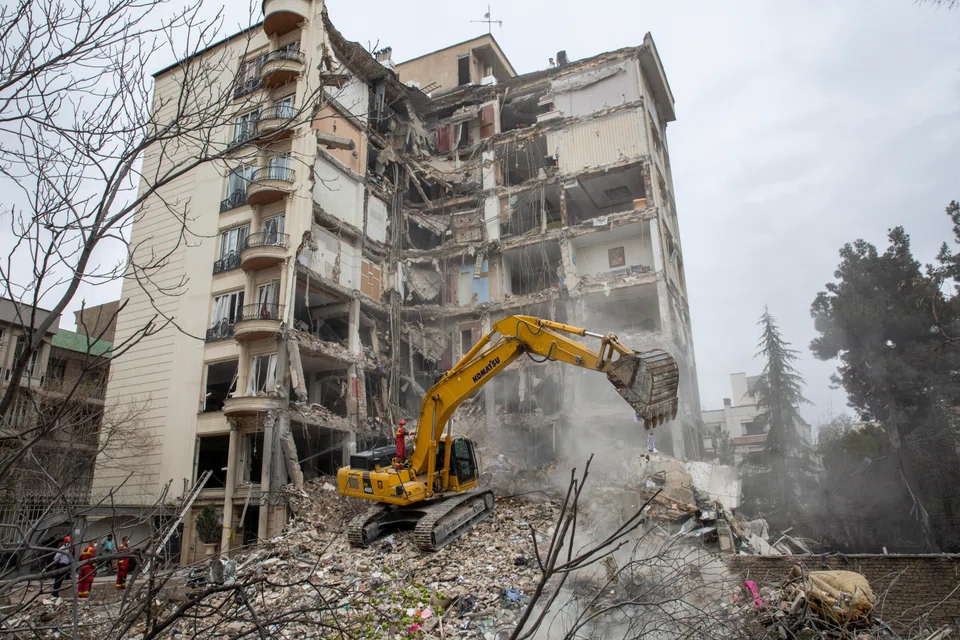
MOST were surprised by the US-Israel war on Iran and did not foresee its multiple and widespread impacts. US President Donald Trump, while bellicose, railed against “forever” wars in the Middle East and weaponised geo-economics.
After decades of sanctions, Iran seemed isolated. Yet, oil and energy prices have risen sharply, and spectres of inflation and uncertainty haunt the outlook for markets.
Many are scrambling for answers. Expert opinions are volleyed at rates almost matching missiles and drones. Entering the war’s fourth week, Washington’s message remains mixed regarding whether the campaign will intensify or a decisive military advantage has already been secured.
Trying to predict what happens next seems to be a question of reading Trump’s mind – and unpredictability is his trademark. Nevertheless, a number of factors offer some context for rational decision-making.
The fog descends
The first is that war often does not conform to rationality. Great effort is needed to avoid the impulse to shoot first and aim later.
Back in 1991, Americans led war in the Middle East as a last resort and used “overwhelming force”. Articulated by their chairman of the Joint Chiefs of Staff, Colin Powell, the doctrine minimised casualties, maintained public support, and achieved a clear and quick win.
'%3e%3cpath%20d='M12.1475%2025.5262C13.7713%2025.4295%2014.94%2023.913%2014.94%2021.8832C14.94%2019.5359%2013.474%2018.093%2011.5917%2018.093C11.3745%2018.093%2010.9582%2018.093%2010.8393%2018.1413V25.2086L11.8891%2025.5745C11.8891%2025.5745%2012.207%2025.5262%2012.1475%2025.5262ZM11.4934%2017.6281C13.2567%2017.6281%2014.3843%2016.4292%2014.3843%2014.4501C14.3843%2012.372%2013.275%2011.2973%2011.4339%2011.2973H10.8393V17.6305H11.4934V17.6281ZM6.66078%2025.6482L7.39265%2025.5492C8.02617%2025.4502%208.26403%2025.3053%208.26403%2025.1097V11.6149C8.26403%2011.4193%208.1451%2011.3709%207.23484%2011.249L6.68137%2011.173L6.6219%2010.7588H11.9508C15.7153%2010.7588%2017.0624%2012.0797%2017.0624%2014.1578C17.0624%2015.9666%2015.7748%2017.1909%2013.4969%2017.6305V17.7041C16.111%2017.948%2017.6571%2019.5382%2017.6571%2021.7636C17.6571%2024.3318%2015.8937%2026.0417%2012.1109%2026.0417H6.60132L6.66078%2025.6482Z'%20fill='%232B2B2B'/%3e%3cpath%20d='M20.6287%2025.6505L21.5596%2025.5515C22.1725%2025.4779%2022.4104%2025.3076%2022.4104%2025.112V11.249H21.9346C20.073%2011.3479%2018.982%2013.0095%2018.408%2014.6227L18.1907%2015.5018H17.6555L18.1701%2010.7588H29.3837L29.6421%2015.4787H29.1664L28.9491%2014.6227C28.3728%2012.8645%2027.3047%2011.2743%2025.5002%2011.249H24.9856V25.1856C24.9856%2025.3812%2025.1251%2025.4548%2025.9965%2025.5515L26.7695%2025.6505L26.829%2026.0417H20.5693L20.6287%2025.6505Z'%20fill='%232B2B2B'/%3e%3c/g%3e%3cdefs%3e%3cclipPath%20id='clip0_5242_21648'%3e%3crect%20width='24'%20height='16.8'%20fill='white'%20transform='translate(6%2010)'/%3e%3c/clipPath%3e%3c/defs%3e%3c/svg%3e)
In other cases, the “fog” of war often looms. Attributed to the 19th-century Prussian general Carl von Clausewitz, this analogy refers to how incomplete information, confusion and uncertainty hamper war operations. It affects not only field commanders, but also politicians in offices far from the front lines. This term was later used in a seminal documentary analysing the mistakes made in the Vietnam War.
Can the fog of war over the Middle East be lifted?
The present hope is that market signals will clear the fog. The argument is that inflation, consumer reaction and stock market slumps will lead to Taco (Trump Always Chickens Out). Add to this US politics and the election cycle.
The war is unpopular even with many in the Maga (Make America Great Again) movement. The midterm elections are set for the year’s end and campaigns will intensify from September. Trump is not up for election, but losing Congress can affect his ability to pass laws.
We can hope. But there are limits.
Trump does not always chicken out. Consider tariffs, which he has not given up on, despite signs of inflation as well as the decision of the US Supreme Court.
Second, and less discussed, is whether the war really ends when the bombing by the US ceases.
The current waves of intensive bombing may well relent. A number of military analysts calculate they indeed must, as the American stockpile of missiles depletes – and resupplying is slow and expensive. But while beginning the war was Trump’s decision, ending it is not up to him or the US alone.
Unless Iran collapses, we must foresee that an injured state will renew every effort to rebuild and strike back. Some still assert that Iran will collapse. Yes, key figures have been killed, and its capabilities to fight and fire missiles have been degraded. But do not underestimate Iran.
Up to the time of writing, the regime remains capable and more than willing to keep fighting. Firing continues against Iran’s neighbours, hitting their refineries, gas plants and export terminals. Southern Israeli towns have also been targeted. Iran has also demonstrated its ability to obstruct the Strait of Hormuz, so vital to oil and gas exports.
Even de-escalation of bombing by the US does not mean that the situation would return to the tense but relatively stable status quo ante. An injured Iran has every reason to rebuild its capacity, and potentially strike back. This can be done directly or through its “axis of resistance” affiliates, the Hizbollah and Houthis.
Remember the latter effectively closed the Red Sea in the earlier phase of the Gaza conflict. There are now other networks and many means – such as cyber, drone or terrorist strikes and dirty bombs – to inflict damage. Those threats and instability may ripple forward.
Lessons for Asia
Should the war further escalate without an Iranian collapse, the impact on businesses will be broad, wide and potentially enduring.
It will affect even those with no direct dealings with the Middle East, oil, energy or shipping. These undergird almost all other sectors. Gas, for instance, provides feedstock to produce fertilisers. Agricultural and food product prices are sensitive to cost increases.
While the US produces much energy domestically, Asia is especially vulnerable to Middle Eastern supply shocks. The challenge is not simply a matter of paying higher prices, but of securing supply.
This is even more urgent because oil and gas stockpiles are low for many countries. Even South Korea, a rich and organised economy, is reported to have reserves for less than three months.
At the time of writing, Trump has to Iran to reopen the Strait of Hormuz, or face a major strike. It is tempting to doomscroll or imagine endless scenarios about what Trump will or will not do. Joking about the Board of Peace and Trump’s peace prize aspirations are also distractions.
But Asian economies and businesses must ask what they can do for themselves.
In politics, we should not succumb to fatalism and give up upholding international rules. Asean’s recent emergency meeting and joint statement of great concern is the necessary response.
Perhaps no one can stop the US when it chooses to break the law, but calling it out can deter others from following suit. It also demonstrates empathy for states in the Gulf.
For the economy, Asians should prepare for inflationary pressures and keep financial powder dry. Governments must also consider ways of helping citizens and small and medium-sized enterprises.
Energy saving and efficiency should be re-emphasised to ameliorate current price rises, and to increase longer-term resilience.
In the longer term, energy subsidies should be scrutinised, otherwise public finances will bleed. Solar and other renewable energy projects, including sustainable biofuels, should also move ahead.
The sharp pain from higher oil and gas prices cannot be avoided. But scarring and worse trauma can be prevented. Asians should propel aspirations for greater energy resilience, pursuing cross-border win-win cooperation and net-zero ambitions.
The writer is chairman of the Singapore Institute of International Affairs. His 2025 book is Island in the World: Singapore’s Geopolitical DNA.
Decoding Asia newsletter: your guide to navigating Asia in a new global order. Sign up here to get Decoding Asia newsletter. Delivered to your inbox. Free.
Share with us your feedback on BT's products and services
TRENDING NOW

DBS, OCBC, UOB rout lops billions off STI as inflation, rate concerns spook investors

Grab CEO’s wife Chloe Tong on life with Anthony Tan and finding her purpose

OCBC sheds S$8 billion in value as shares close nearly 6% down; analysts cautious on banks

Deal between tycoon friends sparks scrutiny of Philippine power sector

