

A new decisive moment for renewable energy
Decentralised, regionally integrated energy systems grounded in renewables offer greater predictability
IT IS time for countries to reinforce their renewable-energy strategies, not only for climate action, but also because renewables are the most resilient and no-regret economic pathway for development, security, decarbonisation and competitiveness.
Furthermore, rising geopolitical tensions have made energy security a top national priority for many countries.
While it is far too early to understand the full consequences on global energy markets, the current military escalation in the Middle East has once again exposed the volatility of our economies to oil and gas price shocks, underscoring the urgent need for a more resilient energy architecture.
This strengthens the role of renewable energy as a compelling, resilient source of power that can support resilience, independence and energy security. Decentralised, regionally integrated energy systems grounded in renewables offer greater predictability, reducing exposure to volatile fossil fuel prices and dependence on imports.
Experience shows that periods of disruption tend to reinforce, rather than weaken, the strategic value of renewable-energy systems. During the Covid-19 pandemic for example, while many sectors experienced slowdowns, renewable-energy deployment continued to expand.
Today, the market has made its choice, with 92 per cent of newly installed power capacity being renewable. And even amid global uncertainty, a record of around 700 gigawatts of new renewable capacity may have been added in 2025, according to current estimates.
With more than 50 per cent of today’s global installed capacity, Asia has become the biggest contributor of renewable power capacity addition in recent years.
No doubt, renewable energy has become the most cost-competitive option for new power generation in many markets, outperforming fossil fuel alternatives on cost, stability and long-term value.
In the near term, new investments in renewables and storage are expected to be more economical than maintaining ageing coal-fired power plants.
However, progress remains uneven. Deployment and investment continue to be concentrated in few advanced economies with access to sufficient and affordable capital. Many emerging and developing countries remain more reliant on international support and continue to face financing gaps.
Closing the gaps in renewable-energy investment
Multilateral and bilateral development finance institution funding must therefore increase urgently in developing countries. At the same time, this funding needs to be better targeted to address the systemic barriers that limit access to affordable private capital.
Public finance can play a catalytic role by reducing risk, improving investment conditions and mobilising private investment, which continues to account for the majority of global renewable-energy financing.
The main barriers are well-known. They include the need to modernise and expand transition infrastructure, particularly electricity grids; the need to establish regulatory frameworks and market designs that are fit for high shares of renewable energy; and the need to strengthen institutional capacity and human resources to support planning, implementation and system operation.
Even at a time when trust in multilateralism is being tested, international cooperation remains essential to address these barriers.
Energy security in the region
Energy security in Asean will also not be achieved by isolation, but by collaboration. This is why the International Renewable Energy Agency (Irena) is supporting a new country-led regional partnership model focused on coordinated delivery.
Accelerated renewable-energy partnerships in Africa, Central Asia, South-east Asia and Latin America are designed to align policy ambition with robust energy planning to reduce risk, connect project developers with international financiers, and mobilise public and private stakeholders around key national priorities.
Current challenges underscore the need for stronger action. Enhanced cooperation, targeted finance and partnership-based approaches can support the deployment of renewable energy at the scale and speed needed to meet climate objectives, while strengthening energy security and long-term economic resilience.
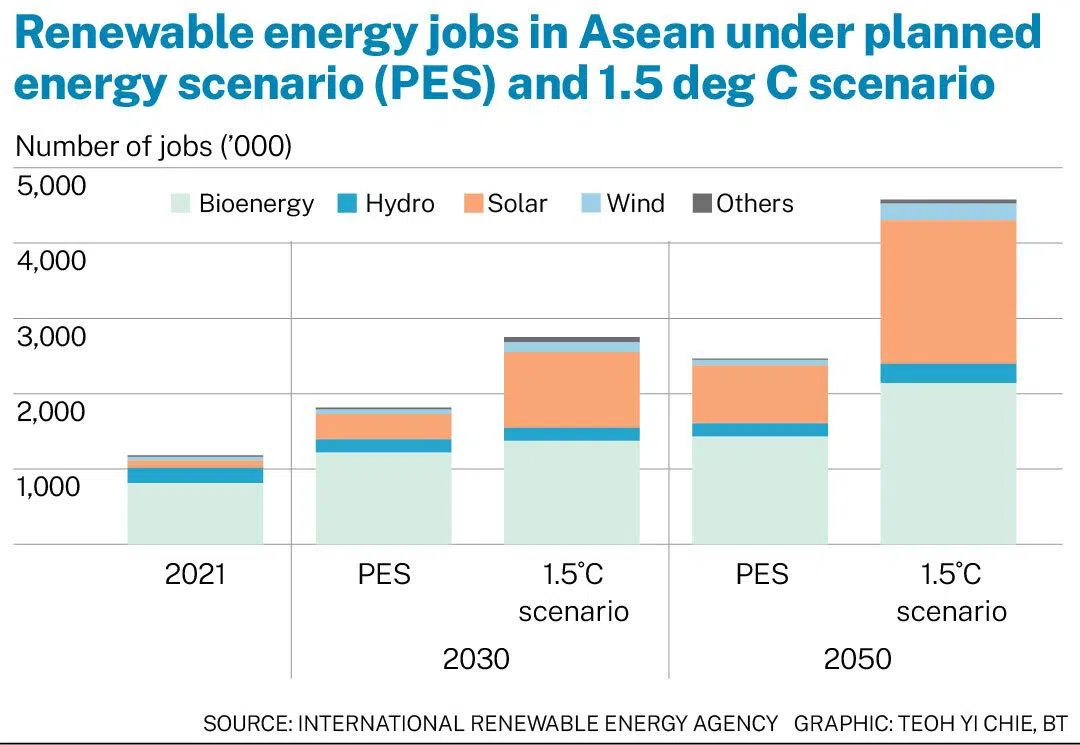
Irena’s analysis confirmed the socioeconomic benefits of renewables for Asean countries multiple times, translating into cumulative economic gains of US$4.8 trillion and 4.6 million renewable energy jobs by 2050.
It is true that the competitiveness of tomorrow’s economies will be largely determined by their ability to move electrons and molecules at the lowest possible cost, and to deliver clean, safe and affordable energy services.
But only fast movers will gain lasting productivity and competitiveness advantages over those who hesitate.
The writer is director-general of the International Renewable Energy Agency






