The fracturing of Maga and its implications for US policies
How trade, immigration, AI and foreign affairs are dividing Trump’s coalition
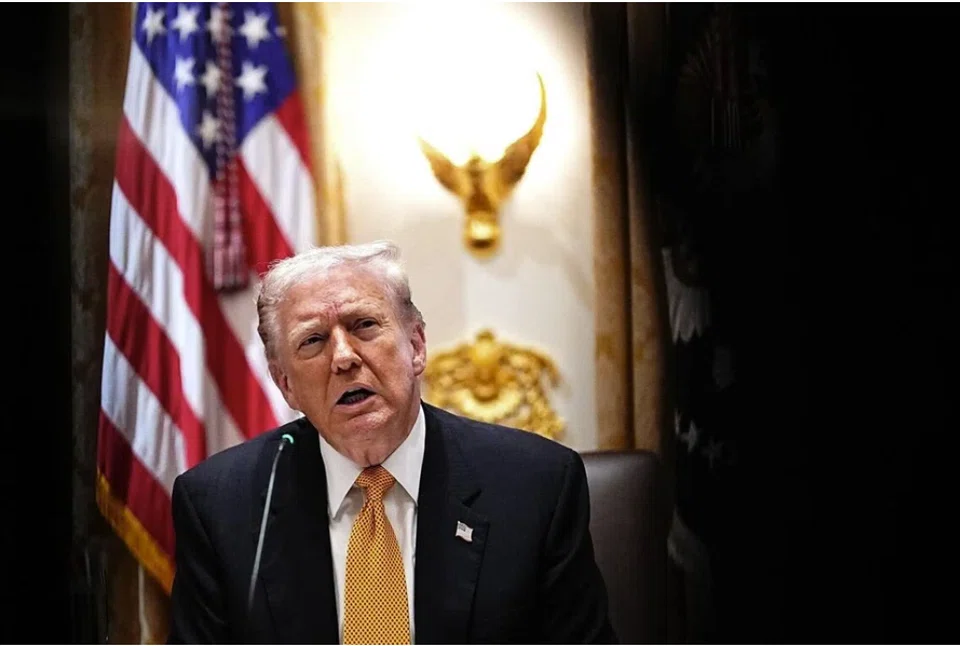
THE Make America Great Again (Maga) movement, once seemingly monolithic in its populist fervour, is showing deep internal fractures across four critical policy domains: trade, immigration, artificial intelligence (AI) and foreign policy.
These divisions reveal a fundamental tension between the movement’s traditional nationalist-populist base and the tech billionaires and pragmatists who have recently aligned themselves with US President Donald Trump’s second administration.
The trade wars within
The most visible early split emerged over Trump’s tariff policy. When the president announced comprehensive tariffs on Apr 2, financial markets plunged and economists warned of recession. The two camps entered open conflict.
On one side stood the hardline protectionists: Commerce Secretary Howard Lutnick and trade adviser Peter Navarro, long-time Maga loyalists who viewed tariffs as permanent tools to rebuild American manufacturing. Navarro has consistently championed policies that would effectively halt global trade flows, seeing them as essential to national revival.
Opposing them were the dealmakers: Treasury Secretary Scott Bessent and tech mogul Elon Musk, who argues that tariffs should serve as negotiating leverage rather than permanent policy. Bessent reportedly flew to Florida to warn Trump that markets would remain unstable unless he pivoted towards emphasising trade deals over protracted economic warfare.
The 90-day tariff pause Trump announced on Apr 9 represented a victory for the pragmatists, but the underlying ideological conflict remains unresolved. More than a policy disagreement, it represents competing visions of capitalism itself, with former White House chief strategist Steve Bannon denouncing the tech-friendly approach as crony capitalism rather than genuine free enterprise.
The H-1B visa tussle
No issue has exposed Maga’s internal contradictions more starkly than the debate over H-1B visas for highly skilled foreign workers. Beginning in December 2024 and continuing through 2025, this controversy has pitted Silicon Valley against Main Street in a battle for the soul of Trumpism.
Musk and Republican Vivek Ramaswamy emerged as fierce defenders of the H-1B programme. They argue that American companies need access to global talent to maintain technological dominance, particularly against China. Ramaswamy sparked outrage by suggesting that American culture celebrates “mediocrity over excellence”, necessitating foreign workers to fill critical roles.
In fierce opposition stand Bannon, Laura Loomer and other Maga stalwarts who view H-1B visas as a Silicon Valley scam that displaces US workers with cheaper foreign labour. Bannon has called for all H-1B visas to be revoked, demanding that those positions be filled by US citizens. He has even proposed using state attorneys general to block visa issuances if the administration doesn’t restrict the programme sufficiently.
Trump himself has offered contradictory signals, at times defending the programme while also expressing sympathy for critics’ concerns. His recent comments that America doesn’t have people with certain talents drew sharp rebukes from his base, with Bannon warning Trump not to lose sight of his mission.
The debate thus reveals a deeper split within Maga between tech-friendly newcomers and traditional populists who see immigration restriction as fundamental to protecting US workers. Musk’s willingness to use his control over X to suppress critics’ accounts has only inflamed tensions.
The AI apocalypse debate
The AI policy split may be the most consequential long-term division within Maga. Trump has embraced AI acceleration as central to American strategic dominance, hosting tech chief executives and launching the “Genesis Mission” in November to coordinate AI development across federal agencies.
But a growing faction of Maga voices regard AI with deep alarm. Bannon has made opposing unchecked AI development his primary focus, describing the technology as potentially representing humanity’s greatest crisis. He argues that AI companies face less regulation than someone seeking a nail salon licence, and accused the administration of coddling tech giants.
The controversy intensified around Nov 21 when a leaked draft executive order revealed plans to pre-empt state AI regulation, effectively creating a federal monopoly on AI governance that would prevent states from implementing their own protections. This proposal created an unusual bipartisan coalition, with Bannon and Democrat Elizabeth Warren both opposing what they see as a massive giveaway to Big Tech at the expense of worker protections and state sovereignty.
Republican governors including Ron DeSantis and Sarah Huckabee Sanders have criticised federal pre-emption as government overreach. The populist wing argues that AI threatens to eliminate millions of working-class jobs – and alienate Maga’s electoral base. Conservative podcasters such as Tucker Carlson have compared AI to occult forces and biblical prophecy about societal collapse.
Meanwhile, administration officials such as AI tsar David Sacks frame the debate in existential terms: Either America accelerates AI development or China will dominate the technology that shapes humanity’s future. This creates a profound tension between economic nationalism that protects US workers and technological nationalism that prioritises American dominance regardless of domestic cost.
Notably, many in the Maga base harbour deeper hostility towards tech billionaires than the traditional political left. As Bannon noted, supporters see tech oligarchs who once suppressed conservative voices suddenly becoming the president’s closest advisers – and they don’t buy the conversion.
The foreign policy fault lines
Foreign policy has emerged as another arena of Maga division, particularly regarding Ukraine and the North Atlantic Treaty Organization (Nato). Trump’s campaign rhetoric suggested a quick resolution to the Ukraine conflict, which resonated with the non-interventionist wing led by figures such as Bannon and Carlson.
However, Trump’s actual policy has proven more complex. While pursuing peace negotiations, he has also provided weapons to Ukraine through Nato and threatened secondary sanctions against countries trading with Russia if peace isn’t achieved. This more muscular approach has won praise from traditional hawks such as Lindsey Graham but created friction with the isolationists.
Crucially, the divide reflects competing frameworks for understanding American power. The pragmatic wing sees selective engagement as necessary to maintain credibility with allies and contain adversaries such as China. The populist wing views foreign entanglements as distractions from domestic renewal and opportunities for elites to enrich themselves while working-class Americans bear the costs.
Recent polling suggests Republican voters’ views on Ukraine remain fluid. While many Republicans believe America is doing “too much” for Ukraine, these positions aren’t deeply entrenched for most voters, giving Trump room to manoeuvre.
The proposed 28-point peace plan, which would deny Ukraine Nato membership but provide American security guarantees, attempts to thread this needle. Yet it satisfies neither groups.
The deeper fault line
These policy disagreements reveal a fundamental philosophical split within Maga: between nationalist-populists who prioritise protecting US workers and traditional values, and nationalist-technologists who prioritise American dominance through innovation and global economic reach.
Trump has tried to straddle these camps. The president’s personal relationships with tech billionaires, combined with their unprecedented financial support and media influence, give them extraordinary leverage. Musk’s role as both senior administration official and owner of the platform where much Maga discourse occurs creates asymmetric power dynamics that frustrate traditional movement leaders.
What comes next
These divisions will determine what Trumpism means beyond Trump himself. With US Vice-President JD Vance representing the populist-nationalist wing and figures such as Marco Rubio embodying more traditional hawkish conservatism, the 2028 Republican presidential race may become a referendum on these competing visions.
The fractures also reveal Maga’s evolution from an insurgent movement to a governing coalition attempting to reconcile incompatible objectives: protecting workers from technological displacement and accelerating AI development; championing immigration restriction while maintaining Silicon Valley’s global talent pipeline; practising economic nationalism through permanent tariffs while pursuing pragmatic trade deals.
The resolution of these tensions will determine whether Maga coheres around a sustainable governing philosophy or fragments into competing factions. For now, Trump’s personality and political skill hold the coalition together. But the underlying contradictions are growing harder to paper over.
Ultimately, the question is whether these divisions prove creative or destructive. Can the movement synthesise its competing impulses into a coherent vision of American renewal? Or will the alliance between working-class populists and tech billionaires prove as unstable as it appears – a marriage of convenience destined for an acrimonious divorce?
The answer will shape not just Republican politics, but America’s role in a rapidly changing world.