

G7 gears up for growing role in Iran crisis
But potential divisions over various issues may pose the gravest test to allied unity in 50 years
US PRESIDENT Donald Trump has regularly criticised Asian and European allies for not playing a more active role in the ongoing Iran war.
However, the Group of Seven (G7) is increasingly stepping up to the plate, evidenced by Monday’s (Mar 30) unprecedented joint meeting of finance and energy ministers, aimed at managing the shocks from the crisis.
This coordination is fitting as the club of industrialised democracies was founded more than half a century ago to facilitate shared macroeconomic initiatives in response to 1970s challenges – including the aftermath of the Middle East energy shock then, and the ensuing international recession.
Today, there is significant historical continuity with that original mission during France’s 2026 G7 presidency, as the war in Iran enters its second month.
G7 foreign ministers last week met in France, sessions that were followed up on Monday by the joint meeting of finance and energy ministers alongside central bank chiefs and heads of international agencies. US Secretary of State Marco Rubio has made clear that the war could last at least another two to four weeks.
This timeline suggests that the current high-intensity phase could end before Trump is scheduled to travel for his summit with Chinese President Xi Jinping from May 13 to 14 in Beijing.
On Monday, the G7 finance and energy ministers said that they will take “all necessary measures” to safeguard the global energy market amid the war.
The International Energy Agency (IEA) has already coordinated the release of 400 million barrels of oil on Mar 11 to mitigate reductions in cargo through the Strait of Hormuz. Some G7 leaders, including Japanese Prime Minister Sanae Takaichi, are already urging the IEA for an additional coordinated release of oil stockpiles.
These requests come amid growing signs of inflationary pressure and soaring borrowing costs in what is already the biggest disruption to global energy supplies on record.
Brent crude oil has risen from around US$70 a barrel in late February to well over US$100 a barrel, and the Iranian regime has threatened prices of US$200 a barrel if the US and Israel continue the conflict.
This energy crunch is particularly affecting Asia and Europe. On Tuesday, Poland became the latest country to introduce a fuel price cap, replicating comparable measures by other countries in the two regions.
The G7 ministers also called, on Monday, for all countries to refrain from imposing unjustified export restrictions on hydrocarbons and related products – a rebuke to key nations including China.
There was also a call from some finance ministers, including UK Chancellor of the Exchequer Rachel Reeves, to avoid new trade barriers that could disrupt supply chains and drive up costs. This was a message primarily directed to the US, which is threatening new trade tariffs in the coming months.
G7 as a growing geopolitical actor
As much as there has been continuity in the G7’s role over the last half century, there is also a significant change: The club has become a more important geopolitical actor, expanding from its original macroeconomic mandate.
To be sure, there are no clear-cut signs yet that any other G7 nations will join the US and Israel in the military campaign in Iran, despite Trump’s pressure. However, one related move being explored by US allies is helping to halt Iran’s blockade of the crucial Hormuz shipping route.
At last week’s foreign ministers’ meeting, the joint statement pledged the “absolute necessity” of re-establishing free passage, including calls for an end to attacks on civilian infrastructure. On Thursday, UK Foreign Secretary Yvette Cooper hosted a virtual meeting of 35 countries to assess measures to reopen the strait.
UK Prime Minister Keir Starmer stated that the meeting will “assess all viable diplomatic and political measures that we can take to restore freedom of navigation, guarantee the safety of trapped ships and seafarers and resume the movement of vital commodities”.
“Following the meeting, we will also convene our military planners to look at how we can marshal our capabilities and make the strait accessible and safe after the fighting has stopped.”
Beyond Iran, the French G7 presidency is prioritising wide-ranging geopolitical issues.
These include preserving Ukraine’s long-term prosperity and security; increasing security and resilience across the Asia-Pacific region; building stability and resilience in South America (including Venezuela); supporting enduring peace in Africa (including Sudan and the Democratic Republic of the Congo); and strengthening sanctions against hybrid warfare.
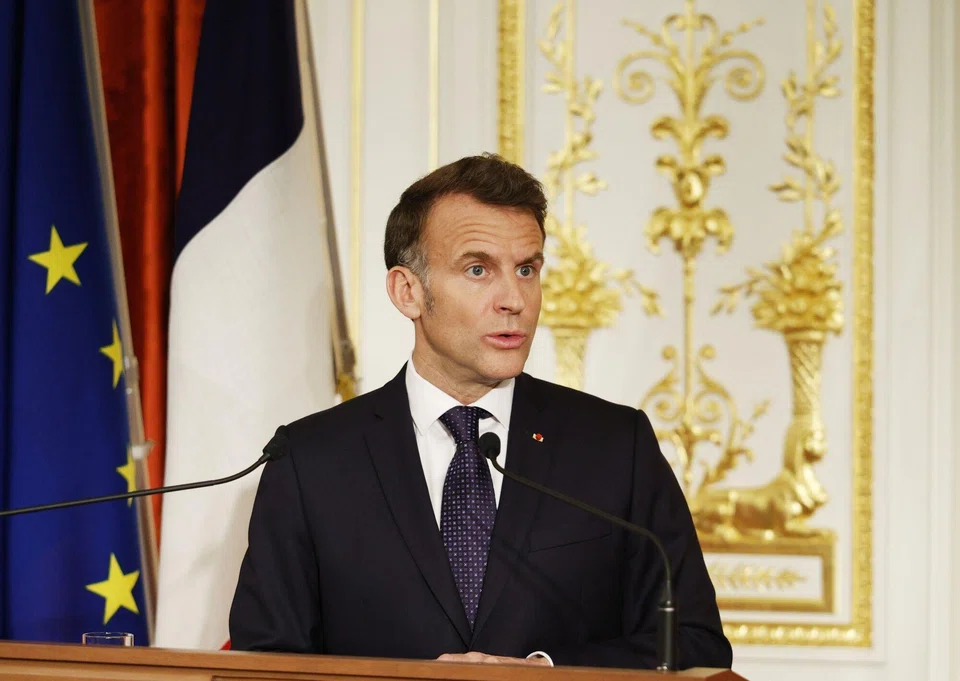
This is a massive agenda that requires deep global partnerships. This is why French President Emmanuel Macron is reaching beyond the core G7 leaders – Trump, Takaichi, Starmer, Canadian Prime Minister Mark Carney, German Chancellor Friedrich Merz and Italian Prime Minister Giorgia Meloni.
Other world leaders expected to play a role in the G7 in the coming weeks include Ukrainian President Volodymyr Zelensky, Australian Prime Minister Anthony Albanese and Indian Prime Minister Narendra Modi.
The G7’s involvement in this multitude of geopolitical dialogues is controversial given the club’s original macroeconomic mandate, especially with China and Russia. However, it is not the case that these security roles are wholly new. An early example of the geopolitical lynchpin function the body has played was when it helped coordinate Western strategy towards the then Soviet Union.
G6 plus 1 in 2026?
Even with the G7 stepping up on Iran, the key question for this year’s French-led summitry will be how much Trump buys into the process. Notably, Macron has already changed the dates of the summer summit to accommodate Trump’s desire to watch cage wrestling in Washington, DC, for his birthday celebrations.
The potential for conflict remains high, especially if the Iran war proves challenging for Trump to conclude with apparent achievements for the US by April. Far from serving as an annual affirmation of alignment, this year’s diplomacy may see significant splits over not only the Iran war, but also tariffs and Ukraine.
This context makes it very difficult for Macron to frame a “Trump-proof” G7 agenda. However, despite disagreements over multiple issues, the French president may be able to navigate a way through this given his previous ability to befriend Trump at key moments.
Nonetheless, this is likely to be a high-risk G7 year with wider implications for the upcoming North Atlantic Treaty Organization summit – particularly after Trump’s renewed threats on Wednesday to pull the US out of the military alliance.
Taken together, this year’s G7 has huge potential for diplomatic fireworks again. While some of the club’s disagreements pre-date Trump, his presidency has widened these schisms into a “G6+1” fashion that poses the biggest threat to allied unity in the last half-century.
The writer is an associate at LSE Ideas at the London School of Economics
TRENDING NOW
Mooted COE changes will solve category issues, but higher premiums likely: observers

Grab CEO’s wife Chloe Tong on life with Anthony Tan and finding her purpose

Once staunchly pro-China, Malaysian Chinese businesses are now distancing themselves from Beijing

Cliff Tan has 7 million followers and a 4-month waitlist. Why won’t he expand his business?

