
Gaza war poses threats, but also an opportunity, for Biden
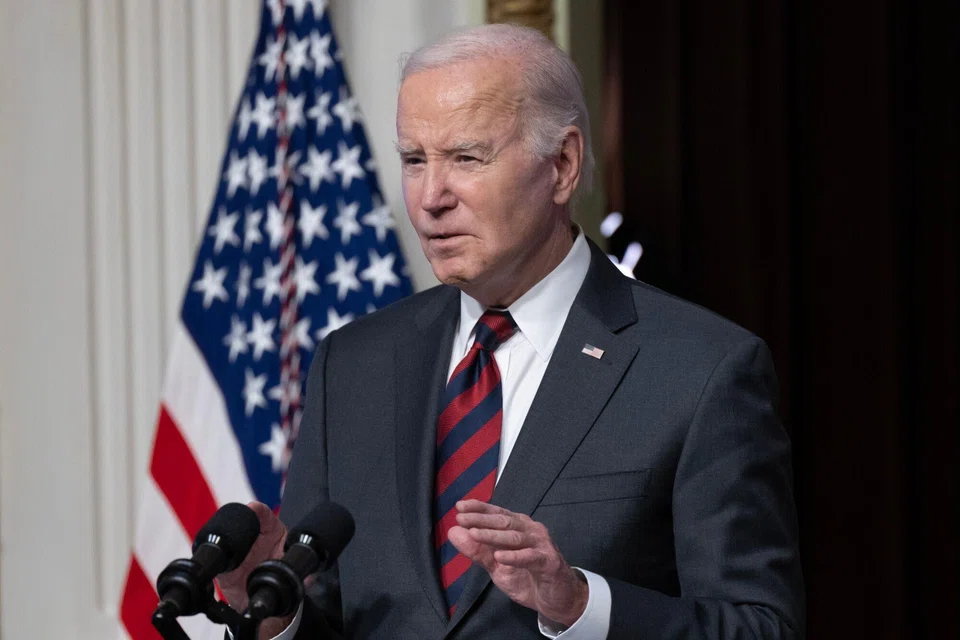
THE war between Israel and Hamas in Gaza, the biggest foreign-policy challenge of Joe Biden’s presidency so far, has highlighted his extensive experience in diplomacy and national security, going back to the years he had served as chairman of the Senate Committee on Foreign Relations and later as former president Barack Obama’s deputy.
President Biden’s stand with Israel during the war, with some referring to it as a “bear hug”, reflects his long-time support for the Jewish state, traditionally a major component of the Democratic Party’s foreign-policy agenda. It is also in line with his credentials as a liberal internationalist backing a democratic nation threatened by forces of totalitarianism – in this case, the Islamist terrorist group Hamas, and in the case of the Ukraine war, as seen in the authoritarian Russian President Vladimir Putin.
Biden’s backing for Israel by deploying two US aircraft carriers and a contingent of marines to the Middle East has also stemmed from realpolitik geo-strategic considerations.
The Hamas attack on Israel was seen as serving the regional interests of its patron, the Islamic Republic of Iran, which is intent on torpedoing American efforts to normalise ties between Saudi Arabia and Israel. The latter could have led to the creation of a pro-American, Arab-Israeli axis to contain the threats from Iran and its proxies, Hamas and the Lebanese Hizbollah anti-Western group.
The Oct 7 Hamas attack on Israel did help shift the balance of power in the region in the direction of Iran by sabotaging the planned Saudi-Israeli detente, and also benefited Iran’s global partners, Russia and China, by diverting US attention and resources from its challenges across the Pacific (Taiwan) and the Atlantic (Russia).
But the attack on Israel and Hamas’ kidnapping of Israeli, American and other foreign civilians to the Gaza Strip, in addition to the vicious murder of 1,200 Israelis, followed by the massive Israeli ground invasion of Gaza, including the bombing of civilian targets that resulted in the death of 1,400 Palestinians, have posed more challenges to the United States president. They go beyond realpolitik considerations, and include domestic political concerns.
First, President Biden is fully aware that although his support for Israel in its efforts to obliterate Iran’s proxy Hamas enjoys the backing of a clear majority of Americans, any enlargement of the war with the involvement of Iran and the Hizbollah group, could draw the US into the military conflict at a time when the American people in the post-Afghanistan and post-Iraq era would reject the idea of getting into yet another Middle Eastern quagmire.
Moreover, the Gaza war has also exposed a major political rift in the Democratic Party, with members of its progressive wing critical of the president’s “bear hug” of the Jewish state. They have accused Israel of violating the rules of war by targeting civilians in Gaza, and, in general, they would like to see the US distancing itself from Israel and expressing more support for the Palestinian cause.
Indeed, public opinion polls indicate that there is less support for Israel and more sympathy towards the Palestinians among young voters as well as among African-Americans – two central Democratic Party constituencies whom Biden needs to mobilise in November 2024 in order to win the presidential election.
The Democratic Party has also become the political home for the growing population of Arab and Muslim Americans in key electoral states such as Michigan. They are exerting more political power and have panned Biden’s overwhelming support for Israel and threatened to reassess their commitment to the Democratic presidential candidate.
More recently, one of the leaders of the Democratic Party’s progressive wing, Senator Bernie Sanders, has called for the US backing for Israel in the war to be tied to Israel’s willingness to accept American demands to maintain a long ceasefire and to refrain from bombing civilian targets.
In fact, Biden has been putting pressure on the government of Israeli Prime Minister Benjamin Netanyahu by persuading him to delay and moderate its ground invasion of the Gaza Strip; to not escalate the military conflict with Hizbollah, which has been attacking targets in northern Israel; to use a smaller force in Gaza; and allow more aid to the Palestinians and pause some military operations.
Israel has agreed to a truce in exchange for the release of some of the hostages by Hamas. But it insists that it will continue with its ground invasion of Gaza when the ceasefire ends.
This would place Biden in a strategic and political quandary. The Israeli move could threaten to widen the war to include Hizbollah and perhaps Iran and draw in the US. Meanwhile the images of dead Palestinian civilians could produce a political backlash against the president among key Democratic constituencies.
Biden – whose first goal is to extend the current ceasefire – could try to square the circle by pursuing a diplomatic approach that would build both on Israel’s military strength and the containment of Iran, but that would at the same time position the Americans as the only global power that could help the Palestinians achieve their goal of political independence and economic recovery.
Such a plan could be part of an overall Arab-Israeli strategy that is very much along the lines of that pursued by Washington before Oct 7: creating the conditions for the normalisation of relations between the Arab world and the Jewish state as part of an effort to contain the threat from Iran and its regional proxies. In the aftermath of the Gaza war, Washington could promote the idea of integrating a Palestinian entity into the evolving Arab-Israeli strategy.
Hence the Biden administration could revive its plan to normalise the relations between Israel and Saudi Arabia, along the lines of the so-called Abraham Accords, and integrate into that process a renewed effort to achieve the two-state solution.
In that context, Saudi Arabia and the other Arab Gulf states could emerge as central players in an effort to finance the rebuilding of the Gaza Strip and its economy, while the Palestinian Authority, a moderate force that controls the West Bank and is at peace with Israel, could replace the Hamas as the ruling power in Gaza – and all that as part of a diplomatic initiative that could be embraced by the Arab League. From that perspective, the Gaza war could prove to be an opportunity for making peace.
TRENDING NOW
Grab CEO’s wife Chloe Tong on life with Anthony Tan and finding her purpose
What role can Japan play in Asean’s future?
He built the Vingroup empire. Now South-east Asia’s richest man is handing some key roles to his sons
Asean’s challenge is to become resilient against global geopolitics: former Indonesia trade minister



