

Go ahead, let AI write your performance review
The yearly exercise, a farce in many instances, can finally be treated as one
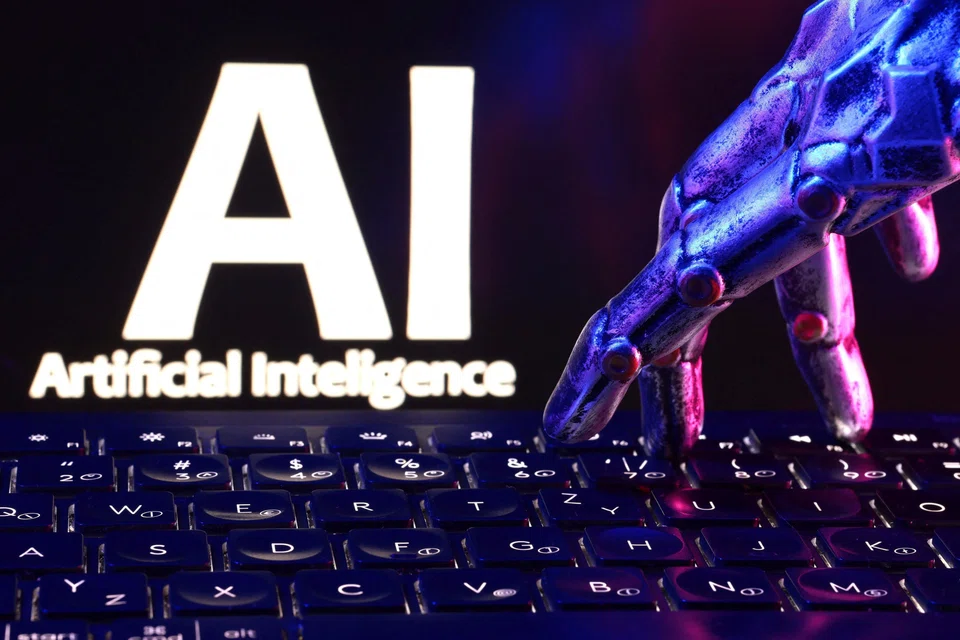

THERE are few things more artificial than an annual performance review, so it really was a matter of time before artificial intelligence was drafted into this ritualistic ordeal.
Disney, for instance, is encouraging employees to use AI tools to prepare their annual reviews and generate their goals, even providing sample chatbot prompts for the purpose, Business Insider reported in late September.
The company is not alone. Managers at Citi use AI to draft evaluation reports on their underlings, while Boston Consulting Group says its AI tool has cut performance review-writing time by 40 per cent.
It isn’t a terrible idea. AI can trawl through a year’s worth of work, help employees remember what they have done and turn a haze of past activity into a more coherent account of achievement.
This is particularly useful for anyone who has ever stared at a blank performance-review box and been sorely tempted to write: “I did my job more or less competently because I have bills to pay. I would like to get back to doing my work now.”
Many will undoubtedly bemoan the introduction of AI slop to the already-dismal genre of performance review-writing. For all the impressive strides the technology has made, large language models still make both the abysmal and the outstanding sound uncannily similar.
This would be a self-defeating development for a performance-review exercise, whose ostensible purpose is to distinguish one employee’s performance from another’s.
If everyone’s self-assessment is extruded through a machine, we all risk emerging as identically competent functionaries, deadly serious about “cross-functional collaboration” and “driving alignment with core values” on paper.
Would that make a material difference to the outcome of your evaluation, though? I doubt it. In many workplaces, an employee’s fate is largely sealed before a formal performance review actually happens.
By the time your manager sits down to size you up, they usually have a pretty good idea of whether you have had a good year. The appraisal itself is often an exercise in reverse-engineering a rationale for an instinct that has already taken shape.
Theory versus reality
In theory, performance reviews are meant to correct for managerial bias and faulty memories. Given the qualitative muck of human quirks and inconsistencies, these appraisals are supposed to impose some structure on managerial judgment, so that firms can distribute the spoils of business relatively equitably.
In practice, the true tussle of assessment and performance in any functioning workplace is not done once a year under the watchful eye of the human resources team, but on a daily basis as you clash and collaborate with peers and superiors alike.
By the time an employee has to rely on the performance-review process as a career Hail Mary to prove that they deserve a promotion or to fight a performance-improvement plan, something very human has gone awry.
In fact, encouraging people to use AI for performance reviews tacitly acknowledges some degree of farce in the process. If the exercise has long been a flawed formality, AI now enables workers to finally treat it as one.
Leave the chatbot to churn out the requisite appraisal boilerplate while the human gets on with the work and office politics that actually determine the size of their bonus.
At long last, the review-writing process will get exactly the amount of effort it deserves.
TRENDING NOW
8 public officers referred to police over property buys near unannounced MRT stations: Chan Chun Sing

Grab CEO’s wife Chloe Tong on life with Anthony Tan and finding her purpose

Retrenched PMETs who return on lower pay see median 25% wage cut

Hao Mart owner resisting OG’s mortgage foreclosure on his Tanglin GCB

