Gold has tumbled. The world hasn’t become less volatile
Geopolitical uncertainty and Asia’s gold hub ambitions underscore the metal’s appeal
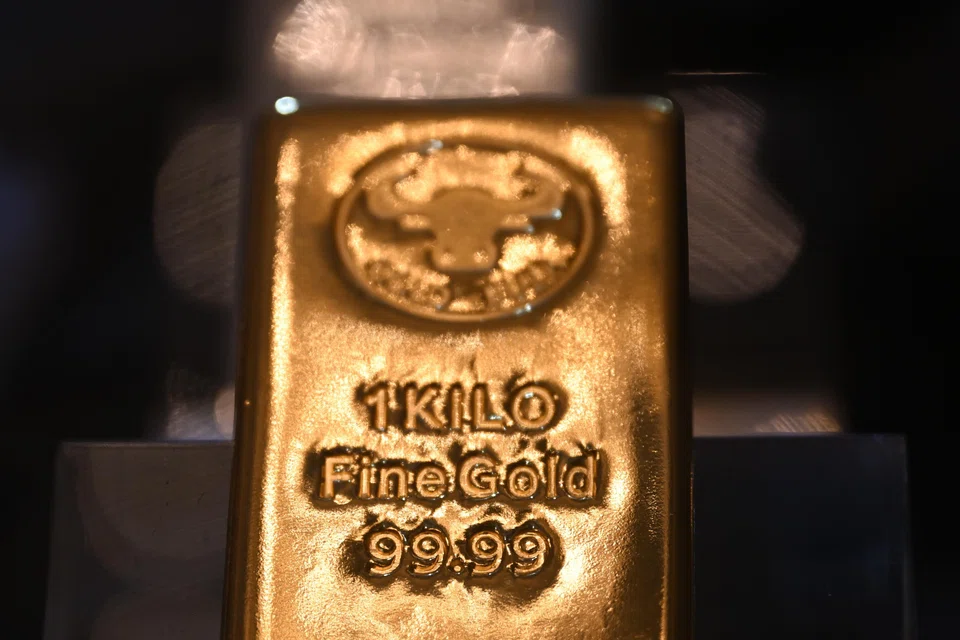
GOLD has had a rough few months. After surging past US$5,400 an ounce at the start of this year, it has retreated to around US$4,000.
Anyone who bought near the peak has been reminded that even a traditional safe haven can be volatile.
Contrary to what its movement implies, the world has hardly become safer or less volatile.
The Democrats’ huge win in the US midterm elections has dealt President Donald Trump a major setback. His administration now faces greater resistance to its legislative agenda and potentially more bruising battles over government spending and debt.
Political gridlock could restrain further spending, but it will not make America’s existing debt burden disappear. Nor will it quickly resolve the inflationary pressures and geopolitical tensions that have troubled investors.
What rising bond yields reveal
There are good reasons for gold’s pullback. Higher interest rates and US Treasury yields have made government bonds more attractive because they offer investors an income while gold does not.
A stronger US dollar has also weighed on bullion, while some investors have simply taken profits after the metal’s extraordinary rally.
What is more striking is how much investment in gold has survived the correction. In September, for example, gold prices fell 8.5 per cent, but global gold exchange-traded funds still attracted about US$10 billion in inflows, said the World Gold Council.
Central banks have also remained significant buyers. The amount they purchased in September was the highest monthly volume of the year so far.
Over the past four years, they accumulated an average of 1,000 tonnes of gold annually, roughly double that of the preceding decade.
Normally, rising bond yields are negative for gold. Bond prices and yields move in opposite directions, meaning the recent rise in yields has pushed bond prices lower.
But the reason yields are climbing matters. If it is because economies are growing strongly, that is one thing. If investors are demanding higher returns because they worry about inflation and governments’ ability to manage their finances, the message is less reassuring.
This explains the growing interest in what has become known as the “debasement trade”. As government deficits widen and debt levels climb, investors worry that inflation and monetary policies will erode the purchasing power of conventional currencies.
Gold offers some protection against that risk. Its supply cannot be increased at will. And, unlike government bonds or bank deposits, it is nobody else’s liability.
That does not mean gold prices can only go up. Higher real interest rates and a stronger US dollar can continue to dent bullion demand.
But some of the forces hurting gold in the short term are also contributing to the longer-term anxiety that keeps investors interested in owning it.
Singapore and Hong Kong’s goals
In Asia, Singapore and Hong Kong are stepping up efforts to become major gold trading and storage centres, reflecting continued demand for the yellow metal amid heightened economic and geopolitical uncertainty.
Singapore is developing a gold-clearing system as part of its efforts to become a regional trading hub. It also wants to offer gold-vaulting services to foreign central banks.
Hong Kong has similar ambitions. It began trial operations of its gold-clearing and settlement system in July, ahead of a formal launch in early 2027.
It also wants to increase its bullion storage capacity to more than 2,000 tonnes within three years.
Building such infrastructure requires substantial investment and a long-term commitment. Thus, the fact that the two Asian financial powerhouses are pressing ahead – despite gold’s sharp retreat from its peak – suggests confidence in the metal’s prospects.
There is also a broader consideration. As central banks diversify their reserves and investors look for secure places to hold physical bullion, Singapore and Hong Kong stand to play a bigger role in the international gold market.
Mining industry still healthy
For miners, the gold price tells only half the story.
Gold Fields, a South Africa-based gold producer with mines in five continents, made an unsolicited A$38.7 billion (US$27.2 billion) takeover offer for Australia’s Northern Star Resources in September.
A combination of the two would have created the world’s second-largest gold producer, with annual output of about 4.1 million ounces.
But Northern Star turned down Gold Fields, although the size of the proposed transaction remains striking, given gold’s sharp correction this year. It shows that established gold mines and reserves are still extremely valuable.
Finding new gold deposits is tough, and developing a mine can take years and cost a fortune. Acquiring an existing producer is a quicker way to secure reserves and increase production.
What miners can sell gold for matters less than the margin between the price received for each ounce and the cost of getting it out of the ground.
Miners that can boost production while controlling costs stand to generate substantial cash flow, even if gold never returns to its peak. Those struggling with rising costs, declining ore grades or short mine lives may fare very differently.
Investors should resist treating every gold miner as simply a proxy for the gold price.
Gold is insurance
Bullion has fallen from its record high. But war, inflation, swelling government debt, volatile bond markets and concerns about the purchasing power of currencies have not disappeared.
The case for owning gold has never depended solely on where its price is headed in the near term.
For many investors and central banks, its appeal becomes clearest when confidence elsewhere starts to fray – a store of value that is not tied to any one currency, government or financial institution.
Gold has been performing that insurance role for a very long time. The price of that insurance has come down. The reasons for holding it have not.
The writer heads investor relations at CNMC Goldmine