Goodbye grocery greedflation and shrinkflation; hello deals
The tide is turning on food prices. Consumers can rejoice, but manufacturers and stores should worry
“GREEDFLATION” in the grocery aisle is over. That’s the message from the consumer giants on both sides of the Atlantic. It’s great for consumers – not so good for manufacturers.
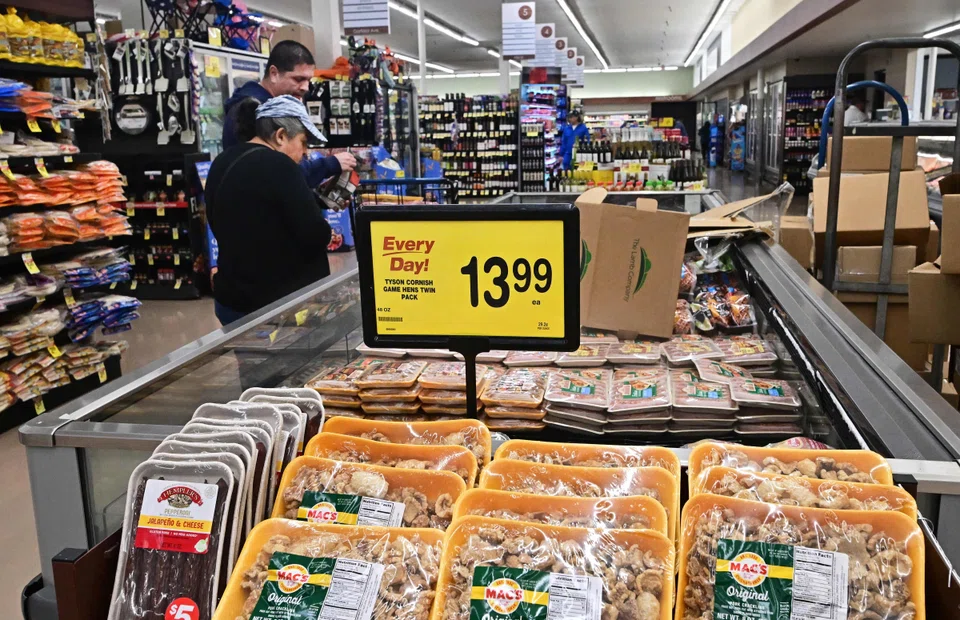
After three years of rampant escalation in food prices, many consumers in the United States and Europe have had enough. They are voting with their wallets and trading down to cheaper off-brand and private labels, as well as companies that offer better value meals.
As a result, supermarkets, manufacturers and fast-food chains are all stepping up promotions to entice customers to buy more. But this is happening unevenly across the industry. With many consumers still under pressure, profit margins are at risk.
It’s increasingly clear that, aside from the super-wealthy, US consumers are straining under stubborn inflation and high borrowing costs. European customers appear to be holding up better, but their confidence is at risk from similar factors. This makes them all much more picky.
A key buzzword from second-quarter earnings has been “value-seeking” shoppers. In other words, your coffee creamers, candy and cleaners are too expensive.
Consequently, companies have not been able to push through price increases the way they did in 2022 and 2023. Most are still showing positive pricing – but this is from earlier raises. In most categories, inflation has started to ease back to its historic low-single-digit range, according to Circana data analysed by Bloomberg Intelligence. Refrigerated, frozen and general foods have had a more precipitous decline. No wonder the world’s biggest food group, Nestle, pared its outlook for the full year.
When food inflation is accelerating, the value of sales expands, especially if it compares with a period a year earlier, when inflation was lower. This is now reversing. With less help from price hikes, companies must sell more, but not all are managing to achieve this. North American packaged foods – the sort of products you find in the middle of the grocery store – look the most precarious.
Consequently, many companies are having to adjust prices by unleashing a barrage of bargains in the form of promotions, particularly in the US. Depending on the depth of special offers, shoppers should finally feel as if their grocery bills are coming under control.
Some companies, such as PepsiCo, have talked explicitly about giving value back to customers. Procter & Gamble (P&G) makes the sort of products that consumers buy every day, owns household name brands, such as Pampers diapers and Ariel washing powder, and constantly brings out new versions. Yet, even it had to resort to offering deals to encourage consumers to put its products in their carts, while baby care was also weak in its fiscal fourth quarter. That doesn’t bode well for manufacturers with weaker brands or in less frequently bought categories.
Retailers, whose same-store sales growth also moderates with lower food price inflation, are getting in on the act too.
Walmart said in May that its grocery deals were up 45 per cent year on year, while Target is cutting prices on 5,000 everyday items. And fast-food chains, including McDonald’s, are offering value meals to entice back diners.
We’re also starting to see a reversal of perhaps the most pernicious form of price rise: “shrinkflation”, whereby companies charge consumers the same amount for fewer potato chips or smaller chocolate bars.
Chipotle Mexican Grill said recently that it would spend US$50 million to ensure all of its restaurants served generous portions. We could see more manufacturers advertising pack sizes with 20 per cent more for the same price, for example.
Yet it’s not clear that any of this activity will lift sales.
Once consumers have begun to shop at discount supermarkets or buy private-label goods, they don’t unlearn these behaviours. Even with slower food-price inflation, own brands continued to gain share in the US in the second quarter, according to Circana.
Consumers are also taking to TikTok to show off their money-saving skills, such as buying handwash in containers without pumps, which are cheaper, and making their own baby wipes. Others on social media are prioritising spending on what they can show off in their feeds or in their homes, from fancy candles to branded mayonnaise, over products that are largely invisible, such as household cleaners.
Less-expensive commodities and companies’ own cost-cutting efforts mean there is some room for manoeuvring on price. But some items, such as cocoa and robusta coffee, remain stubbornly high, while demand for certain types of pulp – used in packaging – is outstripping supply. Wages are also a headwind, and freight rates are worth watching. Advertising spending is stepping up too, with P&G’s marketing reinvestments as a proportion of sales rising three percentage points in the final quarter.
All this means a potential squeeze on profits unless shoppers buy more. Unilever may regret committing to a margin target relatively early in the year. It also explains why Mars is weighing a bid for Kellanova, maker of Cheez-It, Pringles and Pop-Tarts.
Remember that run on Lunchables meal kits a few years ago? Demand surged in 2021 as schools returned to in-person learning. Now, maker Kraft Heinz is trying to boost sales of the almost-charcuterie-board-like snacks, including making them better value.
Some of the reversal is the unwinding of the reopening trend, as well as concerns about how healthy the snacks are. But I’d bet some of the slump is from moms inspired by TikTok to make their own versions to save money. When Lunchables become an economic indicator, it’s time for consumers to rejoice, and manufacturers to worry.
TRENDING NOW
He built the Vingroup empire. Now South-east Asia’s richest man is handing some key roles to his sons
Despite the de-dollarisation debate, demand for dollar liquidity in Asia is growing
Asean’s challenge is to become resilient against global geopolitics: former Indonesia trade minister
Floods compound Philippine growth woes from public-works scandal