

Google’s power struggles are killing its AI mojo
When managers focus on launches and neglect maintenance, products suffer
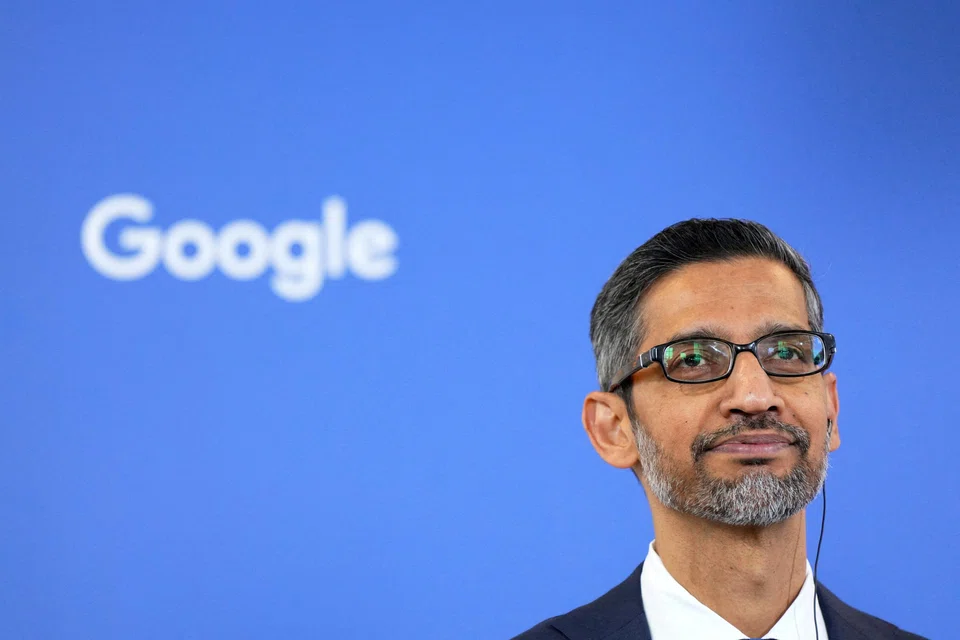
WITH the artificial intelligence race moving so rapidly, even a momentary lag can be costly.
Alphabet’s Google is learning this the hard way: The search giant rapidly caught up with OpenAI and Anthropic last year when it released Gemini 3, an AI model that surpassed key rivals on many benchmarks.
Now, it is slipping behind on AI coding.
The problem is not Google’s technology, but a confounding tangle of red tape.
The troubles are reflected in the big names who have left Google’s AI division in the last few months, including research icon Noam Shazeer, who helped invent the all-important transformer – the T in ChatGPT – and John Jumper, who won the Nobel Prize for his research into protein folding.
More recently, Jonas Adler and Alexander Pritzel, who both played key roles building Gemini, have left too.
Together with Jumper, they have gone to Anthropic. Shazeer went to OpenAI in what was regarded as a major coup for the company’s CEO, Sam Altman.

AI labs are porous, and their scientists jump between them with the frequency of fleas on cohabiting pets. OpenAI and Anthropic can also lure new recruits with stock options that can soar in value, when they hold initial public offerings later this year or the next.
But rock star researchers, such as Shazeer and Jumper, are already millionaires many times over. In the world of AI, the prestige of being on the very frontier is a significant lure.
The departures also accompany murmurs of discontent about Google’s performance in building AI-coding tools, currently the most lucrative and scientifically important avenue for the field.
Many researchers see AI coding, or automating software development, as the fastest path to building machines on par with human intelligence, since it allows AI to upgrade its own architecture.
Currently, the most popular AI-coding tools come from Anthropic and OpenAI.
Anthropic’s first big conferences for software developers hinged entirely on its Claude Code product, and OpenAI’s Codex has recently been vaunted as the better of the two, said attendees at Cerebral Valley, an AI conference held in London on Jun 24.
Few, if any, are talking about Google’s AI-coding tool known as Antigravity, a product that stems from its US$2.4 billion acquisition of startup Windsurf last year.
A problematic incentive
The problem is likely Google’s messy history in product development.
Managers are incentivised to launch new products and then move on to other teams, because that is the fastest route to career progression.
At Google, the crown jewel of an engineer’s pitch for advancement, known as a promotion packet, is a product launch, not sticking around to maintain it.
The company has become notorious in enterprise software for rolling out an array of products that compete with one another and then fizzle out.
There is even a website that is devoted to its graveyard of failed tools: killedbygoogle.com.
That haphazard approach has now tainted AI coding. The company has launched several different coding tools, including Jules, Gemini Code Assist, Firebase Studio, Antigravity and others.
Little wonder that, having recently left for OpenAI, the former product director for Jules warned of “a systems problem” at Google and pointed out that “different teams have different incentives”.
Those messy incentives have impeded researchers who require computing power, since the company needs to devote a large share to its Google Cloud customers, and not just R&D teams.
One former researcher at the company found he had more luck getting the computing bandwidth he needed after leaving it, than by navigating its many layers of management.
It has not helped that Google has recently required its AI scientists to wait six months to assess whether their research can be applicable to Gemini before they are allowed to publish it.
That often puts scientists in a bind: The company’s internal politics can make any kind of contribution to Gemini fraught, and six months is an eternity in today’s fast-moving AI field.
Neither path can look all that appealing.
Not an existential threat
On the plus side for Alphabet, this is not an existential threat.
The company makes its own AI chips, has its own data centres, oversees a healthy business for Google Cloud and, most importantly, prints money every quarter due to its online ad juggernaut.
The US$77 billion in revenue it made in the first three months of 2026 was up 15 per cent from last year.
Yet, the luxury that well-resourced companies have of being able to throw many things at a wall to see what sticks can turn into a liability, when bureaucratic systems lead to chronic inertia.
Google famously missed the boat on large language models initially, because it failed to turn the remarkable invention of the transformer invented by its staff into a viable product.
The transformer was a critical innovation allowing computers to process context between words in a sentence or other elements of a sequence. OpenAI ended up capitalising on that technology to build and launch ChatGPT.
Google may now be leaving a similar kind of strategic opening for OpenAI and Anthropic as it fumbles with AI coding, and fixing the company’s messy management issues will take time.
Transatlantic tensions between Google’s AI researchers in Mountain View, California, and London, where its original DeepMind lab is based and where division chief Demis Hassabis resides, are still acute, people close to the company have told me.
Hassabis is said to be spending half his time in California now, but he will need to find a way to make Google’s efforts less fractured.
The company has said it is bringing its AI-coding efforts together under Antigravity. That is a good start.
But a broader, fundamental rethink of the sprawling company’s incentive and management structures is needed by Google CEO Sundar Pichai, if he wants to stay near the front of the AI race and capitalise on the value it could bring to Alphabet. BLOOMBERG
TRENDING NOW

Malaysian king buys stake in Singapore-listed mining firm expanding into rare earths

Grab CEO’s wife Chloe Tong on life with Anthony Tan and finding her purpose

Once staunchly pro-China, Malaysian Chinese businesses are now distancing themselves from Beijing

Longer wait times expected as S’pore healthcare institutions report system disruptions

