Grab’s new acquisition in Taiwan could further delay a deal for Indonesia’s GoTo
All attention is likely on issues related to the recent purchase plans

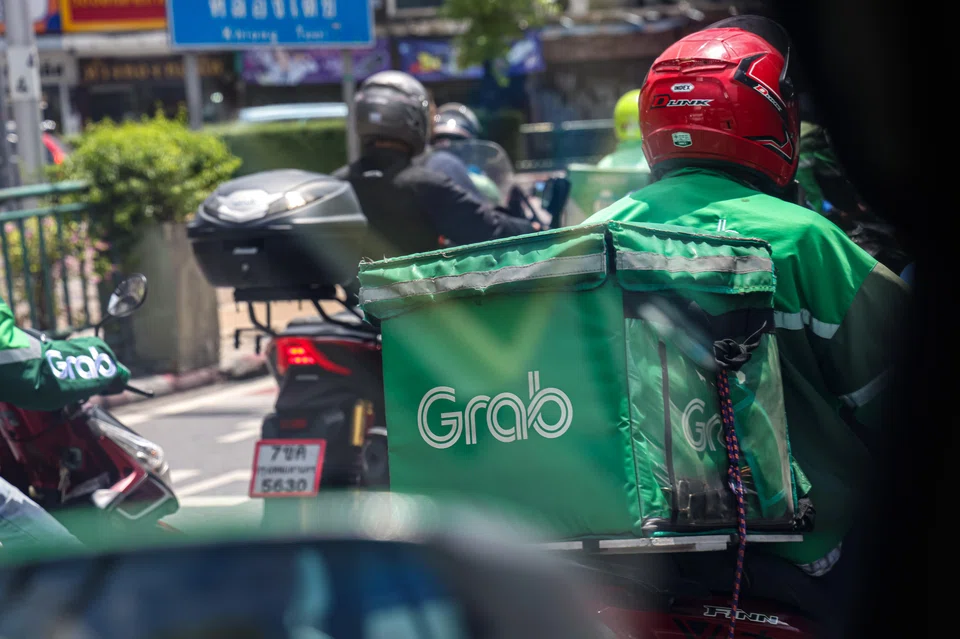
[SINGAPORE] Grab’s surprise move to acquire foodpanda’s Taiwan business – while a game changer for the group – could lead to its on-off merger with Indonesia’s GoTo languishing further on the back burner.
The mobility, delivery and financial services platform announced on Mar 23 that it would splash out US$600 million to acquire foodpanda Taiwan.
Foodpanda in Taiwan is part of a duopoly with Uber Eats. In 2025, Uber terminated its US$950 million deal to acquire foodpanda Taiwan, after the island’s authorities blocked the deal over anti-trust concerns.
Taiwan will be the first market that Grab is expanding to outside of South-east Asia. But if the company’s senior leadership gets it right, the deal represents an opportunity for Grab to dramatically improve its prospects.
The acquisition will increase Grab’s addressable food-delivery market by 20 per cent, adding US$40 billion to the US$200 billion market Grab could serve in South-east Asia.
Taiwan, with an average annual household income of US$39,000, will be the second-highest household income market for Grab behind Singapore.
With the deal, Grab will be acquiring a business that captured US$1.8 billion in gross merchandise value in 2025. The purchase is expected to be accretive to both revenue and earnings before interest, taxes, depreciation and amortisation.
There is still a lot of room for growth in Taiwan as well, with foodpanda having just 10 per cent user penetration across 21 cities.
Observers noted that the foodpanda Taiwan buyout is a natural fit for Grab, as there will be no language or cultural barriers in operating there.
Ambitious timelines
But Grab has set some ambitious timelines for itself, with a target of migrating all of foodpanda Taiwan’s users, merchants and riders onto its own platform by early 2027 – not long after the deal completion some time in the second half of 2026.
While Grab aims to take its deliveries product – allowing users to arrange for delivery of goods – into Taiwan, it is holding off on taking its mobility and financial services there.
On paper, launching mobility when entering this market would be an obvious choice to make, with a population already familiar with ride-hailing services. Uber has been in the area since 2013.
The senior leadership’s decision underscores the importance of getting the food-delivery experience right and ensuring that users, merchants and riders do not abandon the platform after migration. At risk is potentially losing a dominant position Grab has bought into – or worse, losing the market entirely.
Attention diverted
With the focus on ensuring that the platform integration goes smoothly, among other issues and winning more market share, it is natural to expect that attention will be diverted away from the potential merger with GoTo.
While merger talks first fell through in 2020, reportedly on the condition that Grab chief executive officer Anthony Tan would be “CEO for life”, the deal ostensibly came back to life last year. There were media reports of financial advisers hired by Grab to work on the acquisition.
The latest merger talks have apparently stalled on a number of issues – one being anti-trust concerns, as Indonesia’s regulator threatened to reverse the transaction if there was a potential monopoly.
Another is shareholder reluctance, with Telkomsel – which holds about 2 per cent of GoTo – unable to agree on the valuation, according to media reports.
Furthermore, Grab would have splashed out a fair amount of cash in recent months, including the US$600 million for this foodpanda Taiwan deal. It also announced plans this year to buy back US$500 million worth of shares, of which US$400 million will be utilised over the next four months.
Grab would also be pumping in resources to build up the team for Taiwan – personnel, technology and other operational needs.
The company still has some cash in its coffers. As at end-December, its gross cash liquidity and net cash liquidity stood at US$7.4 billion and US$5.4 billion, respectively. But it does raise the question about how much cash is left on the table for a GoTo deal.