

The great Hungarian reset
Hungary’s incoming prime minister will have to address the fragile macroeconomic situation head on
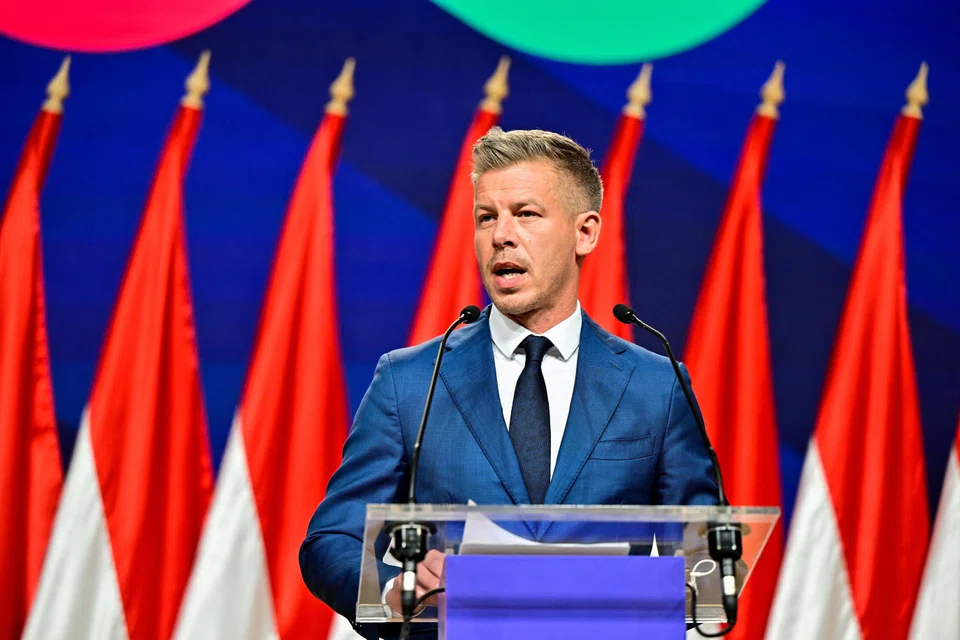
[BUDAPEST] Peter Magyar’s landslide victory over Viktor Orban in Hungary is nothing short of extraordinary.
Two years ago, Magyar’s political party, Tisza, did not even register in the public’s mind. Now, it has secured a constitutional majority that may well allow it to uproot the entrenched system of “illiberal democracy” that Orban built over the past 16 years.
The result has implications far beyond Hungary, and even far beyond Europe.
For Hungarians, it represents a clear rejection of what many had come to regard as a mafia state, marked by centralised power, slavish media and systemic corruption – led by Orban’s family (his son-in-law is now one of the country’s richest men).
Under Orban, Hungary’s orientation became increasingly anti-European and pro-Russian, endangering its national security and the security of the West more broadly.
Magyar’s victory also demonstrates that democratic systems can correct themselves despite institutions being hollowed out and power appearing immovable.
Even a semi-authoritarian system can, it seems, be challenged and ultimately overturned under the right conditions.
Takeaways
Several lessons are now clear for other countries confronting predatory states built up by populists in power.
First, political leadership matters. A successful challenge requires a figure who combines political skill with insider knowledge.
Magyar’s former proximity to the system (he was a relatively minor figure in Orban’s own party) gave him credibility and insight into the ways the government might manipulate the election.
Second, centrism is not a sign of weakness, but the anchor for a winning strategy. By avoiding extremes and appealing to moderates on both sides, Magyar was able to cobble together a winning coalition from an otherwise fragmented opposition.
Third, state control over traditional media is no longer decisive if challengers can find new channels for reaching the public.
Hungary’s media landscape has long been dominated by pro-government outlets, making conventional campaigning for anyone but the incumbent a non-starter.
But Magyar devised a strikingly simple workaround: He went directly to the electorate, embarking on a year-long tour of the country. By engaging directly with voters in small towns and villages, he created alternative channels of communication and rebuilt trust.
Fourth, external endorsements can backfire, because voters are highly sensitive to such interference. By dropping in to campaign for Orban, US Vice-President JD Vance may have done more harm than good.
Lastly, the EU matters. EU membership played an important background role in sustaining Hungary’s democratic resilience, because it provided a framework for preserving democratic contestation (even though it cannot substitute for domestic political mobilisation).
Now that he has won, Magyar’s first big test concerns the economy.
Key challenges
His government is inheriting a fragile macroeconomic environment marked by weak growth, low investment, and a business climate burdened by a legacy of corruption, favoritism, and extensive, often unpredictable government interventions.
A wide array of administrative measures – price and margin caps, sector-specific taxes and ad hoc regulatory changes – have distorted market signals, discouraged investment and eroded confidence. Real-estate prices are high and rising, owing to the outgoing government’s ill-focused housing schemes.
At the same time, fiscal imbalances are significant. The deficit is expected to reach 5.5 to 6 per cent of gross domestic product this year. With public debt already elevated, there will be limited policy space to buffer economic shocks.
A major short-term risk is the country’s high dependence on Russian energy – a vulnerability that the Kremlin will likely try to leverage.
Not all negative
But the outlook is not entirely negative. Inflation has come down from previously high levels, the current account is broadly balanced, and international reserves have been built up to comfortable levels.
The financial sector is stable and profitable, despite being burdened by ad hoc tax measures. These factors provide a narrow window for the new government to pursue a policy reset, with an eye towards restoring the state’s credibility.
That will require a focused and pragmatic economic programme. The most immediate priority is to unlock the EU funds that have been frozen because of Orban’s rule-of-law violations.
Magyar’s commitment to join the European Public Prosecutor’s Office is a critical step, signalling a break with past governance practices. Constructive engagement with EU partners – including his pragmatic stance in support of Ukraine – should be reassuring.
Second, the government should undertake a rapid, transparent review of Hungary’s fiscal position, ideally by involving independent institutions or external partners such as the International Monetary Fund.
Establishing a clear picture of the fiscal “patrimony” is key to designing a credible adjustment programme and delivering on election promises. It also should allow for targeted expenditure cuts – starting with politically motivated subsidies and spending on propaganda – while protecting and redirecting resources towards priority areas such as health and education.
Third, dismantling market-distorting interventions must begin immediately. Price caps, margin controls and other administrative measures should be eliminated, with clear communication to head off inflationary pressures.
Restoring a rules-based, market-oriented framework is essential to rebuild confidence and revive private investment.
Finally, the government should anchor its strategy in a clearer upfront commitment to adopt the euro.
While that cannot happen overnight, sending the right signal will eliminate some sources of uncertainty, reinforce fiscal discipline, strengthen institutional credibility and align Hungary more firmly with its European partners.
At the same time, prompt, large and pragmatic support from European partners and the EU will be critical.
This is not the time for Europeans to “double down” with demands on Hungary, as some senior EU officials were quoted saying in light of the new government’s constitutional majority. Rather, this is the time to deliver on key demands on both sides – fast.
The broader implication is clear. Electoral democracy, even when constrained, can still function as a mechanism of accountability. But it doesn’t happen automatically. It requires leadership, strategy and sustained interaction with voters.
Democracy cannot defend itself; only civic-minded politicians and engaged citizens can do that. PROJECT SYNDICATE
The writer is a visiting professor at the London School of Economics and Political Science
TRENDING NOW

Once staunchly pro-China, Malaysian Chinese businesses are now distancing themselves from Beijing

New launch or resale unit? Here’s a guide for homebuyers
The lesser-known prospects in the Asian chipmaking supply chain

Cliff Tan has 7 million followers and a 4-month waitlist. Why won’t he expand his business?

