Hainan’s Free Trade Port: A partner, not a rival, to Singapore
Divergence between ports creates opportunities for businesses to collaborate and complement each other’s strengths
MY VISIT to Hainan last December began after a televised interview on what the new Hainan Free Trade Port (FTP) could learn from Singapore’s experiences in logistics, governance and institutional trust.
With my family, I took the chance to visit our ancestral village in Qionghai, which my grandfather left for Nanyang (South-east Asia) almost a century ago. Finding our family name within the Quan genealogy at the clan temple added a meaningful, personal layer to the trip.
That brief return to our roots offered an interesting backdrop to understanding Hainan’s transformation. Conversations with local officials and observing the early momentum of the FTP provided a clearer sense of the island’s ambitions – and why Singapore’s position, far from being threatened, remains firmly anchored.
What do the numbers say?
There has been chatter in Chinese Internet spaces hyping the demise of Singapore and others with the recent Hainan initiative. Let’s be clear: Hainan is not Singapore’s rival.
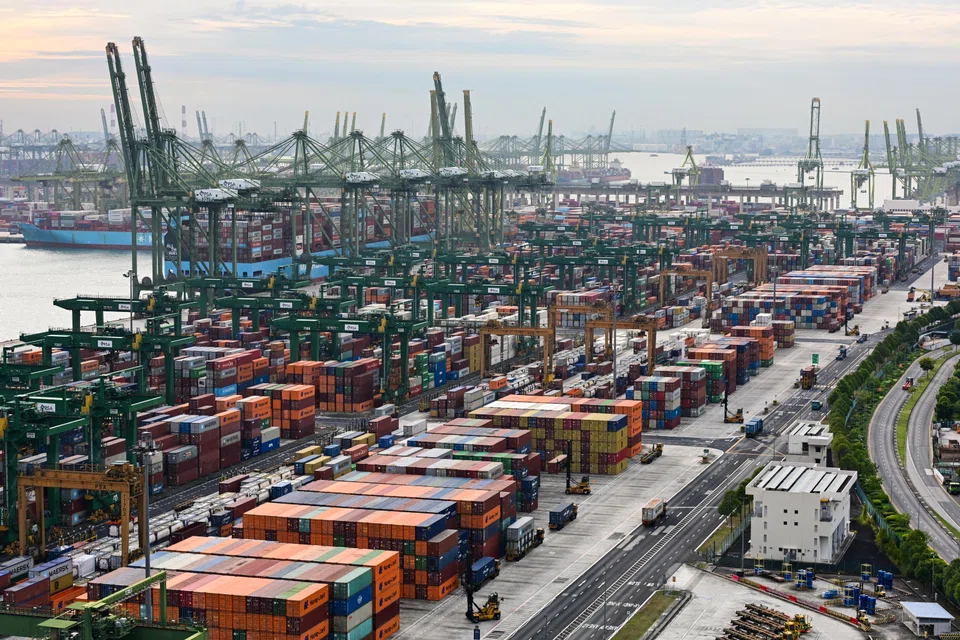
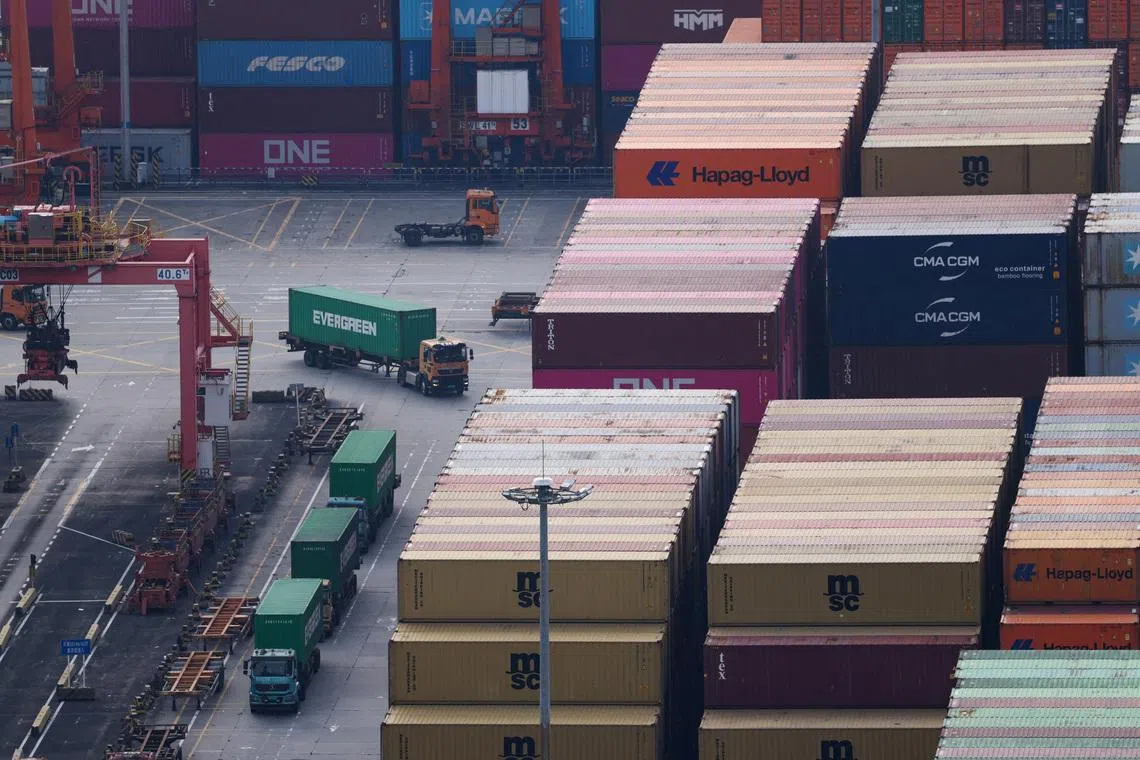
In 2025, PSA Singapore handled a record 44.7 million 20-foot equivalent units (TEUs), second only to Shanghai. Hainan processed 3.3 million TEUs, up more than 65 per cent from 2024 – about 7 per cent of PSA’s volume.
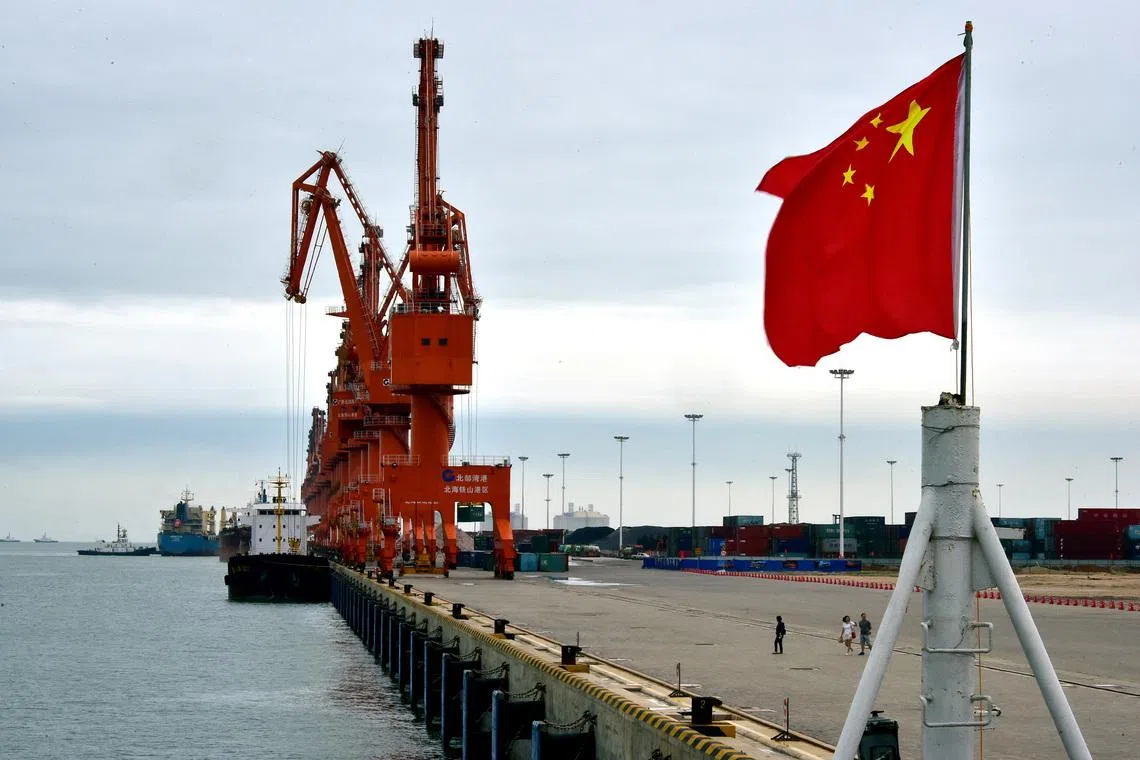
Even if Hainan meets its target of 10 million TEUs by 2035, this would still represent only 22 per cent of Singapore’s current volume.
The Maritime and Port Authority of Singapore has indicated that the Tuas Port – officially opened in 2022 – is targeted for completion in the 2040s, with a handling capacity of 65 million TEUs.
While Hainan’s Yangpu Port offers 33 international shipping routes and will include more, Singapore connects to more than 600 ports in 120 countries, with 300 container vessel calls weekly.
That gap is not closing quickly – it’s being bridged with policy and trade gravity. Hainan also offers marine fuel that may cost less, thanks to tariff-free imports.
But among global carriers, Singapore is still favoured in terms of total bunkering cost, which factors in refuelling time, fuel quality risk and port connectivity.
The Republic offers more than just a port. As Asean’s gateway city, Singapore is a hub for wealth management, banking, insurance, aviation, biomedical sciences, digital economy, green finance and specialist services such as accounting, legal, healthcare and education, among others.
In addition, manufacturing is a key component of our diversification strategy, accounting for 17 per cent of gross domestic product. The government’s aim is to bring this to 20 per cent by 2030.
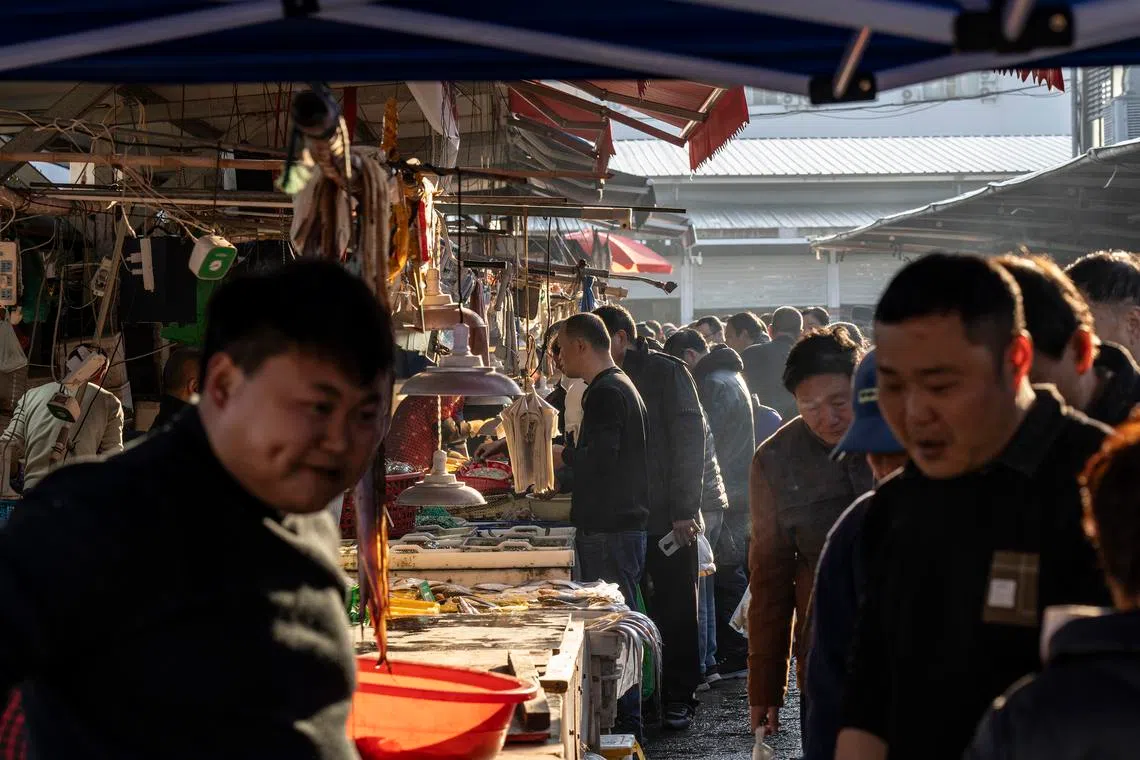
Hainan’s focus is much narrower. Services, led by tourism and duty-free retail, account for 61.7 per cent of GDP – the main driver of its economy. Primary production and industrial production rank next, with shares of 20.7 per cent and 17.5 per cent, respectively.
In contrast, Guangdong, its nearest neighbour, a manufacturing powerhouse and China’s largest provincial economy, recorded these shares for the same sectors in 2024: 57.5 per cent (services), 4.1 per cent (primary production), and 38.4 per cent (industrial production).
Aware of these gaps, the Chinese central government has instituted various incentive schemes to support the Hainan FTP framework. Notably, the share of goods eligible to enter Hainan tariff-free will increase to 74 per cent (covering 6,600 categories) from 21 per cent (1,900 categories).
Moreover, goods produced on the island can be imported into the mainland tariff-free, provided that at least 30 per cent of their total value is added through local processing.
Complementarity, not competition
This divergence between Hainan and Singapore creates opportunities for businesses to collaborate and complement each other’s strengths.
In aviation, Changi Airport Group and Haikou Meilan International Airport on Jun 16, 2025, signed a two-year memorandum of understanding to deepen collaboration in areas such as airport management, route and cargo development, staff training, and technological innovation.
Both parties will jointly develop new air routes by encouraging airlines to expand direct and transit connections between Singapore and Hainan’s airports, including Meilan.
There is also scope for closer financial cooperation between financial institutions in Singapore and their counterparts in Hainan, supported by the FTP’s more liberal policy environment, including the added benefit of the 15 per cent corporate income tax rate.
In addition, the establishment of Singapore’s second renminbi clearing bank in December 2025 opens the door wider for greater collaboration with financial institutions in Hainan.
Multi-functional free trade – or EF – accounts for companies registered in the Hainan FTP facilitate cross-border capital flows.
As at October, 11 banks in Hainan had opened 658 EF accounts, handling transactions totalling 268.9 billion yuan (S$49.3 billion) across 80 countries and regions.
The People’s Bank of China has also introduced various pilot programmes in cross-border asset management and trade investment facilitation within the Hainan FTP.
With bilateral trade between Asean and China surpassing a record US$1 trillion last year, businesses in the bloc can transact with Hainan-based enterprises more easily using the renminbi via the Singapore hub, thus reducing foreign exchange costs, minimising settlement risks and facilitating trade flows.
A legacy of opportunity-seeking
Standing in the Quan clan temple, I felt the arc of a century: from emigration to return, from survival to reflection.
My grandfather left because Nanyang offered openness and opportunity – values Singapore later perfected. Today, Hainan is crafting its own version of openness, on Chinese terms, along a different timeline.
As his descendant, I see not rivalry, but continuity. One generation sought chances abroad; the next may build bridges between the island his forebear left and the city-state that gave his family a future.
Asia does not need fewer hubs; it needs more resilient, diversified nodes. Singapore’s genius has always been turning change and challenge into opportunity – not fearing it.
Let us respond to Hainan not with anxiety, but through strategic engagement. In doing so, we honour both our institutions – and our shared humanity.
The writer is head of research at UOB