
THE BOTTOM LINE

Has Trump won the trade wars?

His tariff strategy remains a strategic gamble with uncertain payoffs
Summarise
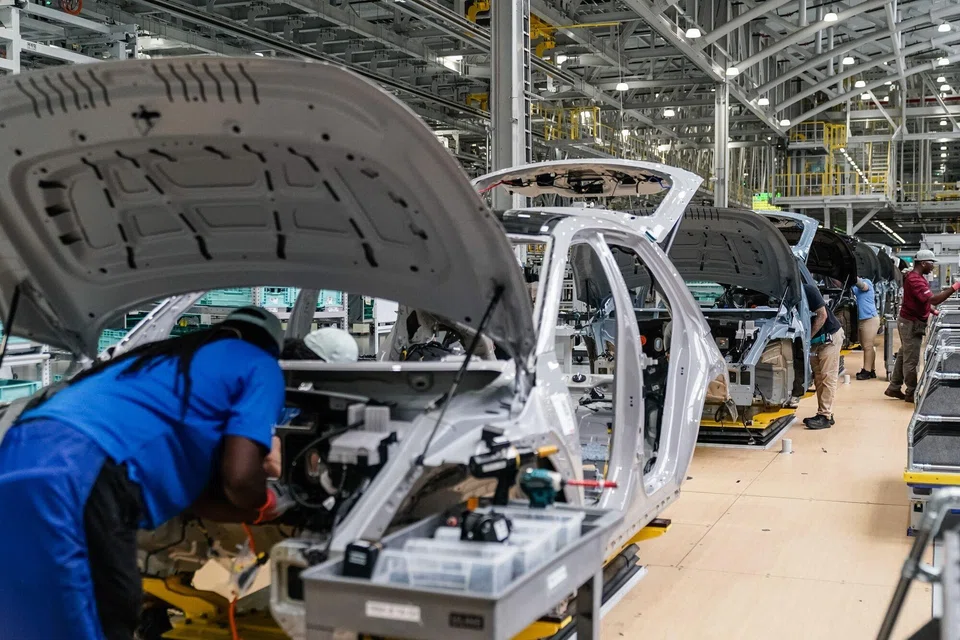
    • US President Donald Trump promised to revitalise American manufacturing through protective tariffs, but the results have been disappointing. The sector lost a combined 14,000 net jobs in May and June, according to federal data.
    • US President Donald Trump promised to revitalise American manufacturing through protective tariffs, but the results have been disappointing. The sector lost a combined 14,000 net jobs in May and June, according to federal data. PHOTO: BLOOMBERG
    Published Wed, Aug 6, 2025 · 07:00 AM

    TRADE tensions are continuing to evolve, as US President Donald Trump last week unveiled his much delayed reciprocal tariffs. He increased tariffs on merchandise from about 70 countries and raised the rate on certain products made in Canada to a punitive 35 per cent. 

    Trump claims his moves will rebalance a global trade system that he argues has been tilted against the world’s largest economy.

    But the question of whether Trump has emerged victorious from the trade wars requires a complex economic and geopolitical assessment that focuses on economic outcomes, strategic objectives and long-term implications for American competitiveness.

    As of now, the trade war landscape remains dynamic and contentious, reflecting volatility rather than clear victory. After Trump increased his tariffs, China retaliated in March by imposing 10 to 15 per cent tariffs on select agricultural, meat and dairy products. The escalation reached unprecedented levels as Beijing responded to Trump’s moves with retaliatory tariffs at 125 per cent on certain goods in April.

    Yet, there have also been attempts at de-escalation. In mid-May, the Trump administration reached an agreement with China to lower tariffs dramatically and open some markets that both sides had closed off as tensions rose. Tariffs on Chinese imports fell to 35 per cent from 145 per cent. Whether the temporary trade truce will be extended beyond Aug 12 remains unclear even after recent talks in Stockholm last week. 

    In separate trade deals with Japan and the European Union (EU), the Trump administration secured significant concessions from its partners without offering equivalent ones in return. The EU and Japan will accept 15 per cent tariffs on most exports to the US, with the EU agreeing to make large purchases of American energy and military equipment, and the Japanese agreeing to invest US$550 billion in the US and to increase purchases of American-sourced fossil fuel, nuclear energy and aircraft.

    From a fiscal perspective, the tariffs appear to generate substantial revenue, with the Tax Foundation estimating that they will raise over US$2 trillion through to 2034. However, once the tariffs’ negative impact on the US economy is accounted for, the realistic dynamic revenue falls to US$1.4 trillion – a figure that is eroded even more by foreign retaliation. This demonstrates that the fiscal gains come at a direct cost to overall economic growth.

    The trade war’s intensification has created significant economic disruption for US businesses and consumers. According to an Aug 1 analysis by the Budget Lab at Yale, the full scope of US tariffs and foreign retaliation is projected to reduce payroll employment by 497,000 jobs by the end of 2025. Furthermore, the report estimates that the US economy will be persistently 0.4 per cent smaller in the long run. These represent substantial economic costs that must be weighed against any strategic gains.

    One of Trump’s central promises has been to revitalise American manufacturing through protective tariffs, but the results have been disappointing. The sector lost a combined 14,000 net jobs in May and June, according to federal data. Factory employment has dropped to the lowest level in five years. This runs contrary to Trump’s assertion that higher tariffs would translate to more American manufacturing jobs.

    Trump’s tariffs have largely failed to overcome broader economic forces driving manufacturing overseas, pointing to structural challenges that run deeper than trade policy alone. From 1997 to 2024, the US lost around five million manufacturing jobs, experiencing one of the largest drops in manufacturing employment in history. 

    Moreover, despite the aggressive tariff strategy, America’s fundamental trade imbalance persists. The real US trade deficit has increased every year since 2016, reducing GDP growth by roughly 0.25 per cent annually over 2017 to 2019, according to the Economic Policy Institute. Tariffs alone cannot solve these structural trade imbalances.

    The trade war’s ultimate success or failure may depend on developments that extend well beyond Trump’s current term. The structural challenges facing American manufacturing, including automation, global supply chains and comparative labour costs, cannot be solved through tariffs alone. Meanwhile, the economic costs of sustained trade conflict continue to accumulate.

    China’s retaliatory capacity and economic resilience have also proven greater than many initially anticipated, while US businesses and consumers bear the burden of higher prices and economic uncertainty. The temporary truces and agreements reached so far suggest that both sides recognise the need for de-escalation, but fundamental disagreements remain unresolved.

    While the tariffs have achieved some tactical objectives, like generating revenue and forcing periodic negotiations, they have largely failed to deliver on their primary strategic promises of manufacturing revival and trade balance improvement.

    The economic costs have been substantial and measurable, while the benefits remain largely theoretical or temporary. Most significantly, the trade war has not reversed the long-term decline in American manufacturing employment or meaningfully reduced trade deficits.

    At the same time, there are questions about the durability of the trade agreements that the Trump administration has signed, with foreign governments wondering whether the president will honour the new pacts.

    Rather than a clear victory, Trump’s trade wars represent an ongoing strategic gamble with uncertain long-term payoffs.



