
THE BOTTOM LINE

Hong Kong’s low-tax lure is getting a reality check

A cut in levies may not be the unequivocal boon for the city’s financial sector
Summarise
Published Tue, Aug 11, 2026 · 06:00 PM
    • Premium office vacancy rates in the Central Business District in Hong Kong are at their lowest since 2023, while rents rose by 6 per cent in the first half of 2026.
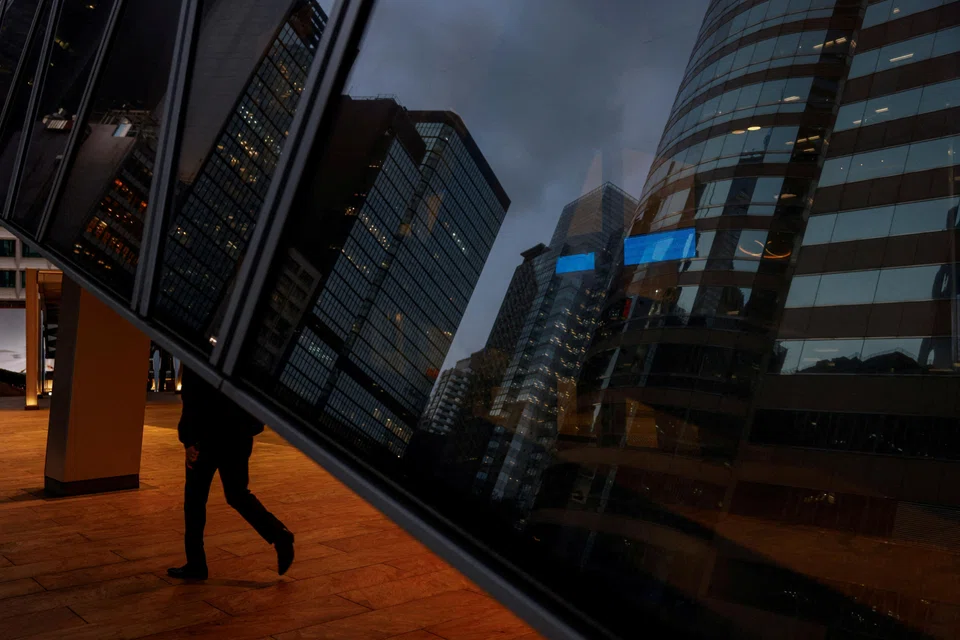
    • Premium office vacancy rates in the Central Business District in Hong Kong are at their lowest since 2023, while rents rose by 6 per cent in the first half of 2026. PHOTO: REUTERS

    [HONG KONG] The competitiveness of Hong Kong as a financial centre is about to be tested.

    The low-tax haven has two opposing forces that promise to transform its US$5.4 trillion asset-management industry, which overtook Switzerland as the world’s largest cross-border wealth hub in 2025.

    The city is widely expected to approve a landmark tax reform designed to attract overseas asset managers.

    Under the proposal, effective taxes on qualified carried interest and performance fees – at both the company level and in the hands of Hong Kong-based employees – would be wiped to zero.

    It is super attractive, considering that local residents face a salaries tax of up to 15 per cent. In addition, this concession will apply to a wide range of funds, from private equity to family offices.

    The scope of eligible transactions will be widened to include physical commodities and cryptocurrencies. If passed, the tax exemptions will apply retroactively, starting from April 2025.

    This generous offering will only speed up the pace of global hedge funds’ expansion in the city. Top-tier companies, from Jane Street Group to Qube Research & Technologies, have taken up large amounts of space in high-end skyscrapers.

    As a result, premium office vacancy rates in the Central Business District in Hong Kong are at their lowest since 2023, while rents rose by 6 per cent in the first half of 2026.

    Expats are returning to the city, and luxury retail sales – especially in jewellery and watches – are rebounding.

    China’s tax hunt

    But if hedge-fund employees are dreaming about paying no taxes on their million-dollar bonuses, the city’s private wealth managers are panicking, fearing that their clients would reflexively flee the city in response to Beijing’s latest cross-border crackdown.

    China is getting serious about its global tax hunt, asking citizens to retroactively cough up billions of dollars in unpaid bills.

    In recent weeks, mainland authorities said they would begin taxing returns from offshore trusts and overseas insurance policies, closing longstanding loopholes used by the ultra-wealthy as well as the middle class.

    China’s 20 per cent levy on overseas capital gains is a longstanding policy.

    However, Beijing is now actively enforcing it, leveraging the so-called Common Reporting Standard (CRS), a global financial accounts information-sharing framework adopted by more than 120 jurisdictions to pursue unpaid taxes.

    Those relying on golden visas, or using complex financial structures to obscure their money trail, will have a hard time hiding offshore assets, especially with the advent of CRS 2.0, which Hong Kong plans to adopt in 2028.

    As far as Beijing is concerned, people who spend most of their time in the mainland, or generate the bulk of their wealth in China, are tax residents. Foreign passports offer no exemptions. 

    Beijing’s tax hunt puts Hong Kong in an awkward spot. The city has been a magnet for mainland wealth, in large part because it does not have a capital gains tax.

    But will its financial products still be attractive if the Chinese have to pay 20 per cent to their local tax bureaus? In addition, will the ultra-high-net-worth individuals pull money out?

    Interestingly, the US has not adopted the CRS.

    Investment banking to benefit

    The outcome could see a divergence of fortunes in Hong Kong’s finance industry. 

    Global hedge funds may further expand their presence, not necessarily to trade Hong Kong-listed companies, but to enjoy the city’s zero-tax regime and be closer to mainland China’s deep talent pool.

    This in turn would spur a boom in traditional investment banking services provided by prime brokerages.

    However, private wealth management is likely to suffer, as Hong Kong loses its low-tax appeal for mainland Chinese. 

    The existential question now is whether the city’s finance industry can diversify internationally fast enough, especially in terms of funding sources.

    The good news is that the share of professional investors, especially from Europe and North America, has risen.

    In 2025, net inflows from institutional managers surged more than three times to HK$1.4 trillion (US$176 billion), much faster than private banking’s 79 per cent growth, the Securities and Futures Commission of Hong Kong said.

    The bad news is that China still looms large.

    While estimates differ, the Boston Consulting Group said that mainland flows accounted for 59 per cent of cross-border wealth under management in 2025. 

    This is why passing the fund industry’s landmark tax reform is all the more important for Hong Kong.

    Hedge-fund bros making millions and paying no taxes may not be a good look, and it may well push up the cost of living. 

    But that is a price the city has to pay to blunt the blow from the north, if nothing else. When China takes away the sugar bowl, you have to find the high somewhere else. BLOOMBERG



