Hong Kong’s property recovery is as chaotic as its reopening

For the city to reclaim its position as Asia’s pre-eminent financial centre, it needs to ensure a rebound in commercial real estate
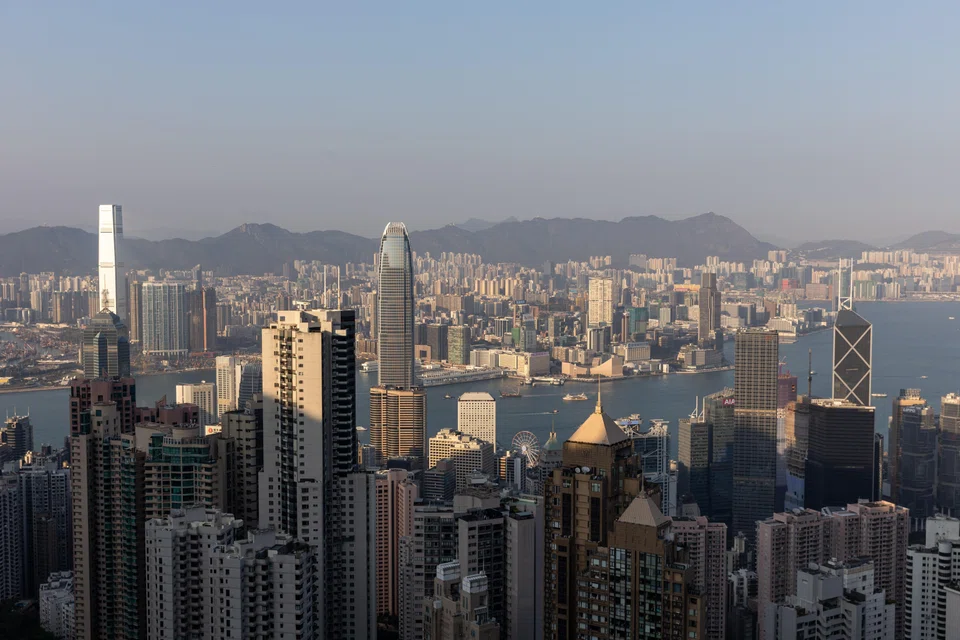
    • Realtors are pinning their hopes on the return of mainland enterprises, after the border reopening. But instead of offices, Chinese companies seem more keen on industrial buildings.
    • Realtors are pinning their hopes on the return of mainland enterprises, after the border reopening. But instead of offices, Chinese companies seem more keen on industrial buildings. PHOTO: EPA-EFE
    Published Thu, Mar 9, 2023 · 10:30 AM

    AS HONG Kong’s commercial landlords and real estate agents are finding out, a border reopening and the return of Chinese visitors do not necessarily spell a universal boom to the city.

    Restaurants, especially in the business district of Central, are full. The Clockenflap Music and Arts Festival is drawing crowds. In the evenings, people swarm in and out of shops in Causeway Bay, once home to the world’s most expensive retail space.

    Meanwhile, apartment sales are picking up, with the city’s biggest developers offloading hundreds of flats within days. It’s a huge relief after a painful 2022, when transaction volumes sank to the lowest in decades.

    But there are ominous signs. Sun Hung Kai Properties recently bought a prime commercial site, which will eventually house “the second-tallest landmark building in Kowloon”, for HK$4.73 billion (S$816.4 million), far short of the HK$7.3 billion to HK$12 billion range that the land was expected to fetch. So why is the city’s biggest builder so cautious despite robust demand for its apartments?

    This sale underscores the business elites’ scepticism towards Hong Kong’s economic recovery, and by extension, its property rebound.

    Last year, vacancy at Grade-A office buildings hit an all-time high of about 15 per cent, according to CBRE, a commercial real estate services provider. Financial companies are by far the largest tenants, accounting for 27 per cent of total leasing volume. But as Western investment banks scale back their China exposure and cut jobs, who will assume those pricey leases?

    There are few takers. Government agencies are also active in this space, accounting for 9 per cent of total leasing volume. However, they mostly rent in the less expensive areas, such as Kowloon.

    Realtors are pinning their hopes on the return of mainland enterprises, after the border reopening. But instead of offices, Chinese companies seem more keen on industrial buildings.

    A case in point: State-owned China Resources Group was the largest investor in the city’s commercial real estate last year, shelling out HK$7.8 billion on four transactions. In May, a logistics subsidiary bought a pair of warehouses from Kerry Properties for HK$4.6 billion. Despite an ongoing trade war with the US, only 2.5 per cent of Hong Kong’s warehouses are vacant, according to CBRE.

    Some of the divergence in vacancy rates is due to supply. Last year, Hong Kong was flooded with 4.3 million square feet of new office space, the highest since 2008, even though commitments to the new stock were few and far between, with just 20 per cent absorbed by year-end. Much of the incremental supply came from the east of Kowloon, where the government is redeveloping the city’s old commercial airport into a major business district.

    New warehouse space, on the other hand, has been sparse. This year, we can expect 5.4 million sq ft coming to the market, the highest since 1992. However, that will be from a joint-venture project that Alibaba Group Holding’s logistics unit Cainiao Network is developing at the Hong Kong International Airport. Half of that space is for its own use.

    As Hong Kong limps out of a self-imposed isolation, we are confronted with a messy, uneven recovery. Commercial property, which over the years has been a reliable and timely barometer of business sentiment, reflects just that.

    It is thus worth wondering if the government has the right policies. Chief Executive John Lee seems keen to reclaim Hong Kong’s throne as Asia’s pre-eminent financial hub, even as global banks reduce headcount. Meanwhile, its importance in international trade is put on the back burner. The city’s commercial real estate market is telling him that it is time to retool his focus. BLOOMBERG