

How big money finances Indian politics
The business elite fund political parties and elections in return for economic favours or for securing favourable policies for their industry
 Add BT as a preferred source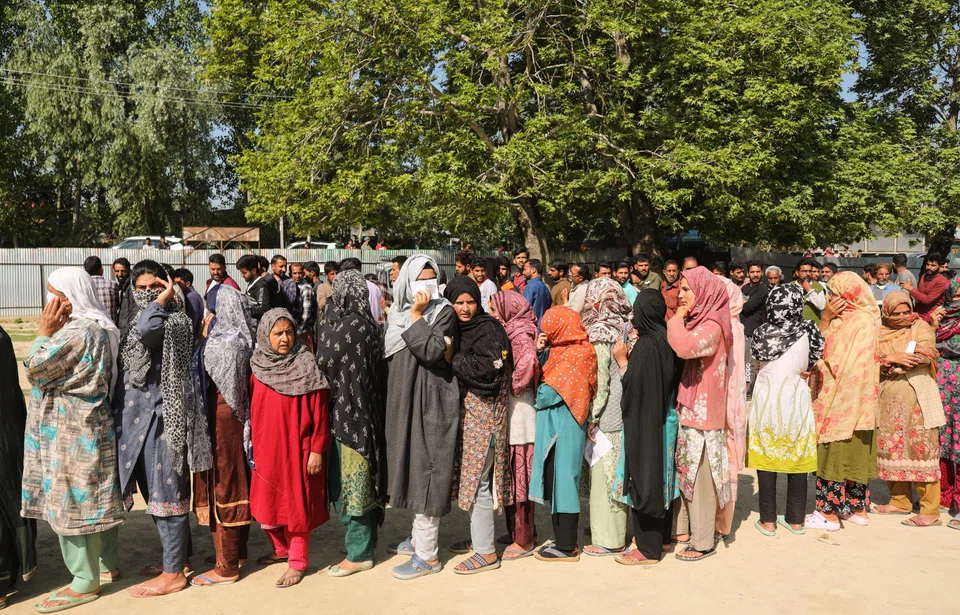
MANY years ago in West Bengal, I encountered school-age boys playing Carrom or cricket all day. Curious as to why they weren’t at school or out working, I asked, to which they responded: “We are all employed. We do party-r-byabsa (“business of the party”, or work for the Communist Party of India-Marxist).
“We participate in rallies, attend meetings, and mobilise people on election days. In return, the party gives us small contracts (such as repairing roads, tube wells, etc).”
This “business of the party”, as British anthropologist FG Bailey called it, worked on the basis of parties distributing minor contracts to their workers at the grassroots level.
Times have changed.
Political parties are now corporate entities. They no longer depend on self-sacrificing, full-time volunteers but party office bearers. These functionaries are paid handsomely, travel by airplanes or air-conditioned cars and stay in five-star hotels.
They look more like party executives than workers. The party offices resemble luxurious hotels or corporate headquarters.
Massive war chest
For all this, political parties need to build a massive war chest.
A part of that money must be “in white” – auditable and traceable.
Corporations and ultra-high net worth individuals need the ruling parties to capture regulatory apparatus, get access to lucrative natural resources and government contracts, buy state enterprises and competitors (often taking advantage of insolvency and bankruptcy resolutions) at an undervalued price.
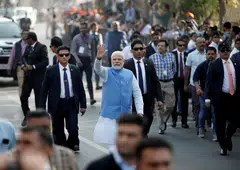
The scandal of electoral bonds in India has revealed this new quid pro quo relationship between the ruling party and the corporate world.
The sectors which purchased the bulk of the electoral bonds included mining and power generation, “sinful” industries (such as lottery and gambling), infrastructure contractors and real estate developers, buyers of undervalued state shares, and highly regulated sectors such as pharmaceuticals, chemicals, civil aviation, banking and telecommunications.
These bond purchasers stood to gain windfall profits by receiving favours from the Union government at the centre as well as the parties running the state governments. Some companies have donated money to political parties worth more than their combined profit during the period of purchase of an electoral bond. This perhaps points to them fronting for some hidden entities.
There are also allegations of shell companies donating electoral bonds. The News Minute found that many companies were raided by the Central Enforcement Directorate (which investigates money laundering) and the Income Tax Department before they purchased electoral bonds. This points to a coercive mechanism of extracting donations by the powers that be.
Unsurprisingly, the ruling Bharatiya Janata Party (BJP) has cornered a disproportionate amount of these electoral bonds, putting it in the pole position financially in the general elections in 2024.
Surprisingly, none of the corporate houses believed to have a close relationship with particular political parties were shown to have purchased any electoral bonds at all.
The Supreme Court took a long time to pronounce a verdict but ultimately declared the electoral bonds illegal and unconstitutional on Feb 15, 2024. It forced the State Bank of India (the sole designated seller of the bonds) to reveal the details of the purchasers and redeemers.
Nevertheless, the court allowed the recipient parties to retain and use the donations.
This connection between business and politics is nothing new.
At the national level, there has always been a quid pro quo relationship between the political and the business elite. The business elite fund political parties and elections in return for favourable policies pertaining to their industry.
Three events have shaped these links: the liberalisation of the Indian economy in the 1980s and 1990s, the 9/11 terror attack on the United States, and the rise of social media.
With economic liberalisation, the government’s infrastructural projects at the grassroots level grew massively, expanding the scope of offering contracts to local party leaders, workers, and followers.
The commodification of land that followed was crucial.
In a land-scarce country, the demand for land went up exponentially in the 1990s. Provincial political leaders in and around urban centres began to control the supply of land for real estate, industry, academic institutions and hospitals. Political parties expect their expenses to be covered by such local-level leaders.
The bigger game is played at the national level. In a liberalised economy, monopolies and oligopolies are created not by erecting entry barriers but by strangling competition, capturing the regulatory apparatus and monopolising financial resources. The politics and business nexus helps in this.
The growth of social media has also come in handy for political parties in managing public perceptions.
The parties profile and target individual voters and influence them using social media platforms. They exploit algorithms to ensure their content is spread far and wide while suppressing the opposition’s messages. This requires a vast war chest to pay for party officials, professional agencies and IT workers.
Money is also needed to place advertisements. Lavish ad spend by the better-resourced parties makes the political terrain unbalanced and an unlevel playing field. In certain instances, the opposition parties’ bank accounts were frozen to deprive them of money to buy advertisement slots and campaign.
The 9/11 terror attack in America also affected global financial transactions by forcing transparency. Financial institutions must now do due diligence to track and audit the digital footprints of transactions. It is imperative for private corporations, and now even political parties, to maintain a clean money trail.
After the electoral bonds scandal, however, India needs to rethink the regulation of political funding to create a level playing field.
The transformation will not be easy. Nevertheless, there may be a way forward.
First, by ensuring the ruling party does not abuse the Income Tax Department, Enforcement Directorate or other investigative agencies to force political donations. It should be answerable directly to Parliament and its oversight committees.
Second, elections could be publicly funded. The financial resources for this could be generated from a cess and additional tax on corporations and industrial use of natural resources.
Third, TV and print media could be mandated to allocate advertisement slots on a proportional basis to all recognised political parties.
Finally, social media and technology companies should make declarations and furnish weekly reports on the activities of political parties and their proxies. Any deviance can be flagged and blocked.
The writer is professor at the Jindal School of Government and Public Policy, OP Jindal Global University, Sonipat, India
Decoding Asia newsletter: your guide to navigating Asia in a new global order. Sign up here to get Decoding Asia newsletter. Delivered to your inbox. Free.
Share with us your feedback on BT's products and services
TRENDING NOW
Malaysian tycoon Vincent Tan’s sell-downs point to pruning rather than an exit plan
Ringgit sinks to seven-month low despite record bond inflows as Fed fears dominate

Simba ordered to pay S$700,000 in damages to indoor skydiving operator Altitude Xperience for trespass

What Qantas’ Project Sunrise really means for Singapore

