How Iceland’s fish-farms are helping to cut greenhouse gas emissions – from cows
Nutrient-rich wastewater is used to grow seaweed for cow feed, which reduces methane from burping cattle
A POLLUTANT in one context can help save the earth in another. Long regarded as an environmental threat, wastewater from Iceland’s land-based fish farms is now finding new purpose in other industries.
Some fish farms are working with agricultural companies to use the nutrient-rich water as fertiliser, or with energy firms to create energy-generating biogas. Turning aquaculture byproducts into valuable resources helps to minimise the industry’s environmental footprint.
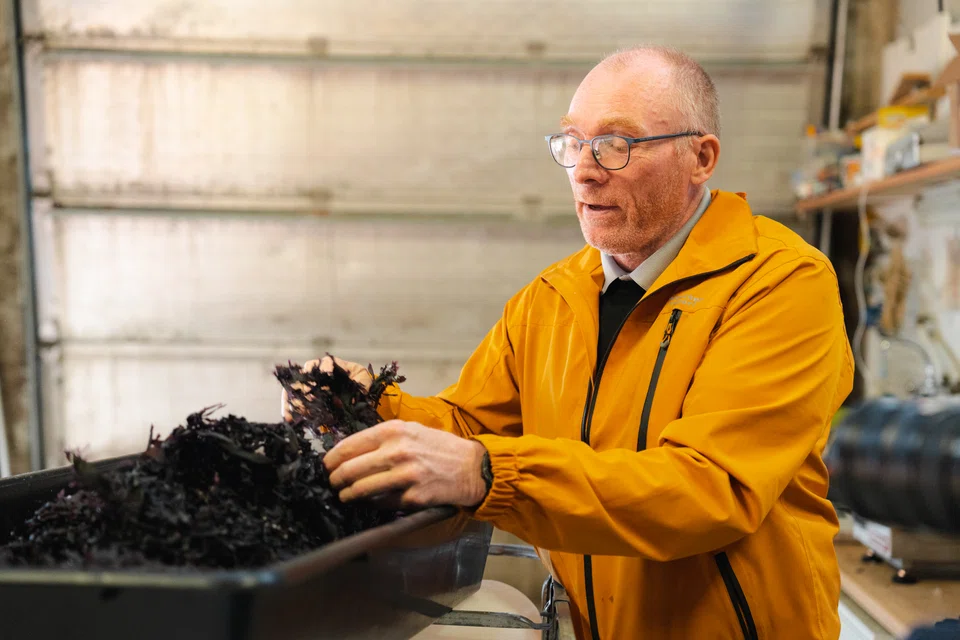
Wastewater can even reduce the greenhouse gas emissions of other industries. One such collaboration involves Lava Seaweed, a startup that repurposes wastewater to grow seaweed for cow feed.
“There is a lot of potential to minimise the environmental impact of aquaculture production through the adoption of circular practices,” said operations manager Johann Magnusson.
Circular practices reduce waste by creating closed-loop systems in which byproducts from one process are repurposed or recycled in another. Most of Iceland’s newer land-based salmon farms are integrating circular practices into their wastewater management systems, noted Magnusson.
Too much of a good thing
Fish-farm wastewater is rich in nutrients. If excessive quantities are released into coastal or inland waters, this can stimulate phytoplankton blooms: abundant and rapid increases in microscopic algae.
While phytoplankton blooms naturally occur in marine ecosystems, excessive blooms can be devastating.
“The main harm from this is that the organic waste produced by the blooms can decay and consume oxygen in the water, suffocating other organisms,” said associate professor Patrick Martin from Nanyang Technological University’s Asian School of the Environment.
High phytoplankton concentrations also reduce water clarity and stop sunlight from reaching the depths. This lack of sunlight could kill plants and macroalgae.
As Iceland’s land-based fish farms expand, proper wastewater management is thus crucial to prevent negative environmental impacts, said Dr Martin.
Wastewater is typically treated to remove organic waste before it is discharged into the ocean. While the composition of wastewater varies across farms, the untreated wastewater used by Lava Seaweed contains both solid biowaste and dissolved nutrients such as carbon dioxide, nitrogen, and phosphorus.
It contains about five times more carbon dioxide and 8 to 10 per cent more dissolved nitrogen than sea water – harmful if released into the ecosystem, but ideal for seaweed growth.
Repurposing wastewater this way also has economic benefits. Nutrients used in fertiliser, such as phosphorus, are limited resources globally, said Gudni Gudbergsson, head of the Freshwater and Aquaculture Division at the Marine and Freshwater Research Institute.
“As land-based farms in Iceland continue to scale up, the magnitude of wastewater produced will be enormous. If we can use that as fertiliser and reduce the need to import fertilisers from other countries, it will be a win-win for everyone,” he said.
From land to sea
Lava Seaweed is part of a regional 1.2 million euro (S$1.7 million) project to test seaweed-based feed’s effectiveness in reducing methane emissions from burping cattle, known as enteric emissions
Co-funded by an inter-governmental organisation under the Nordic Council of Ministers, the CircleFeed project aims to cut the dairy cattle supply chain’s emissions by over 30 per cent.
The global livestock industry contributes some 30 per cent of global methane emissions – and methane is 80 times more potent than carbon dioxide in warming the planet, according to estimates from the United Nations Environment Programme.
Under CircleFeed, Aarhus University in Denmark is analysing up to 15 seaweed blends grown by Lava Seaweed. Three or four of the blends will be selected and fed to cattle to evaluate their impact on the cows’ enteric emissions.
These tests, funded by The Global Methane Hub, are expected to continue until the end of 2025. Lava Seaweed will then conduct a study to determine the blends’ feasibility for market adoption, said Magnusson.
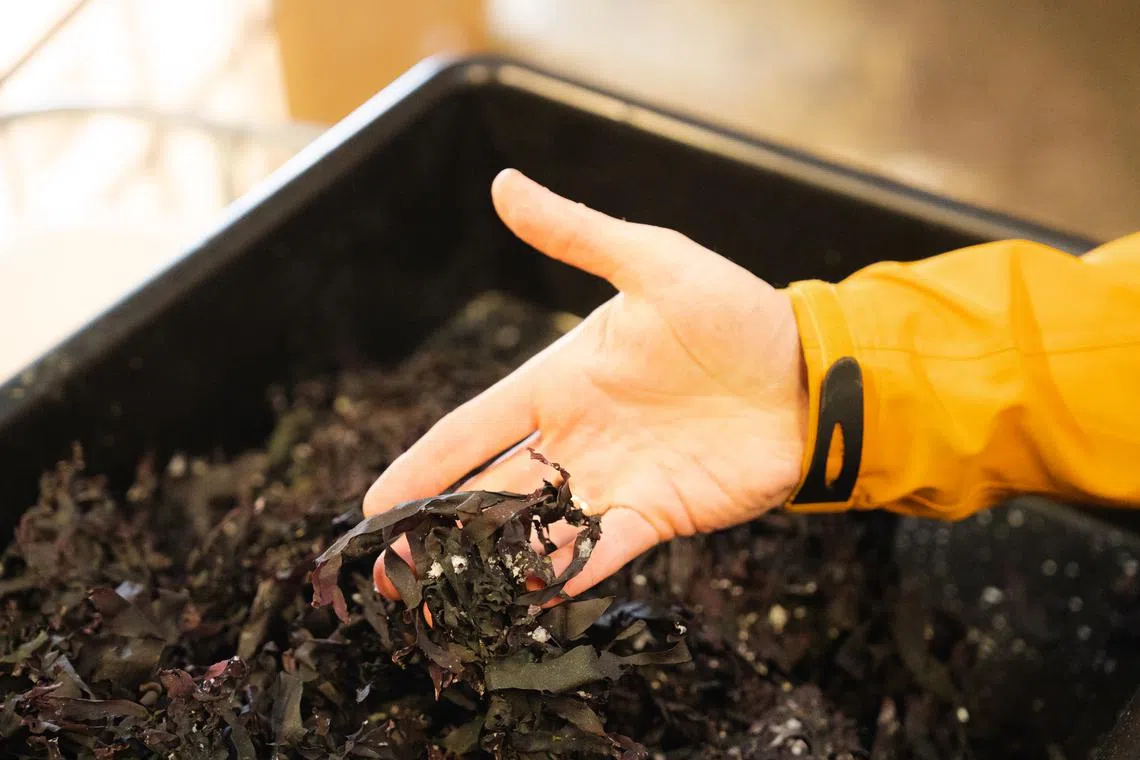
The startup’s pilot plant in Reykjavik currently grows two species of seaweed: Palmaria palmata and Chondrus crispus. These were chosen for their relatively high protein content and strong commercial demand in use in the food and cosmetic industries.
Lava Seaweed also plans to cultivate other species of red seaweed, such as those in the Asparagopsis genus. A study published in the Journal of Translational Animal Science showed that when cattle were fed with an Asparagopsis supplement, their overall methane emissions fell 51.7 per cent.
Published in August 2024, the study was conducted over a 200-day period on 160 Angus feedlot cattle, including the control group.
Finding uses for wastewater is just one way that Iceland’s fish-farms are greening their act. Said Magnusson: “There’s a significant effort in Iceland to make the fishing industry more sustainable.”

For instance, 100% Fish – a project initiated by startup incubator Iceland Ocean Cluster – encourages businesses to turn byproducts from the country’s S$1.9 billion fishing industry into health, pharmaceutical and even fashion products such as fish-skin leather.
“Across Europe, there’s a strong push to incorporate seaweed cultivation into sustainable food production, but Icelanders are not there yet,” he added. “The focus still largely remains on fish.”
The writer is a final-year communications student at the Nanyang Technological University’s Wee Kim Wee School of Communication and Information. This report is the second in a two-part series on Iceland’s aquaculture industry, produced as part of the school’s Go-Far overseas reporting programme.