How keeping up with the Joneses in parenting is crimping fertility

A new study urges policymakers to consider taxing private education or scaling back favourable treatment
Summarise
    • The challenge of bumping up fertility rates is particularly acute in Asia, where the most successful economies are ensnared by rock-bottom birthrates and rapidly ageing societies.
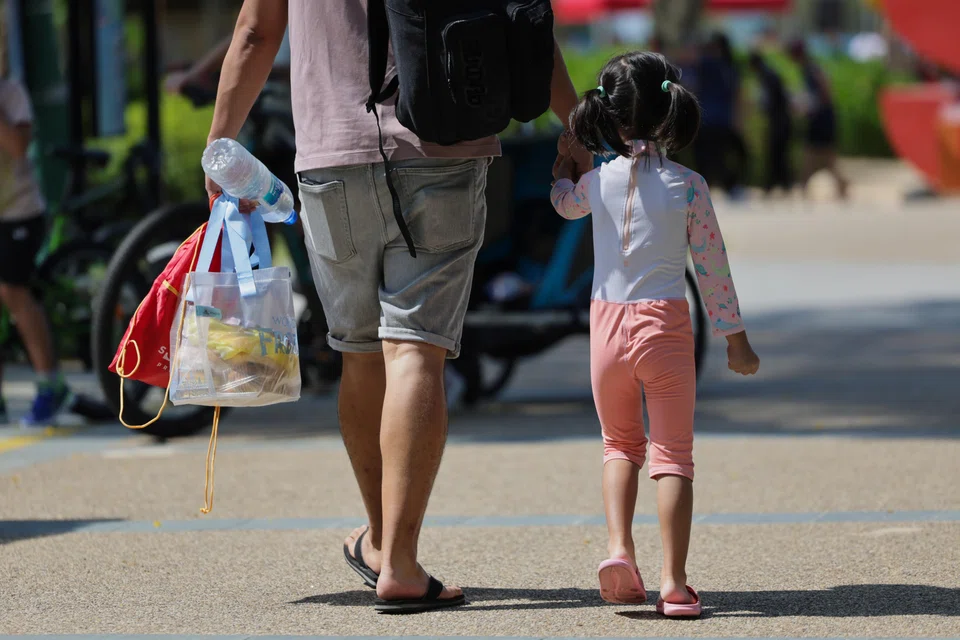
    • The challenge of bumping up fertility rates is particularly acute in Asia, where the most successful economies are ensnared by rock-bottom birthrates and rapidly ageing societies. PHOTO: BT FILE
    Published Wed, Oct 15, 2025 · 05:24 PM

    IN THE debate about tumbling fertility levels, the high cost of raising children, delaying marriage, access to birth control, and the career aspirations of women are usually subjected to scrutiny. Even bulky and expensive car seats have been likened to a form of contraception.

    But what about envy? The issue may not be so much the expense of rearing kids and giving them the best start in life, but perceptions of how you perform in that role relative to others. 

    The competition can be particularly intense. The price of keeping up with the Joneses – especially in the area of educating children – can be added to the causes of a likely decline in Earth’s headcount this century.

    If falling fertility is to be corrected through policy, education costs need to be considered and hard choices made. That is the upshot of a paper presented last month at the Brookings Institution in Washington. 

    The challenge is a global one, but particularly acute in Asia, where the most successful economies are confronted by rock-bottom birthrates and rapidly ageing societies. Singapore recently reported that for the first time, people 65 years and older account for more than 20 per cent of the city-state’s residents.

    This roughly matches the figure for South Korea; the numbers are higher in Japan and Hong Kong. (Rates of fertility in all four are well below 2.1 children per woman, the generally recognised number required for society to reproduce itself.)

    Yet, going deeper, the pressure to match or go beyond what friends and neighbours are doing does not get sufficient attention, according to the paper’s authors, and the result becomes a race – with questionable outcomes.

    Mums and dads do not obsess about “education per se, but about how their children’s education compares with that of other parents’ children”, wrote Lukas Mahler, Michele Tertilt and Minchul Yum. “When parents have strong comparison motives, parental investment is higher, and fertility is lower than in an economy without such motives.”

    As politically tough as it may be, the study urges policymakers to consider taxing private education or scaling back favourable treatment. The authors emphasise the role of after-school gigs, which can really suck up family finances and tend to benefit those who can afford it.  But merely outlawing private tutoring, ubiquitous throughout Asia, can be counterproductive – and bring collateral damage.

    Governments are well aware of the flashpoints. In 2021, China began a crackdown on tutoring, banning private companies from teaching the school syllabus during weekends and vacations. The campaign had various motivations. The cost of after-school sessions, once regarded as a necessary price for getting ahead, had come to be viewed as a block on fertility. China’s population is contracting, and officials are trying to provide incentives for larger families. Freeing up the family budget might help.

    “As much as parents hate the sky-high cost of giving the little ones a leg up in life, no couple wants to be among the first to declare enough is enough.”

    However, the broadsides against tutoring had byproducts. Widespread layoffs and bankruptcies fed into a lucrative underground market in education. Tutors who had instructed large groups turned to smaller gatherings, and sometimes one-on-one lessons. To make up for the loss of income, and the risk of discovery, fees escalated. 

    China was heavy-handed. But was the country entirely wrong in trying to do something about costs? South Korean officials pushed curfews on hagwons,  privately run outfits that help students gain an edge in preparing for exams. A nice idea, but the local authorities were reluctant to enforce the rules. And Koreans still spend enormous sums on education. (The UK added a 20 per cent value-added tax to private school fees in January, a contentious step denounced by conservatives as class warfare. Some pupils have left the system.) 

    Something needs to change, though it will not be easy. Much parental spending may be wasteful as it concentrates on “test-taking skills with limited value beyond the exams, contributing little to human capital formation”, the paper says. “In fact, some of it may even be harmful to children.” 

    The obstacles would not be just political, but cultural as well, going by the many points raised in the discussion at Brookings. Describing South Korea as one of the most successful economies, one academic called the taxing of education a dangerous idea. An entire development model hangs on the acquisition of knowledge. 

    The rug-rat race appears to be here to stay. As much as parents hate the sky-high cost of giving the little ones a leg up in life, no couple wants to be among the first to declare enough is enough. That does not mean some tinkering is not desirable. It is also best undertaken in conjunction with other measures. By all means, hand out baby bonuses and lengthen parental leave. But no single initiative will change behaviour as fundamental as having children or forgoing them. 

    Many nations have transformed their approach in the past decade or so. They have gone from policies that constrain population growth to advocating, at least gently, for the opposite. The question is whether it is too little, too late to reverse the decline in fertility. Parents will always want to do their best.

    Changing incentives will be an exercise for the long haul. Perhaps there should be a class in patience – free of tax. As for the Joneses, let them deplete their savings if you can look away. BLOOMBERG