
How long can energy markets withstand the Iran war?

Strategic oil reserves and spare capacity are running thin
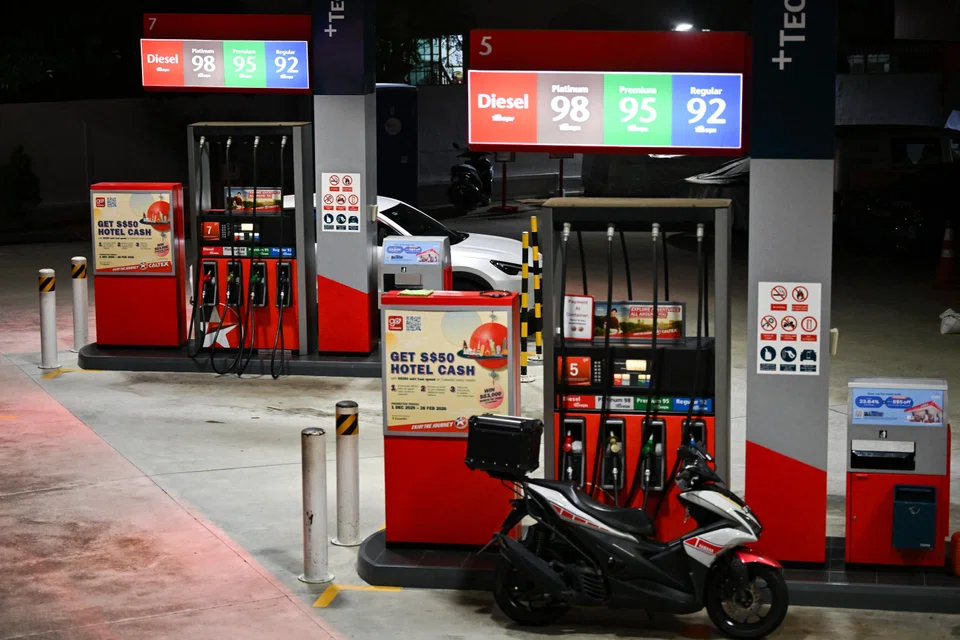
    • The whiplash in oil prices is the story of this war’s energy economics so far: extraordinary shocks, absorbed and unwound with speed. 
    • The whiplash in oil prices is the story of this war’s energy economics so far: extraordinary shocks, absorbed and unwound with speed.  PHOTO: BT FILE
    Published Wed, Jul 22, 2026 · 07:00 AM

    TWICE now, global oil markets have priced in the closure of the Strait of Hormuz, the choke point through which roughly a fifth of the world’s crude and a third of its liquefied natural gas once flowed, and twice they have priced it back out.

    After the war between the US and Iran began, Brent crude briefly spiked past US$120 a barrel.

    By June, when a reopened the strait, Brent had fallen to US$72.24, the lowest since the US and Israel attacked Iran on Feb 28.

    Then, when the ceasefire collapsed in early July and strikes resumed, prices climbed higher to the US$80 range, but that is still far lower than their peak.

    The whiplash in oil prices is the story of this war’s energy economics so far: extraordinary shocks, absorbed and unwound with a speed that would have seemed implausible a decade ago.

    The question worth asking now is how much slack is actually left in the system, and what happens when that slack runs out.

    Asean Intelligence

    Get insights into businesses across South-east Asia

    Get the free report

    Mitigating factors

    The market has held up better than expected because Opec+, led by Saudi Arabia and the United Arab Emirates, entered this war with more idle production capacity than at almost any point in the past two decades – the product of years of voluntary output restraint.

    That cushion let the group backfill lost Iranian and disrupted Gulf barrels without the kind of scramble that defined earlier oil shocks.

    Then, in March, the US and roughly 30 other International Energy Agency members agreed to release around 400 million barrels from strategic stockpiles, with Washington alone committing 172 million barrels over a rolling 120-day drawdown.

    That intervention did real work in capping the initial spike.

    China also reduced its oil imports sharply, with the volume in June dropping to the lowest in nearly 10 years. That helped to free up oil supply for other buyers.

    Finally, sluggish global demand growth, a surge in non-Opec supply and rapid rerouting of tankers around – rather than through – contested waters have all softened the blow.

    Refiners have adapted; insurers have found ways to price war-risk rather than simply refuse it; six vessels a day still threaded the strait even during its most contested stretch in July.

    Spare supply running low

    But the strain is showing. The utilisation of refinery capacity in the US is running near 97 per cent in July, and crude inputs are elevated.

    That means there is little leeway if a major facility goes offline.

    Washington drawing on its Strategic Petroleum Reserve has also come at a cost: Its stockpile has fallen to about 316 million barrels, the lowest level since 1983.

    Total US crude inventories, commercial plus strategic, are at their lowest since 1984. The reserve that used to be the emergency shock absorber has itself been substantially spent.

    Meanwhile, Opec’s spare capacity, while large in headline terms, is concentrated in the two countries most exposed to the war – Saudi Arabia and the UAE – and much of it sits behind the same strait that keeps closing.

    The other pressure is political-economic rather than physical: Producer countries have fiscal break-even prices that do not move with the war.

    Saudi Arabia in 2023 estimated that it needs oil at US$75 a barrel to balance its budget; other members need less, some need more.

    A sustained period of low prices – the kind driven by a durable ceasefire and a supply rebound – squeezes Opec+ members’ finances even as it helps consumers.

    That creates pressure within the cartel to underdeliver on production increases, which in turn removes some of the market supply that has kept a full-blown 2026 oil shock from happening.

    The real challenge

    The oil market has effectively been stress-tested in 2026 and has, in each round, found a new equilibrium within weeks, rather than months.

    That is a different resilience profile than the oil shocks of the 1970s or even in 2022, which occurred because of the Ukraine war.

    However, while the market has absorbed the pattern of shocks – escalating conflict, a sharp spike in oil prices, coordinated response by parties, partial reopening of the strait, oil-price retreat – its ability to do so is weakening.

    Reserve capacity, both the barrels in strategic reserves and the political capacity of Opec+ to keep adding supply at the expense of its own members’ budgets, is quietly eroding with each round.

    And the true challenge has yet to occur: a sustained – 30 days or more – full closure of the Strait of Hormuz, with insurers withdrawing coverage entirely and shippers refusing to transit regardless of price.

    That hypothetical event would remove supply roughly equivalent to the entire capacity of the US Strategic Petroleum Reserve, and could cause a 40 to 60 per cent price spike in oil within the first week alone, going by some estimates.

    That is something oil markets may not be able to absorb, because the two things that cushioned every prior shock – spare capacity and strategic reserves – are both now thinner than they were when this war began.

    Decoding Asia newsletter: your guide to navigating Asia in a new global order. Sign up here to get Decoding Asia newsletter. Delivered to your inbox. Free.

    Share with us your feedback on BT's products and services



