

How Singapore and Vietnam should build strategic complementarity
Its promise lies in higher-value cooperation and offering a replicable model for Asean
VIETNAMESE President To Lam is expected to visit Singapore for the Shangri-La Dialogue happening from Friday (May 29) to Sunday.
It will be his second visit to Singapore in just over a year, a sign that Hanoi increasingly sees Singapore as not only an economic partner, but also a strategic node in South-east Asia.
His March 2025 visit paved the way for the elevation of bilateral ties to a Comprehensive Strategic Partnership (CSP), the first such framework between Singapore and a fellow Asean member. This should also be viewed as a wider regional equation.
Vietnam is already the top recipient under the Singapore Cooperation Programme, but the relationship has moved beyond capacity building. The real question now is whether two different but complementary economies can build platforms that enable their adaptation to the next phase of Asean growth.
From economic ties to strategic complementarity
The upgrade to a CSP gave formal recognition to a relationship that already had substantial economic weight. But diplomatic labels matter only if they change what companies, workers, regulators and institutions can actually do together.
For decades, the relationship has been built on pragmatism. Singapore has been one of Vietnam’s leading foreign investors, while Vietnam has become an increasingly important destination for Singaporean capital, expertise and enterprise.
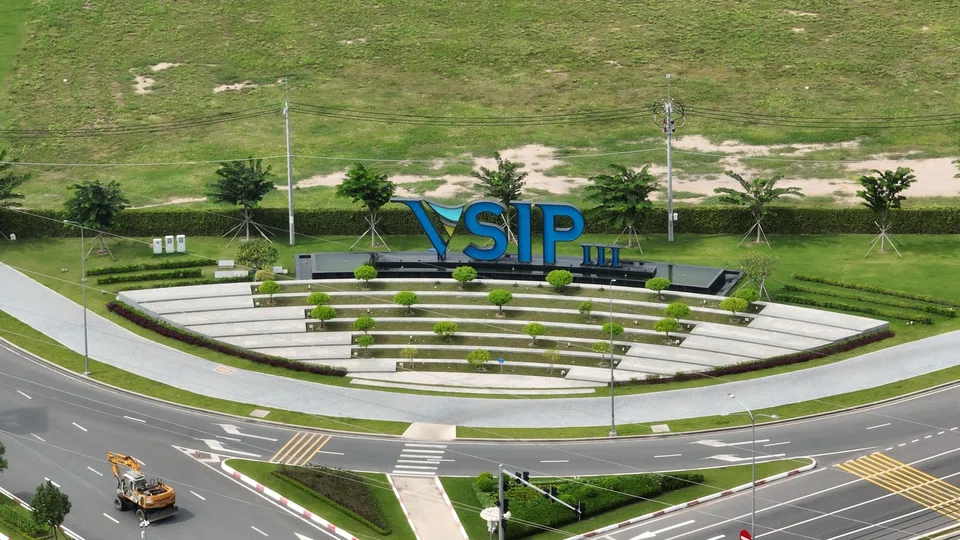
The Vietnam-Singapore Industrial Park (VSIP) network remains one of the most concrete symbols of the partnership.
With 22 parks in operation and planned expansion towards 30 by 2026, VSIP has moved from an industrial estate model to becoming a long-running platform for production, jobs, infrastructure and local development.
As at February 2026, Singapore had more than 4,400 active investment projects in Vietnam with over US$91 billion in registered capital. Bilateral trade also reached a new high of US$23.7 billion in 2024.
Yet, the next phase of the relationship cannot rely only on the old formula of factories, ports and investment flows.
Its real promise lies in higher-value cooperation: artificial intelligence, data centres, semiconductors, smart logistics, renewable energy, carbon credits, cybersecurity, financial innovation and green industrial zones.
Singapore and Vietnam should not simply trade more with each other. They should help each other build the capabilities needed for the next economy.
AI, talent and the real economy
AI is a useful test case.
Singapore’s advantage in AI is unlikely to come from building the largest models or hosting the biggest data centres. Its more realistic strength lies in trusted systems, governance, finance, applied research, and the ability to deploy technology in sectors where reliability matters.
Vietnam brings a different set of strengths: industrial scale, a growing pool of engineers, a fast-expanding domestic market, and increasing importance in regional supply chains.
That combination makes the partnership more interesting than a simple investor-recipient relationship. Singapore can help shape standards, governance and deployment models. Vietnam can offer scale, talent and industrial use cases.
Recent initiatives such as the Singapore-Vietnam Innovation Talent Exchange programme are a step in this direction.
By supporting innovation-related work stints in areas such as AI, cybersecurity, cloud computing, semiconductors and low-carbon technologies, the programme can help build a small but valuable group of professionals who understand both markets.
That is the kind of collaboration the next phase requires: targeted, practical and tied to the real economy.
Making green growth measurable
The same test applies to green growth.
Singapore and Vietnam have identified digital transformation, low-carbon industrial parks and cross-border energy cooperation as key areas of future cooperation.
These are sensible priorities. They are also easy to announce and difficult to execute.
Cross-border electricity trade, carbon markets and low-carbon industrial parks will require more than political goodwill. They will depend on regulatory clarity, credible verification, bankable projects, grid readiness, land-use decisions, and the ability to align public and private incentives.
This is why the next generation of VSIPs matters.
Their test would be whether they can embed cleaner energy, smarter logistics, better waste and water management, deeper digital infrastructure, more resilient local supplier networks and higher-value jobs.
Beyond hosting production, the next VSIPs should help define what competitive, lower-carbon industrialisation in South-east Asia can look like.
Implementation, not announcements
Political momentum can help.
The CSP framework, regular high-level exchanges and Lam’s expected return to Singapore all show that the relationship has strategic attention at the highest levels.
Success should be measured by visible improvements: faster business links, more trusted data flows, greener industrial zones, stronger talent pipelines, more resilient supply chains, and more opportunities for firms from both countries.
That requires realism on both sides.
Singapore should not see Vietnam merely as a manufacturing hinterland or a destination for capital. Vietnam is moving up the value chain and will expect technology transfer, skilled jobs, stronger domestic firms and more sophisticated forms of partnership.
Vietnam, in turn, should not see Singapore only as a source of investment. Singapore’s value lies also in standards, regulation, finance, logistics, governance, professional services and global connectivity. These capabilities become more useful as Vietnam’s economy becomes more complex.
Why this matters for Asean
The Singapore-Vietnam partnership may even have wider significance for Asean.
As major-power competition intensifies, South-east Asian countries need practical ways to strengthen autonomy without being forced into rigid alignments.
The most useful forms of regional cooperation will be trusted corridors of trade, talent, energy, data, finance and production.
Singapore and Vietnam are well placed to build one such corridor. One is a global hub with strengths in capital, rules, logistics and connectivity. The other is a rising industrial economy with scale, ambition and growing strategic weight in mainland South-east Asia.
The value lies not in making the two economies more similar, but in connecting what each does best.
More than 50 years after establishing diplomatic relations, Singapore and Vietnam are entering a different phase of partnership. The ties are clearly strong. Can both countries turn those ties into something strategically replicable for the wider region?
If successful, the Singapore-Vietnam partnership could become a working model for how Asean economies build resilience, competitiveness and strategic autonomy in a more uncertain world.
The writer is a researcher at the Asia Competitiveness Institute, Lee Kuan Yew School of Public Policy, National University of Singapore
TRENDING NOW

DBS, OCBC, UOB rout lops billions off STI as inflation, rate concerns spook investors

Grab CEO’s wife Chloe Tong on life with Anthony Tan and finding her purpose

OCBC sheds S$8 billion in value as shares close nearly 6% down; analysts cautious on banks

Deal between tycoon friends sparks scrutiny of Philippine power sector

