

How Singapore can become the ‘Switzerland of chips’
The Republic can be a neutral place where chips, capital, talent and data all come together
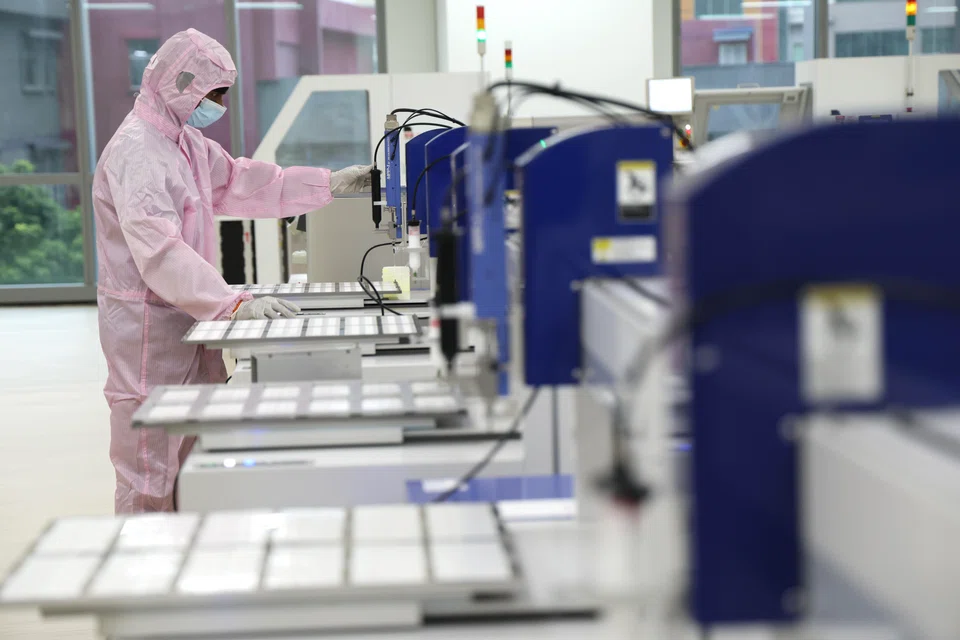
LEADERSHIP in semiconductor chip manufacturing is shifting away from developing smaller and faster chips, which are costly and dominated by a few tech giants. Building advanced fabrication plants can cost more than a dozen billion dollars and offer diminishing returns.
The new focus is on advanced packaging, high-bandwidth memory, power management, software and system integration.
Recent artificial intelligence bottlenecks show that Nvidia’s growth is limited by Taiwan Semiconductor Manufacturing Co’s (TSMC) chip-on-wafer-on-substrate packaging rather than transistor density, while AMD thrives on chiplet architectures.
TSMC is expanding packaging capacity, indicating that performance now hinges more on chip communication and power management.
Amid these developments, Singapore appears to be having a “Switzerland moment” – much like what the European country experienced in the 20th century.
Switzerland did not dominate manufacturing. It became indispensable by connecting finance, trade and competing political blocs. In a fragmented semiconductor world, Singapore can play the same role.
The South-east Asian city-state already has the ingredients: political stability, trusted institutions, world-class logistics, and the ability to work with both Washington and Beijing.
What is missing is the narrative to match the investment. The investment is already happening.
In January 2025, Micron broke ground on a US$7 billion advanced packaging facility for high-bandwidth memory in Singapore. GlobalFoundries committed US$4 billion to expand speciality chip capacity.
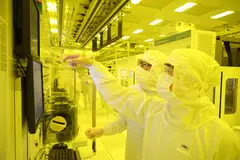
The Economic Development Board of Singapore noted that the country already accounts for about 10 per cent of the global semiconductor output, and 20 per cent of semiconductor equipment production.
That footprint was built on packaging, testing, R&D and equipment – not leading-edge fabrication. So, Singapore can definitely become a global player in chips manufacturing.
The country does not need to compete with others at the top end. Most of the chip buyers do not need the high-performance graphics processing units that power massive data centres. Most electronics or cars need only simple routine chips to run.
Neither Singapore nor neighbouring Malaysia will replace Taiwan, South Korea or the US in advanced manufacturing, but they do not need to.
Malaysia’s deep expertise in assembly, testing and packaging complements Singapore’s strengths in finance, logistics and infrastructure. Together, they can form a regional ecosystem that matters more than any single fab.
Indispensable Singapore
To win this next phase, Singapore should do three things.
First, double down on advanced packaging, AI infrastructure and semiconductor talent. Stop trying to out-subsidise Intel or TSMC. Win where scale matters less than coordination.
Second, leverage geography. With 280 million people in Indonesia and more than 700 million people across South-east Asia in total, vast amounts of data are being generated in close proximity to Singapore.
Critical to Singapore’s strategy is data, the fuel for AI. The city-state can position itself as the trusted hub where regional data is computed, stored and used to train models – under strong governance.
Singapore can become the Switzerland of chips, if the governance structure is set up properly and respected by all the major players and neighbours.
Third, protect its neutrality. In a world split between US and China tech stacks, the most valuable real estate may be the place in which both sides still trust enough to meet, invest and coordinate. That is Singapore’s historic advantage.
While AI safety and governance rules are still in their infancy, Singapore could host and lead this conversation, helping to build consensus for a broader AI governance framework.
Data centres, power grids, advanced packaging plants and cross-border supply chains will decide the next decade of competition just as much as clean rooms do.
The decisive question in the race is no longer who can build the smallest chip, but who can turn computing power into usable capability at scale.
Singapore may never produce the world’s most advanced chips, but it can become the place where the chips, capital, talent and data all come together.
In a fragmented technological order, being indispensable is more valuable than being dominant.
Singapore’s land constraint is real, but solvable – by extending its connector model.
Orbital compute, water-based data centres – such as Microsoft’s Project Natick – and deeper collaboration with Malaysia and Indonesia for conventional capacity are all versions of the same strategy: building beyond its borders while keeping the control, trust and governance inside them.
For a city-state built on being the connector, this is a playbook it already knows how to execute.
Singapore does not need to win the race for developing the smallest chip. In a world splitting into rival tech empires, power could come from being the one place no one can afford to cut out.
In semiconductors, as in finance, the world does not need another superpower. It needs a Switzerland.
This is an adaptation of an article earlier published on the LSE South-east Asia Blog.
Bruno S Sergi is an instructor at the Harvard Extension School. He is also affiliated with the Harvard Center for International Development, the Davis Center for Russian and Eurasian Studies, and the Harvard University Asia Center.
Kevin Chen is the chief economist and chief investment officer of Horizon Financial, and partner and CIO of CoinBridge. An adjunct associate professor at New York University, he serves on multiple Nasdaq and international corporate boards.
Decoding Asia newsletter: your guide to navigating Asia in a new global order. Sign up here to get Decoding Asia newsletter. Delivered to your inbox. Free.
Share with us your feedback on BT's products and services
TRENDING NOW

ComfortDelGro appoints two new independent directors

Once staunchly pro-China, Malaysian Chinese businesses are now distancing themselves from Beijing

NoonTalk needs continued financial support from CEO Dasmond Koh, auditors warn

DP Architects sets the benchmark for sustainability disclosure and design

