If inflation continues to build, the Fed won’t be able to maintain neutral stance for long
On Wednesday, it kept rates steady at their highest level in 20 years at between 5.25 and 5.5%
FEDERAL Reserve chairman Jerome Powell pulled off a pretty neat magic trick on Wednesday (May 1) – he somehow caused the interest rate-cut promise he had made at the central bank’s March meeting to disappear, without the market seeming to notice too much.
The Fed kept rates steady at their highest level in 20 years, at between 5.25 and 5.5 per cent. A few weeks ago, there was hope that the central bank would use this meeting to introduce a rate cut and to dance on the grave of inflation.
Instead, in its statement, the Fed acknowledged a recent reversal in fortunes on price increases but insisted the most likely trajectory for prices was still downward. All the evidence pointed to the likelihood that the central bank’s actions in 2022 and 2023 were cooling the economy down, the Fed said.
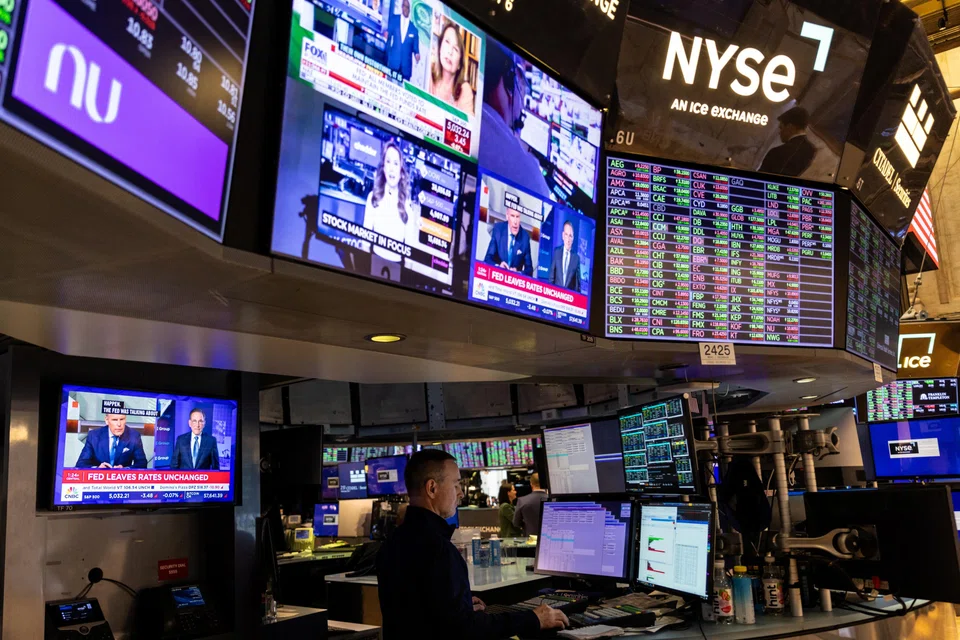
After the statement, stocks were hovering nervously, awaiting a hint on what the central bank’s next move would be. Powell pulled the rabbit out of his hat in the press conference, setting off a rally that, at one stage, saw the Dow Jones Industrial Average soar by more than 500 points.
The problem was to somehow fit the heated inflation statistics in the recent gross domestic product and consumer spending data into the Fed’s narrative of a tentative victory against inflation, a narrative that Powell had spun for at least six months.
To do so, he reiterated his confidence that inflation had peaked and was on a “sustainable downward path”, and then admitted that his confidence was lower than it previously had been. This was a chart-based explanation of his state of mind that could only have come from an avid economist.
It was as if he had pulled out a new leading indicator that the markets could follow – in addition to consumer confidence, consumer price inflation, producer price inflation and gross domestic product growth, investors could now regularly check in with the index of Powell’s confidence in the central bank’s victory.
Investors, of course, love a benchmark. Rather than worrying about the central bank reneging on its rate-cut promise, they embraced Powell’s mid-range confidence. The central banker had not dashed all hope of cuts, and a glimmer was enough, at least in the very short term.
Leading up to the Fed meeting, investors had been superstitiously backing away from rate-sensitive niches of the market, dumping Treasuries and high-risk investments such as Bitcoin.
The whispers were afoot. Powell, who famously surprised markets with his dovish turn last December, was about to pivot for a second time and bare his talons.
His comments allayed the fears of those “who were worried that he was going to introduce the concept of a rate hike”, said Quincy Krosby, chief global strategist at brokerage LPL Financial. “He didn’t suggest that it’s impossible this year. He just said it’s not necessary at this point.”
Put differently, that message could have caused a panicky stampede. But Powell adopted the tone of an oncologist assuring the patient that Stage One cancer was eminently curable.
He dismissed talk of “stagflation”, which was the great fear among investors after Thursday’s GDP data showed growth slowing coinciding with price pressures building, just as they did during the stagflationary 1970s.
Powell did not rule out a rate hike or a rate cut this year, but, through his tone alone, he made clear that a cut remained the more likely of the two.
“There was a collective sigh of relief in the financial markets after the Fed refrained from increasing its hawkishness,” said Jack McIntyre, portfolio manager at money management firm Brandywine Global. “Powell said rates are currently restrictive enough, meaning a rate hike is highly unlikely. But he also cautioned that inflation is still too high to start cutting rates too soon. Think of this outlook as ‘high for longer’, as opposed to ‘higher for longer.’”
US homebuyers who have delayed their purchases because mortgage rates had risen to their levels around 7 per cent could eventually get used to that rate.
Interest rates are not particularly high on a 50-year chart. Investors, in other words, could live with high for longer. Another round of rate hikes would almost certainly plunge stocks into a bear market just as the 2022 round of hikes did.
Krosby said the market will likely remain antsy, as illustrated by the fact that the Dow had given back all its gains and slipped into the red by the end of the session.
While the Fed believed it had taken the right course in stopping rate hikes last year, the ultimate arbiter of its success would be economic and inflation data, he confessed. For that reason, the stock market – like the Fed – will be even more data-dependent than usual, said Krosby.
Investors will hope that April’s consumer price inflation report will resume the downward trend that was interrupted by the February and March editions. The Fed will not be able to maintain a neutral stance for long if inflation continues to build. That is, not unless Powell the magician has more tricks up his sleeve.