Investing in China’s EV darlings is a lopsided bet
Your reward for stumbling onto the next big thing could be to own something too much like the last big thing
I SHOULD start with a disclaimer that nothing in this column should be taken as investment advice, unless you want to emulate my knack for making a small fortune by starting out with a large one.
But let’s talk about car stocks. The ones I own make my portfolio look less like a glittering showroom than a junkyard. Yet, a Chinese academic recently singled out three hot names and declared their stocks are headed for the graveyard.
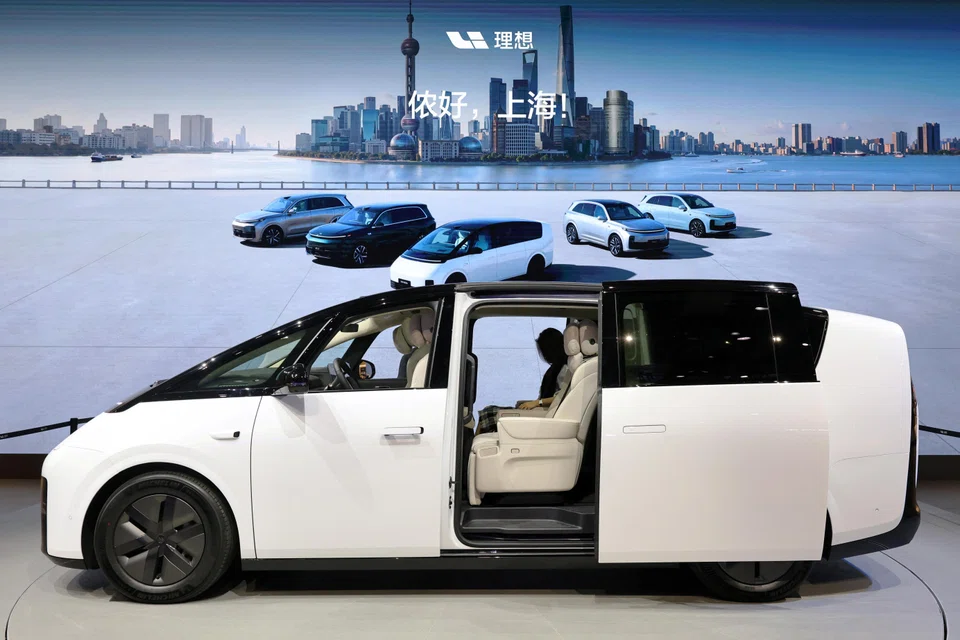
According to Professor Zhu Xican from the School of Automotive Engineering at Tongji University, the odds that Li Auto, Nio and XPeng will survive as independent car companies are somewhere between none and zero.
Often called the “new trio” of China’s car industry, they were “next Tesla” candidates during the peak of electric vehicle (EV) hype. XPeng’s founder, He Xiaopeng, has even been named China’s Elon Musk, which probably suited him just fine until a year or so ago.
That kind of tech founder energy runs through all three. They carry a certain Silicon Valley sheen, not least because they behave like software startups with wheels. Nio, for instance, pioneered battery swapping, the idea that instead of plugging your EV in for hours, you drive to a station and get a fully charged battery in minutes. It even offers “Battery-as-a-Service” so customers don’t have to own costly batteries. Like many startups, it was built on a disruptive “Why didn’t I think of that?” idea.
But if startups have a usually expensive lesson to teach, it’s that there are good reasons why something hasn’t been done before, and investing in one means being wilfully blind to them. Battery swapping, for example, costs a fortune to scale and relies on cooperation from Nio’s rivals to work.
Compounding strategic risk is execution risk. Even a great idea, poorly rolled out, is merely an expensive mistake with an innovation label on it.
XPeng arguably looks like the most promising of the three, though only if you think there is something to the AI-powered flying cars and humanoid robots it is building. These are not yet product categories, which is both the risk and the allure.
If He Xiaopeng succeeds in building a robot that irons your shirt before another one flies you to work, that would change our everyday lives. Arguably, the last person to do that was Steve Jobs, and anyone who put money in his main venture did all right.
He himself has said he never wanted XPeng to be just a car company, which might be his polite warning that car companies make terrible investments. Silicon Valley glamour simply doesn’t apply to them, because cars are a low-margin product, infrequently purchased, while software is the opposite.
Of the trio, Li Auto hints most strongly at what happens when it all goes right. Its founder, Li Xiang, built and listed a car-buying portal, giving him unusually clear insight into what Chinese consumers wanted. He parlayed that intel into a profitable car company and today, Li Auto’s price-to-earnings (PE) ratio on the Nasdaq is 24. Will it be the next Toyota? Investors might hope so, except the Japanese giant’s PE is just 7.2.
Even if these companies execute flawlessly, your reward for owning them could be to join a mature, low-margin business in a brutal industry.