

Investor engagement: A road paved with good intentions, but where is it going?
Issuers should have some flexibility to explain their approach in a principles-based manner
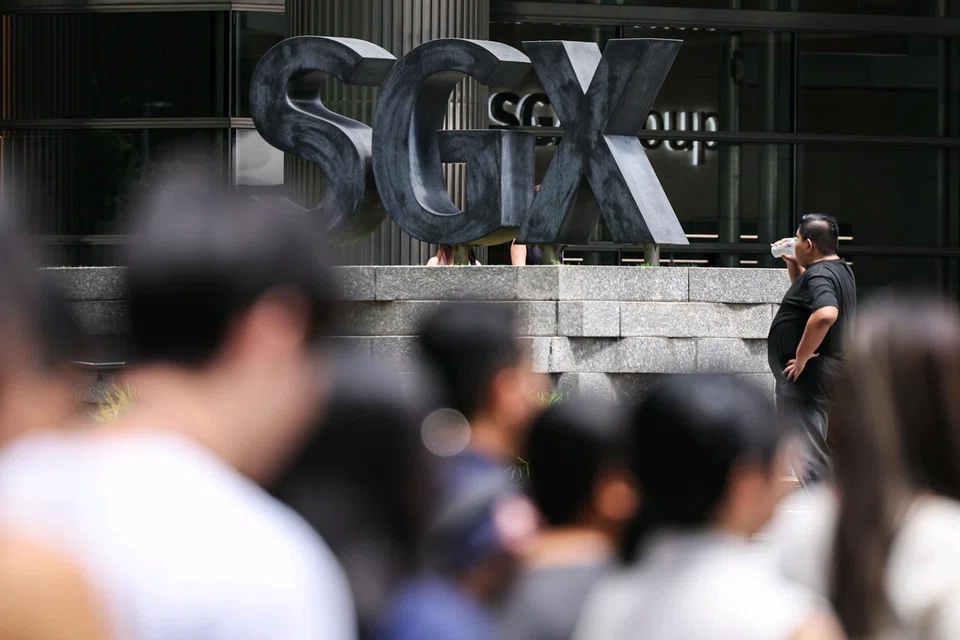
SINCE the phased roll-out of recommendations by the Equities Market Review Group last year, including the catalytic bonanza of the S$6.5 billion Equity Market Development Programme (EQDP), the Straits Times Index (STI) has been on a tear.
Up over 30 per cent in a year, it is hovering at record highs with scarcely much downward volatility. This comes despite the bumpiness that ordinarily should accompany wars and energy price spikes.
Some small and mid-caps (Smids) have had astounding gains – multi-fold – during this period. The hangover of chronic undervaluation, a result of lack of research coverage, anemic liquidity, lack of investor interest and investor relations activity in this segment, has been somewhat lifted.
The return of corporate activity included placements and mergers and acquisitions, as growth stories found investors with EQDP capital to deploy.
Other investors, buoyed by the return of speculative traders and retail interest, have fuelled rotational interest as liquidity begets liquidity, leaving a host of stocks better followed and valued than last year.
For this to last, listed companies have been encouraged to step up with investor-relations initiatives supported by generous grants.
And also, to speak up. Forward guidance, the regulatory booby trap that directors and management feared to fall afoul of in the past, is now actively encouraged, with Singapore Exchange Regulation (SGX RegCo) clarifying its stance on myths and misperceptions in January. But it will take some time for boards to be emboldened.
Alas, this rosy picture has not applied to all listed companies. There is still a tail of stocks in some form of slumber trading thinly (if at all), well within their potential full value.
There are companies that have been long listed with no great need to raise public funds. They may have no desire, or pressure, to create value for minority investors – in some cases, the majority shareholders are multi-generational and happy with the status quo.



Or perhaps they just don’t know how.
Hence, in good Singaporean fashion, to help improve disclosure, value creation and investor engagement, SGX RegCo has just concluded the market consultation on creating requirements to help the market along.
After all, in compliant Singapore, what better way is there beyond cajoling and grants to get listed companies to move ahead, than to codify rules!
While nobly intended, some of the questions posed in the consult seemed elementary.
For instance, the proposal for all issuers to maintain a website for investors must be a hoot. The form is certainly laudable and not punitive even to smaller listed companies that may regularly moan about listing compliance costs.
But it may be more relevant, if we really have to go down the path of mandating something, to require listed companies to have clearly designated investor relations functions.
Perhaps a common accessible e-mail box or contact points to facilitate shareholder engagement, rather than a bare website. This could at least be more effective in substance.
There is a proposal setting out some minimum content requirements. It is, however, questionable whether it will overlap with existing disclosure rules, such as corporate governance reports, leading to duplication rather than meaningful enhancement.
We could end up with more generic statements to satisfy rules, rather than actually raising the quality of investor engagement or communication.
Another proposal to have issuers maintain and publish an investor relations policy seems laudable. However, it is not apparent that publishing a standalone policy document that will become another boilerplate will get us further.
Nor will mandating annual report disclosure of investor engagement activities during the financial year. Investor engagement is essentially a two-way affair, and the nature of interactions can vary depending on issuer size, sector and stage of development.
Perhaps, highlighting material activities may be more relevant, without reducing it to just a count or compliance exercise to be meaningful.
There are some positive recommendations, however, even if they could lead to unintended consequences.
One that sounds good is a requirement to describe key financial and non-financial performance indicators determining remuneration of key personnel and how they relate to long-term value creation objectives.
The challenge is striking the balance from too much detail on numerical targets, especially in competitive areas and commercially sensitive strategic or business targets.
This may be interpreted as public commitments or forward guidance, versus what in practice may reduce to a general statement from the remuneration committee confirming alignment to long-term goals and strategy; essentially, a governance checklist.
Similarly, mandating issuers to maintain and describe a dividend policy and other aspects of capital management appears to aid transparency, on the face of it. But this may be more relevant to certain sectors or types of companies, and on its own not directly tied to value creation, say for high-growth tech companies.
Issuers should have some flexibility to explain their approach in a principles-based manner reflecting their circumstances and plans, and not be boxed into rigid templates.
Perhaps some consideration could be placed on tiering, where onerous requirements may not actually be useful for smaller companies. A grant for SMIDs to employ or train investor relations officers will probably be more useful for this group.
The fundamental question is whether these disclosure proposals are intended to strengthen governance standards and transparency, or to improve broader market outcomes of investor participation, liquidity and valuation.
If it’s the former, then rules work. But these appear to be a collection of nice-to-haves. If it’s the latter, perhaps it is best left to the market to reward the diligent without codifying.
Decoding Asia newsletter: your guide to navigating Asia in a new global order. Sign up here to get Decoding Asia newsletter. Delivered to your inbox. Free.
Share with us your feedback on BT's products and services
TRENDING NOW

DBS, OCBC, UOB rout lops billions off STI as inflation, rate concerns spook investors

Grab CEO’s wife Chloe Tong on life with Anthony Tan and finding her purpose

OCBC sheds S$8 billion in value as shares close nearly 6% down; analysts cautious on banks

Deal between tycoon friends sparks scrutiny of Philippine power sector

