IPO booms can spell trouble for markets
Companies go public in good times, but these may not last
WHEN you suck on a TastySounds lollipop, something funny happens in your head. As well as the flavour on your tongue, you hear music in your ear. Vibrations travel up your jawbone, creating the sensation of sound only you can hear.
The result is disorientating. The primary sense is of sweetness. The secondary sense is a burst of inner music.
Something similar is going on in Hong Kong’s stock market, where Amos Food, the maker of TastySounds lollipops and other sweets, plans to list one day.
The “primary” market for initial public offerings is performing sweetly. But in the secondary market, where existing shares are traded, the music has fallen flat.
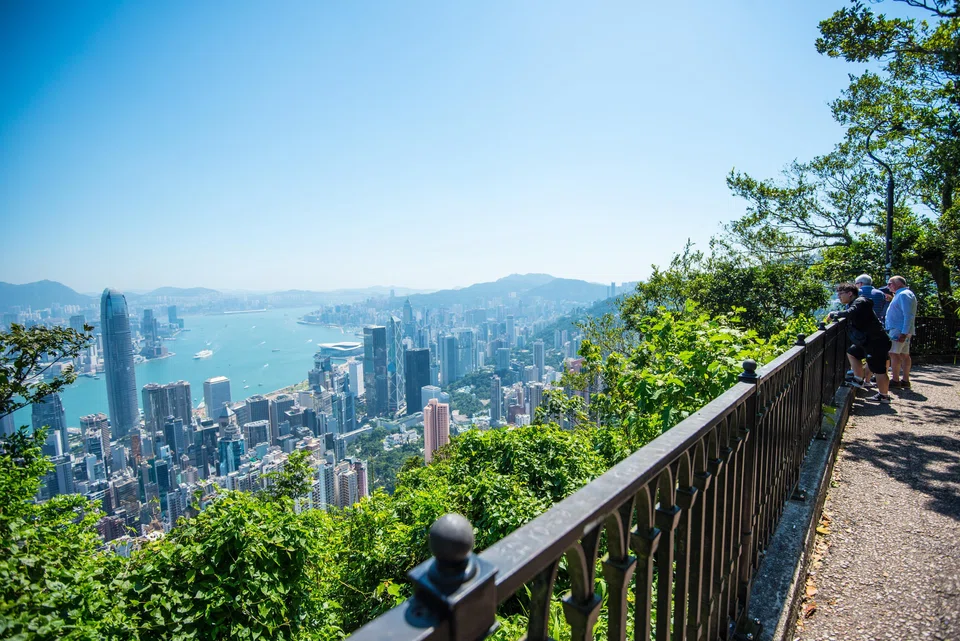
The Hang Seng index of the Chinese territory’s big firms has dropped by about 1 per cent this year, the fifth-worst performance of all major exchanges tracked by The Economist. Hong Kong’s predicament also serves as a warning sign for America, which is enjoying an IPO surge of its own.
Amos is in a long queue of companies waiting to list in Hong Kong. The exchange is encouraging them by extending the window for firms to complete their paperwork and allowing them to file it in secret.
In the first seven months of 2026, it hosted 104 IPOs, which together raised about US$42 billion. It offered a refuge to Shein, a retailer of superfast-fashion which debuted on Aug 31, after geopolitical concerns deterred it from listing in New York or London.
The sum is more than double the haul from the same months of 2025, itself a bumper year in which Hong Kong debuts raised more money than any other exchange.
IPOs tend to precede down times
If markets for stocks were like ordinary ones for cars or other goods, Hong Kong’s would be unquestionably booming. If motorists were snapping up lots of new vehicles at healthy prices, no one would worry that prices for used rides were flat or falling.
But with equities, the market for “second-hand” securities overshadows that for newly minted shares. Hence Hong Kong’s conflicting sensations: zingy and downbeat all at once.
Some of the dissonance reflects unique Chinese characteristics. Mainland regulators have become stricter about share offerings on the Shanghai or Shenzhen exchanges.
In response, some Chinese companies have turned to Hong Kong instead, even if conditions are not otherwise inviting.
America’s increased hostility to its superpower rival has also persuaded a number of Chinese companies on American bourses to seek secondary listings in Hong Kong. Their arrival has perhaps crowded out investor demand for other shares.
Like someone who has gorged on too much confectionery, Hong Kong’s market is suffering from indigestion.
It also reflects a familiar tune. A study of American markets from 1928 to 1997 by Malcolm Baker of Harvard and Jeffrey Wurgler, then of Yale, found that firms issue more equity just before periods of low market returns.
Another paper from 2005 by Lubos Pastor and Pietro Veronesi of the University of Chicago found something similar: IPO waves follow good times and precede bad times.
In keeping with this score, Hong Kong’s IPO boom began amid a dramatic stock market rally: The Hang Seng rose by over 40 per cent in the year after China’s government announced fresh monetary stimulus in September 2024.
The index’s subsequent performance is jarring only in that the low returns have arrived before the IPO wave is over.
Some scholars think the phenomenon reflects markets’ irrationality. Owners sell shares when they know their company is overvalued and outside investors do not.
But Pastor and Veronesi think equity investors may be acting entirely rationally. The decision to go public is made under uncertainty – corporate insiders do not know anything the market does not about future conditions – and is hard to reverse.
Since markets always fluctuate, it makes sense not to list when times are bad, in the hope that conditions will improve. Waiting thus carries what economists call an “option value”. As a consequence, many firms list after valuations improve, but long before valuations peak.
What does this mean for Hong Kong investors? Though the secondary market is struggling, the debutantes have mostly done well at least in their first days of trading (even shares in the ill-starred Shein ended its opening day roughly flat).
Those lucky enough to get an allocation of shares in an upcoming IPO can then look forward to three sensations: a tingle on the tongue, a jingle in the ear, and the clink of money in their pocket.
©2026 The Economist Newspaper Limited. All rights reserved
TRENDING NOW
‘We don’t want to stay as we are’: CEO Patrick Ng builds a more resilient Huationg
URA to review guidelines on floor space to give developers more design flexibility: Chee Hong Tat
He built the Vingroup empire. Now South-east Asia’s richest man is handing some key roles to his sons
32 companies, 6 individuals bag accolades at Singapore Corporate Awards 2026