Iran and the ‘Strait card’: a risky high-stakes gamble
How the country could turn its control of the Strait of Hormuz into a victory
IN THE fog of modern warfare, victory rarely belongs to the side with the most missiles. It belongs to the side that controls the choke points, the narrow passages through which the lifeblood of the global economy flows.
For Iran, that choke point is the Strait of Hormuz, and wielding it with strategic discipline could allow Teheran to emerge from a conflict not as a defeated power, but as a reluctant, indispensable broker of regional stability.
Geography of leverage
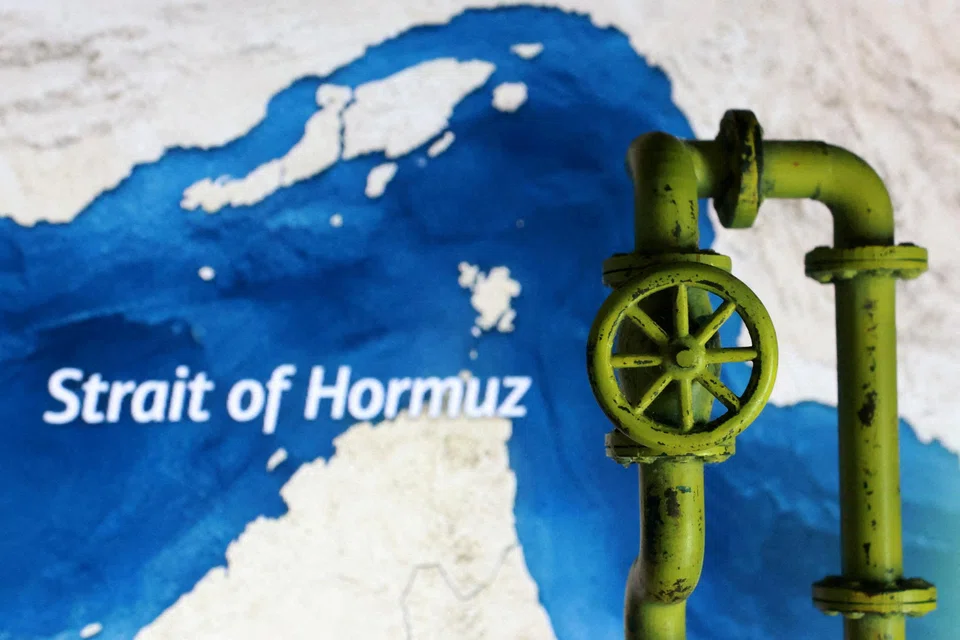
The Strait of Hormuz is, by any measure, one of the most consequential stretches of water on earth. At its narrowest point, roughly 33 km wide, it serves as the sole maritime exit for a fifth of the world’s traded oil and a fifth of global liquefied natural gas.
Saudi Arabia, the United Arab Emirates, Kuwait, Iraq and Qatar are all dependent on it. So, indirectly, are Japan, South Korea, China, India and much of Europe. Iran does not need to win a conventional military engagement to cause catastrophic disruption; it merely needs to credibly threaten to close, or partially close, the strait.
This asymmetry is Iran’s most powerful strategic asset.
Threat as the weapon
Military strategists have long understood that the threat of action is often more powerful than action itself. A full closure of Hormuz would be an act of war against the entire global economy, and Iran knows this.
But a partial disruption, including placing mines in key shipping lanes and harassing tanker traffic with fast boats and drones, striking insurance confidence in the region, could send oil prices soaring past US$150 or even US$200 a barrel without triggering a full conventional response that Iran could not survive.
This graduated pressure strategy transforms the strait from a physical feature into a geopolitical lever. Every dollar added to the price of oil is a tax on Iran’s adversaries and, critically, on the Western economies underwriting opposition to Teheran.
“Fast-boat harassments, drone strikes and mine-laying in contested waters are inherently unpredictable. A single incident, such as a tanker sunk with civilian casualties or a miscalculated exchange with the US Navy, could rapidly collapse the space for diplomacy.”
Diplomatic endgame
Here is where Iran’s Hormuz strategy becomes genuinely sophisticated: The goal is not permanent closure, but negotiated reopening.
The strait represents a hostage that every major power, including China and India, which depend heavily on Gulf energy, has a stake in recovering. This creates a diplomatic opening that a purely military confrontation would foreclose.
Beijing, which purchases a significant portion of Gulf oil, would face enormous economic pressure to mediate. New Delhi, equally energy-dependent, would seek a diplomatic off-ramp. Even Washington would find itself navigating between its commitment to regional allies and the domestic political cost of rising petrol prices.
Iran, by presenting itself as willing to reopen the strait in exchange for sanctions relief, security guarantees or a negotiated political settlement, could extract concessions it could never achieve on the battlefield.
Risks of the strategy
This argument must be made honestly: The Hormuz gambit carries enormous risks. A full closure would almost certainly trigger a massive US and allied military response aimed at reopening the strait by force, a campaign Iran’s navy and air defences could not ultimately withstand.
The strategy works only if Iran exercises calibrated restraint, escalating just enough to impose pain without crossing the threshold that makes a full military response politically inevitable for Washington.
There is also the risk of miscalculation. Fast-boat harassments, drone strikes and mine-laying in contested waters are inherently unpredictable. A single incident, such as a tanker sunk with civilian casualties or a miscalculated exchange with the US Navy, could rapidly collapse the space for diplomacy.
A conditional victory
Iran’s path to emerging as a “winner” from a conflict involving the Strait of Hormuz is narrow, conditional and deeply dependent on strategic discipline that has not always characterised Teheran’s decision-making.
But it is not fanciful. A power that controls a choke point the world cannot afford to lose permanently holds leverage disproportionate to its conventional military strength.
The lesson of Hormuz is one that history teaches repeatedly: Geography, wielded wisely, is power.
For Iran, the strait is not just a body of water. It is the most valuable card in a difficult hand, and how Teheran chooses to play it may determine not just the outcome of a conflict, but the shape of the Middle East for a generation.