It’s Trump’s party; and ain’t a lot that Haley and DeSantis can do about it

COVERING the American presidential primaries is considered a dream job for any ambitious journalist striving for recognition.
Your typical presidential primary is a gripping horse race that typically starts with the Iowa caucuses and the New Hampshire primary in January, and ends in the national convention where the party finally “elects” its presidential nominee.
And the suspense that the primaries had delivered in the past!
Recall the Democratic Party’s 2008 presidential primaries when until the last moment we didn’t know whether former first lady and veteran politician Hillary Clinton or an upstart senator with the unusual name of Barack Obama would win the race. Hey, it was more exciting than watching the Oscar awards ceremony.
Or, the crazy Republican presidential primaries of 2016 when a real estate tycoon and television show host, Donald Trump, stunned the political world by beating a bunch of senior Republican senators and governors. That was so much fun!
So, pity your young and aspiring journalists who were hoping that this year’s presidential primaries would provide an opportunity to make a name for themselves.
In some respects, the presidential primaries show was over even before it started, with none of the suspense and drama of past years.
On the Democratic side, President Joe Biden is not facing any major challenge and is expected to be re-nominated as the party’s presidential candidate at the party’s convention in Chicago in August.
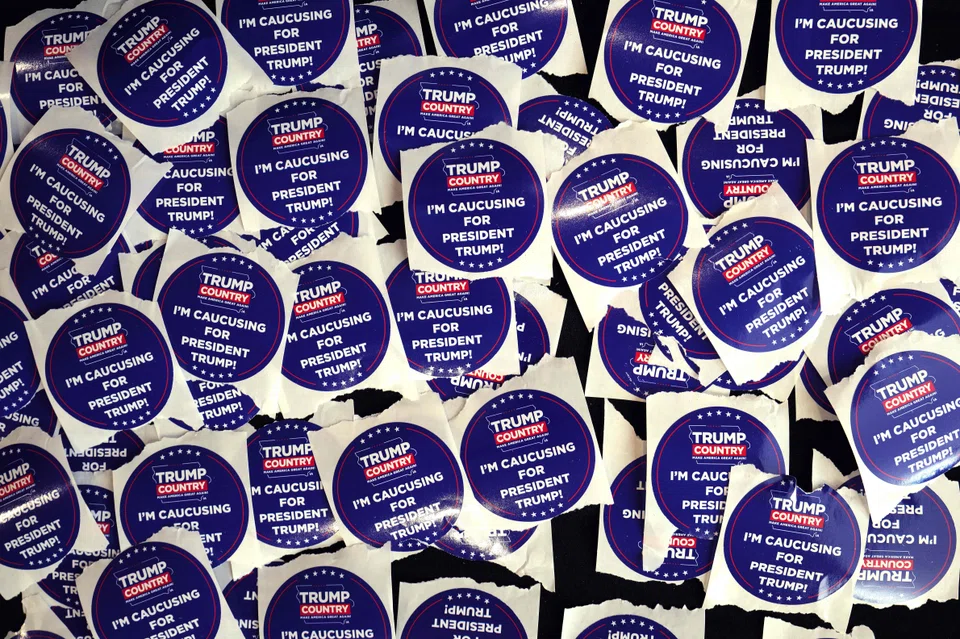
Trump was already set for a cakewalk when his expected march to the Republican presidential nomination began on Monday (Jan 15) in snowy and frigid Iowa where voters battled the weather and showed up for the caucuses – meetings run by the party where candidates are chosen by secret ballot.
In past years, the Iowa caucuses were watched closely by the political pros, on expectations that the winner would be able to benefit from the three “M’s” – momentum, media, and money – that would push him forward a week later towards the New Hampshire primary, and, who knows, snowball him to the nomination.
The caucuses and primaries also involve the so-called game of expectations. Even if you finish second in Iowa, the fact that you did better than expected could also provide you with the three M’s as the race continues.
From that perspective, since all opinion polls showed that former president Trump was well ahead in the caucuses, the battle for second place ended up being a stirring competition.
Trump was facing challenges from four other candidates – Florida Governor Ron DeSantis; former South Carolina governor and US ambassador to the United Nations, Nikki Haley; entrepreneur Vivek Ramaswamy; and former Arkansas governor Asa Hutchinson.
In reality, the race for the second place was between the first two, with most polls showing the Florida governor leading, although in recent weeks there were some signs that Haley, daughter of Indian immigrants, was gaining momentum.
In any case, the two had spent as much time and money attacking each other in the campaign as they did against the leading contender.
Front-runner Trump campaigned far less in Iowa than his rivals; in fact, he didn’t take part in all the pre-caucus televised debates. Indeed, why bother and risk making gaffes during the debate when your position as the party’s leader is secured, and you are headed for what could be a huge victory?
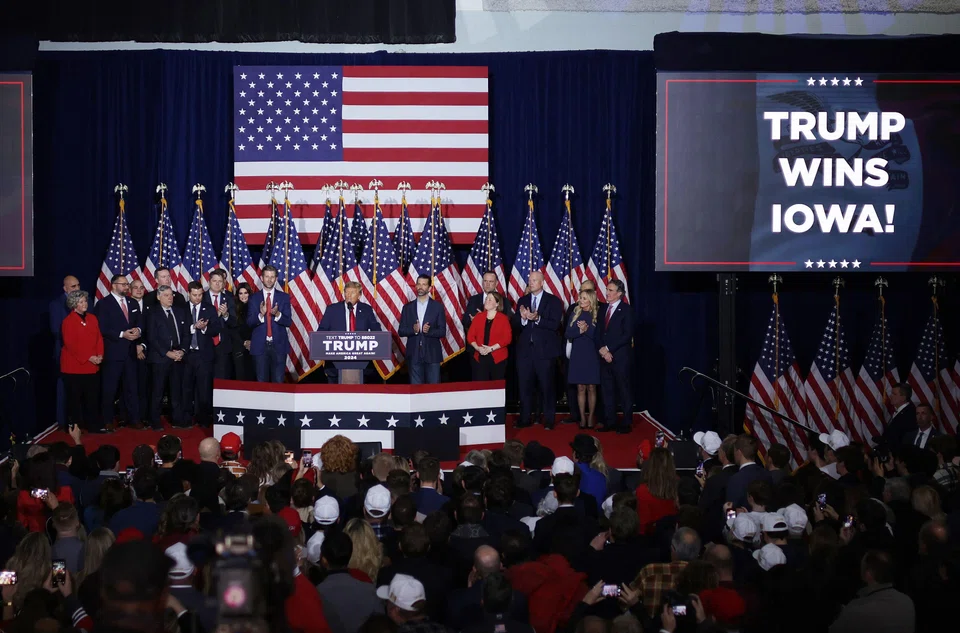
And, indeed, after he won the Iowa caucuses by a landslide on Monday, there is no doubt that the Republican Party has become Trump’s Party. Trump’s margin of victory in Iowa exceeded the Republican record of 13 percentage points for the largest win ever in a contested caucus, winning an outright majority of more than 50 per cent. He is now ready to claim the Republican nomination in a third consecutive election.
And, forget the former president’s lies about winning the 2020 election and his mounting legal jeopardy. Exit polls conducted on Monday night suggested that the majority of Republican voters believe that he did win the 2020 presidential race and that his legal problems – he is facing four indictments and 91 felony counts – only boosted enthusiasm among his loyalists.
But the battle for the second place in the race is continuing, with the hope of the challengers being that perhaps Trump would be convicted and forced out of the race, and then DeSantis and Haley would end up fighting for the presidential nomination. An unlikely scenario, though.
Governor DeSantis finished a distant second on Monday, with a narrow edge over Haley in a state where he had hoped his candidacy could provide him some much-needed momentum and money in the battle for the role of Trump’s chief rival. But then, opinion polls suggest that Haley is leading in next week’s New Hampshire primary, which is good news for Trump, who hopes that the two-person race for second place would continue to split the Republican field and ease his path to the nomination.
“I really think this is time now for everybody, our country, to come together,” Trump said in his victory speech on Monday night, celebrating the resurrection of his political career that was seen as being over following his role in inciting the Jan 6, 2021, riots at the United States Capitol.
Still, the results of the Iowa caucuses on Monday may also be indicative of some of the problems that Trump could face in the general election against Biden.
Hence, while he was able to sweep the rural counties in Iowa and districts with large concentrations of working-class voters, Haley beat Trump in districts with college-educated suburban voters, especially women. These would be the kind of voters who could determine the outcome of the 2024 presidential race.