

Is Jardine C&C likely to be taken private?
Most of its value resides in Jakarta-listed Astra International, while its own parent has secondary listing in Singapore

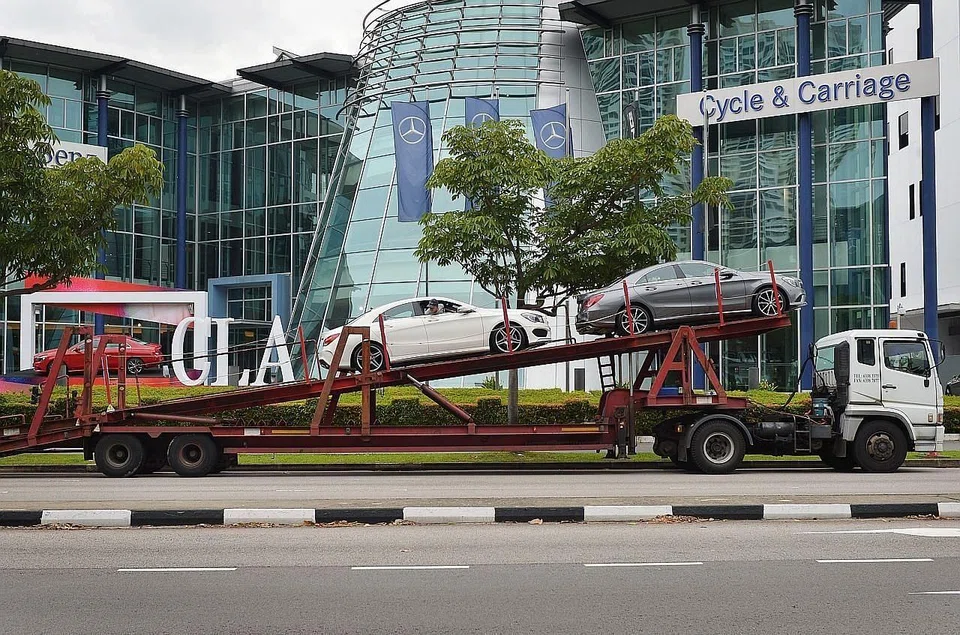
[SINGAPORE] Some market watchers might have been left scratching their heads the past week following a news report that Jardine Cycle & Carriage is exploring the sale of its car dealerships in Singapore and Malaysia.
While these businesses contributed less than 5 per cent to the group’s underlying profit attributable to shareholders last year, they are closely tied to its identity and corporate profile.
Besides Singapore and Malaysia, Jardine C&C is also a big player in Indonesia’s automotive industry through its 50.1 per cent stake in Astra International, and its 49.9 per cent interest in Tunas Ridean.
In addition, the group has significant exposure to Vietnam’s automotive sector through its 26.7 per cent stake in Truong Hai Group Corporation (Thaco).
More to the point, the group’s automotive businesses in Singapore and Malaysia have performed well over the past couple of years.
They contributed US$47.9 million to the group’s underlying profit attributable to shareholders in 2025, up from US$32.2 million in 2024 and US$28.6 million in 2023.
The group attributed the segment’s stronger performance in 2025 to a 74 per cent increase in commercial vehicle sales in Singapore, supported by the delivery of electric buses under tender projects.
It added that used car sales and aftersale throughput volume had increased during the year, while new passenger car sales had been flat.
Jardine C&C’s total underlying profit attributable to shareholders in 2025 came in at US$1.11 billion, up 0.7 per cent from US$1.1billion in 2024.
The sale of the group’s automotive businesses in Singapore and Malaysia – if it materialises – may also lead to some market watchers asking whether Jardine C&C serves any useful purpose as a public-listed company.
As it is, the bulk of the group’s value resides under Astra, a separately listed company in Jakarta.
Jardine C&C is itself 85.5 per cent owned by Jardine Matheson – which has a secondary listing in Singapore, and is a constituent of the Straits Times Index.
If Jardine C&C were to sell its legacy Singapore and Malaysia automotive businesses, would it make sense for Jardine Matheson to eventually take it private in order to eliminate a layer of corporate costs?
Could the sale of the Singapore and Malaysia units mark the beginning of a broader rationalisation of the group’s automotive businesses?
What does all of this mean for investors?
Growing EV competition
Despite the recent strong performance of Jardine C&C’s automotive businesses in Singapore and Malaysia, the surging popularity of Chinese electric vehicles (EVs) versus traditional internal combustion engine (ICE) vehicles could pose a longer term challenge.
Indeed, it may be a matter of time before Jardine C&C will have to respond to the impact of Chinese EVs in its other key markets too.
At its annual general meeting (AGM) on Apr 30, a shareholder asked how Astra is coping with competition from Chinese EVs in Indonesia. The company’s group finance director Freddy Lee – who assumed the role of CEO the following day – said Astra is working closely with its principal partners to expand its portfolio.
Lee went on to say that EVs currently represent 10 to 15 per cent of the Indonesian market, leaving a substantial market for hybrid and ICE vehicles where Astra remains dominant.
He added that Astra’s end-to-end ecosystem of manufacturing, distribution, retail, aftersales, financial services, insurance and used cars reinforces its competitive position in the automotive sector.
Astra had previously said it will announce the outcome of a strategic review this quarter.
Disclosing a credible plan to adapt to the rapidly shifting dynamics of the automobile industry as part of that review could help maintain investor interest in Astra as well as Jardine C&C, in my view.
Actively managed portfolio
One reason for optimism is that Jardine C&C has actively adjusted its portfolio over time to drive returns.
For instance, Astra spent US$207 million last year to acquire Mega Manunggal Property, one of the largest industrial and logistics property developers in Indonesia.
The group also invested US$56 million to raise its stake in the “Halodoc” digital healthcare platform, and US$211 million to increase its interest in the Medikaloka Hermina hospital group.
Through United Tractors, Astra also acquired a gold mine in North Sulawesi last year for US$540 million.
Jardine C&C spent US$4 million last year increasing its stake in Refrigeration Electrical Engineering Corporation (REE) from 41.4 per cent to 41.7 per cent.
The Ho Chi Minh-listed company holds interests in power, utilities, real estate, as well as mechanical and electrical engineering.
On the other hand, Jardine C&C divested its entire 25.5 per cent stake in Siam City Cement back in August 2024 for US$344 million. In December 2025 and February 2026, the group sold down its stake in Vinamilk from 10.6 per cent to 2.5 per cent for US$416 million.
When asked by a shareholder during the AGM about these divestments, Lee said the assets had paid dividends but their overall returns did not clear Jardine C&C’s cost of capital. A key lesson the group learned, he added, was that it is important to have significant influence over its key investments.
Take-private offer?
This brings me to the question of whether Jardine C&C is likely to be taken private.
Despite most of its earnings coming from Astra, the group does not suffer from a holding company discount.
On the contrary, based on the respective financial numbers for 2025, Jardine C&C is trading at 9.1 times its underlying earnings and 1.2 times book value, while Astra is trading at 7.1 times earnings and just marginally above its book value.
Based on the dividends for 2025, Jardine C&C is trading at a yield of 4.4 per cent while Astra is trading at 6.8 per cent.
Interestingly, Jardine C&C also appointed former OCBC CEO Samuel Tsien as its first independent chairman in November last year. Tsien first joined Jardine C&C’s board in October 2021, and has served as its lead independent director.
These factors seem to put Jardine C&C in a good position to remain listed, and garner a healthy investor following.
Yet, from the perspective of its parent, it is hard to see how Jardine C&C’s continued listing makes sense, especially if it sells its Singapore and Malaysia automotive businesses.
Jardine Matheson manages its portfolio in much the same way as Jardine C&C, and having full ownership of its stakes in Astra, Thaco and REE could be more efficient.
Many public investors may also prefer the broader business and geographical exposure that Jardine Matheson offers compared to Jardine C&C.
Indeed, Jardine Matheson is trading at a somewhat stronger valuation than Jardine C&C right now – which could support a share-based offer. Based on its 2025 financial numbers, Jardine Matheson’s shares are trading at 12.8 times underlying earnings, and a dividend yield of 3.2 per cent.
In my view, a take-private offer for Jardine C&C looks like a distinct possibility.






