Jimmy Carter’s century
Despite significant accomplishments in deregulating various industries, his presidency is frequently underestimated
 Add BT as a preferred source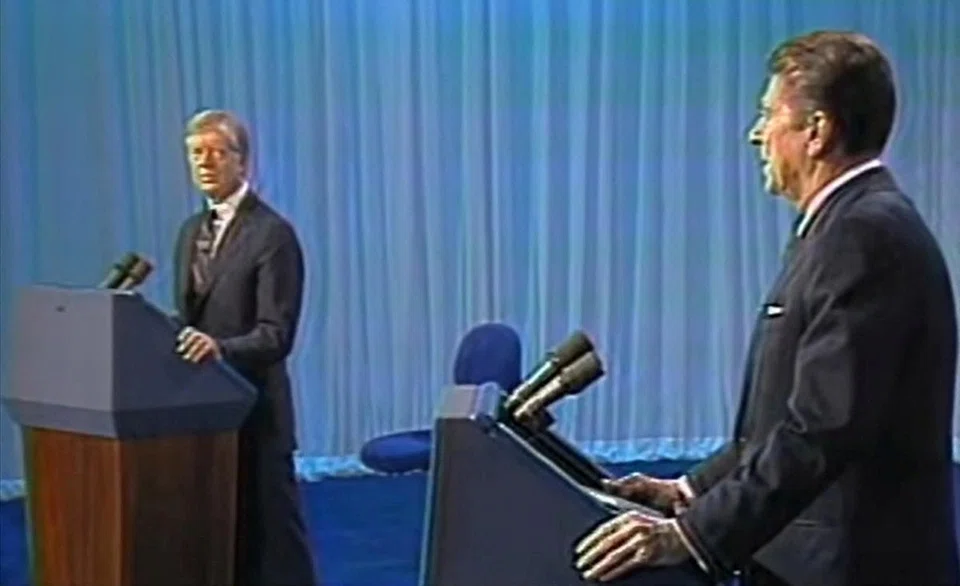
FORMER US president Jimmy Carter turns 100 on Tuesday (Oct 1). Despite his significant accomplishments, his presidency is frequently underestimated. While his pivotal role in mediating the 1978 Camp David Accords between Egypt and Israel is widely recognised, his legacy has been marred by the perception that he mismanaged the economy and botched the Iran hostage crisis. But subsequent revelations have shed new light on Carter’s presidency, revealing a leader who was more competent than previously thought.
When it comes to economic policy, Carter is sometimes blamed for excessive regulation, government spending and runaway inflation. His successor, Ronald Reagan, is often credited with ending the era of “big government”. But the conventional narrative fails to acknowledge that it was Carter who launched the deregulatory push that bore fruit during the Reagan years.
Carter’s deregulation of the transportation and communications industries marked the beginning of a significant shift that reshaped the modern American economy. First, he deregulated the air cargo industry in 1977, paving the way for express delivery by companies such as FedEx, which later enabled Amazon to disrupt the retail sector.
Next, Carter went after the airlines by appointing Alfred Kahn – a proponent of deregulation – to run the Civil Aeronautics Board (CAB) in 1977. A year later, Carter passed the Airline Deregulation Act, which opened the industry to competition, and abolished the CAB. Over the next few decades, the real cost of flying fell by 45 to 50 per cent, making air travel – once an activity only the rich could afford – widely accessible.
In 1980, the Carter administration deregulated trucking, railroads, and long-distance phone service, leading to increased competition and lower prices in each. Today, we take the affordability of long-distance calls for granted; but they used to be prohibitively expensive, a luxury reserved for birthdays and emergencies.
Carter’s 1979 decision to deregulate the beer industry was, in its own way, also noteworthy. By lifting Prohibition-era restrictions on home brewing, Carter helped usher in the era of craft beer, with the number of US breweries surging from 100 in 1979 to 1,500 in 1997.
The deregulation of natural-gas prices in 1978 and of oil prices in 1979, intended to reduce US dependence on foreign energy, took longer to come into full force; but by 1985, supply had increased and prices began to drop. Also in 1979, the president installed solar panels on the White House roof and presented a plan to get 20 per cent of US energy from renewables by 2000. Only in retrospect has the cost-effectiveness of solar and wind power been appreciated. Carter was ahead of his time on the environment and American energy independence.
The Carter administration also institutionalised a review process in the White House for evaluating proposed new federal regulations by means of cost-benefit analysis. This framework remains in place today.
Financial deregulation is more controversial. In 1980, Carter signed the Depository Institutions Deregulation and Monetary Control Act, which loosened federal banking rules by removing the cap on interest rates that banks could pay on savings deposits and lifting the prohibition on paying interest on checking accounts.
Although Carter is often blamed for the high inflation that plagued the US economy during the 1970s, the real cause was the fiscal and monetary policies of the Lyndon Johnson and Richard Nixon administrations.
Nearly four decades after Nixon’s presidency, White House tapes revealed that Nixon directly pressured then Federal Reserve chairman Arthur Burns to ease monetary policy ahead of the 1972 election. The Nixon administration also imposed wage and price controls to suppress inflation until after the vote.
Later, when these were removed, inflation returned with a vengeance. Moreover, the 1971 “Nixon shock”, which included a 10 per cent surcharge on imports and the unilateral abandonment of the gold standard (leading to the devaluation of the dollar), stoked inflation.
While Carter is not to blame for the surge in inflation, he played a critical role in ending it. In 1979, he appointed Paul Volcker as Fed chair with the mandate to do whatever it took to tame price increases. The resulting interest-rate hikes and recession curbed inflation but also probably doomed Carter’s re-election effort.
More generally, Reagan’s victory in 1980 reflected the widespread belief that Carter’s presidency was a failure. This perception was reinforced by Carter’s address to the American people on Jul 15, 1979, which was disparagingly dubbed the “malaise” speech.
Carter’s failure to secure the release of the US personnel taken hostage by militants in Iran in November 1979 was arguably the biggest drag on his presidency. However, two newly revealed pieces of information show Carter’s handling of the crisis in a more favourable light than was known at the time.
First, in January 1980, with Carter’s approval, the Central Intelligence Agency (CIA) extracted six American diplomats hiding in the Canadian embassy in Teheran. The agency’s involvement in the operation was not publicly known until records were declassified in 1997; the story gained wider recognition only in 2012 with the release of the popular film Argo, in which Ben Affleck played the lead CIA agent. Carter could have claimed credit for the rescue ahead of the 1980 election, but he chose to keep the US government’s involvement secret to avoid angering Iran and endangering the remaining hostages.
Then, in March 2023, Ben Barnes, a politician from Texas and former protege of John Connally (who served as Treasury Secretary under Nixon), made a startling confession that significantly alters our understanding of the hostage crisis. Barnes revealed that in July to August 1980, three months before the election, he had unwittingly accompanied Connally on a trip to the Middle East on behalf of the Reagan campaign, to deliver the following message to the Iranian government: “Don’t release the hostages before the election. Mr Reagan will win and give you a better deal.”
The hostages were released on Jan 20, 1981, minutes after Reagan’s inauguration. (It later came out that the incoming administration secretly sold arms to Iran in 1981 to 1982, presumably as the quid pro quo.) Barnes, who kept the story of the trip secret for four decades, decided to come forward after Carter entered hospice care.
The shocking discovery that, while Carter was willing to sacrifice his own political future to secure the hostages’ release, the Reagan campaign was apparently willing to prolong the crisis to win the election, underscores the need to re-evaluate Carter’s presidency. In the light of what we know now, we should move beyond the facile perceptions of 1979 and give Carter all of the credit he deserves.
The writer is the professor of capital formation and growth at Harvard University. He served as a member of former US president Bill Clinton’s Council of Economic Advisers.
Decoding Asia newsletter: your guide to navigating Asia in a new global order. Sign up here to get Decoding Asia newsletter. Delivered to your inbox. Free.
Share with us your feedback on BT's products and services