

Kering buys time for Gucci’s revival with beauty unit sale
L’Oreal’s product innovation and marketing skills could help Gucci win over shoppers for cosmetics and fragrances
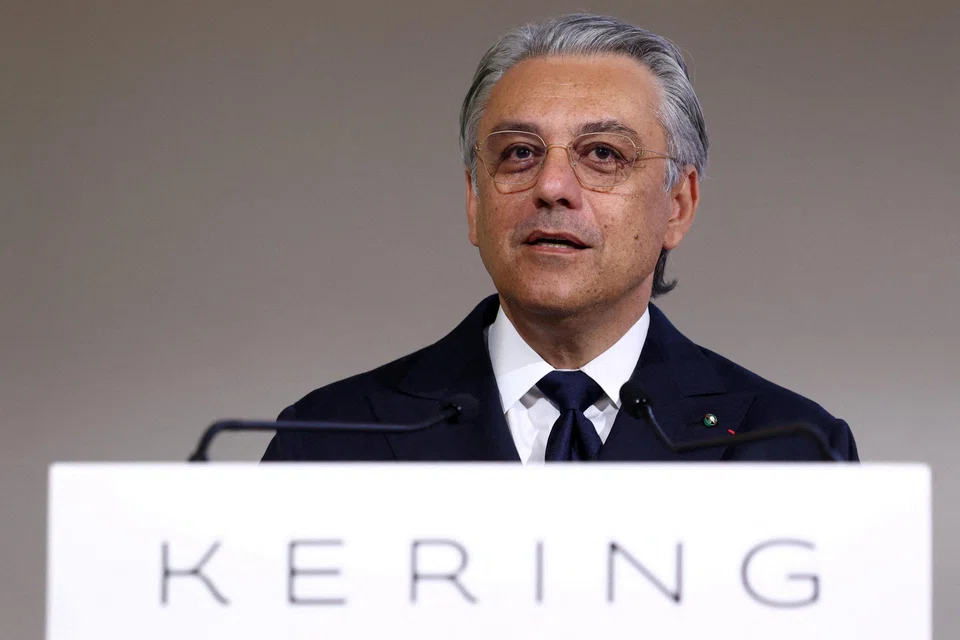
BEAUTY is in the eye of the beholder. But it’s not hard to see why Kering’s new chief executive officer, Luca de Meo, would want to sell the company’s embryonic beauty division, and why L’Oreal would pay 4 billion euros (S$6.03 billion) for it.
For De Meo, the sale shores up Kering’s finances and provides some breathing room until he can get Gucci, his biggest brand, firing on all cylinders. L’Oreal is shelling out a very pretty price for the business, including upmarket perfumier Creed and Gucci’s beauty licence, but it gets the upside that he is prepared to sacrifice.
De Meo, who became CEO last month, inherited a balance sheet stretched to 9.5 billion euros of net debt by deals, including Creed and a minority stake in Valentino, as his predecessor, chairman Francois-Henri Pinault, sought to make Kering less dependent on Gucci.
Quicker deleveraging provides him with some space until Gucci, which at its peak accounted for more than 60 per cent of revenue, can end its three-year sales slump. New creative director Demna Gvasalia provided a glimpse of his vision in September, but his full aesthetic won’t appear until spring, so there is much to do. De Meo’s turnaround efforts might get some help from L’Oreal’s big marketing budget too, trumpeting the Gucci brand to shoppers for cosmetics and fragrances.
Kering paid 3.5 billion euros for Creed, about 14 times sales, in June 2023. L’Oreal is paying 4 billion euros in cash for not just Creed but exclusive licences for Kering’s other brands, including Bottega Veneta and Balenciaga, as well as rights to operate Gucci’s beauty line, currently with Coty, when it expires in 2028. (L’Oreal already operates Yves Saint Laurent’s cosmetics and fragrances). That implies Kering may have to take a charge on Creed. But that might be useful to de Meo too, if he decides to get all the bad news out of the way early in a “kitchen sinking”.
Luxury is a long-term business. Kering will never now realise the full fruits of its foray into beauty, just as rivals such as LVMH and Hermes move deeper into the lucrative market.
But given the pressures on Kering’s balance sheet, and the need to invest in Gucci, de Meo has decided that cash today trumps future promise. Kering will receive royalties from L’Oreal for the use of its brands, but structuring the deal so that Kering could achieve a bigger share in the future upside looks like a missed opportunity.
As for L’Oreal, it is paying around 11 times Jefferies’ estimate of Kering’s beauty sales this year of 350 million euros, not quite as high as the Creed multiple, but not far off.
However, Jefferies estimates that if the Gucci licence is included, then sales could be about 800 million euros.
L’Oreal is likely to bring its considerable product innovation and marketing skills to the Kering beauty portfolio. Creed is very profitable, and operates at the highest echelon of the fragrance market, which is outperforming cheaper perfumes.
Gucci’s beauty range has always been underwhelming. If L’Oreal can address this shortcoming, and pump Kering’s products through its vast distribution network, then one billion euros of sales looks achievable. That would make the deal multiple a much more reasonable four times sales, not far from the valuation of Aesop, the natural beauty brand L’Oreal acquired two years ago.
For the buyer, too, there may be an opportunity cost. It was last month named in the will of the late Giorgio Armani as one of the companies that could potentially acquire a 15 per cent stake in Armani, and eventually a bigger holding. The Armani fragrance licence, which L’Oreal holds, likely generated 1.8 billion euros in revenue last year, according to analysts at HSBC, about 4 per cent of group sales. L’Oreal has said it is only interested in Armani’s beauty business, but buying a stake would be a way to hold on to the lucrative Armani licence beyond its end in 2050.
L’Oreal has a strong balance sheet. Even with the Kering purchase, net debt will be 0.5 times earnings before interest, depreciation and tax next year, according to Jefferies. But taking on the two businesses would be much to digest, particularly as L’Oreal has added Aesop, skincare brand Medik8 and haircare line Color Wow, as well as a 10 per cent stake in injectable-filler maker Galderma, over the past two years or so.
Both companies may be giving something up here. But this deal is worth it to each. BLOOMBERG
TRENDING NOW

Two Singapore-listed palm oil firms named in Greenpeace report on Indonesian plantation fires

Singapore Airlines flight returns to San Francisco after ‘unruly’ passenger incident

Singapore looking into which companies responsible for haze-causing fires: PM Wong

Deluge IPO 3.86 times subscribed ahead of SGX debut

