
THE BOTTOM LINE

Kevin Warsh as Federal Reserve chair: A high-risk appointment

In a different context, he would merit serious consideration – but his current alignment with Trump on interest rates raises alarm
Summarise
    • Appointed to the US Federal Reserve Board of Governors in 2006 at age 35, Warsh became the youngest person ever to serve in that role.
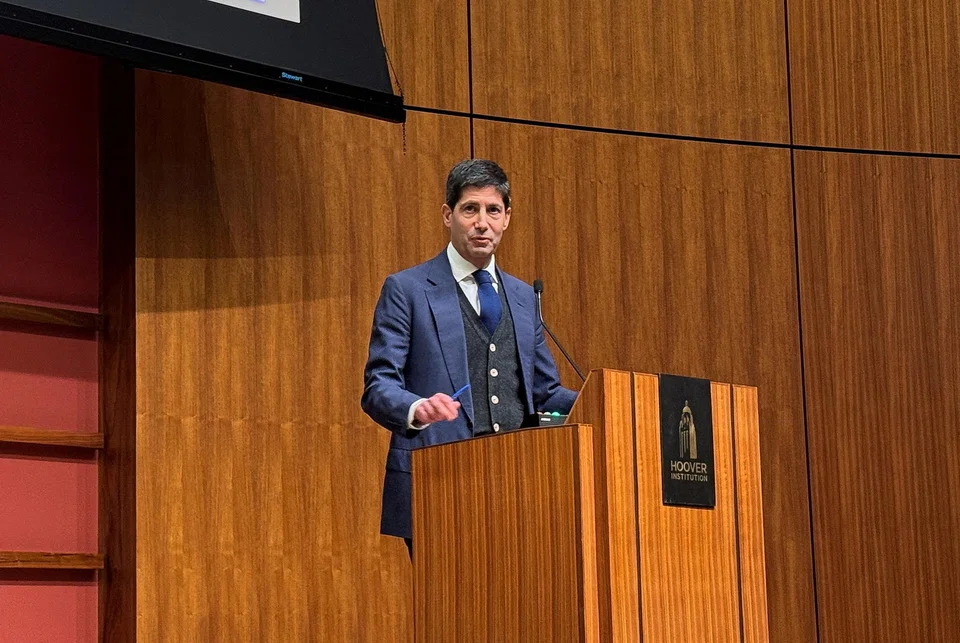
    • Appointed to the US Federal Reserve Board of Governors in 2006 at age 35, Warsh became the youngest person ever to serve in that role. PHOTO: REUTERS
    Published Wed, Dec 17, 2025 · 01:36 PM

    AS US President Donald Trump narrows his search for the next Federal Reserve chair, former Fed governor Kevin Warsh has emerged as the leading contender alongside National Economic Council director Kevin Hassett.

    Trump’s recent comments that Warsh now tops his list – and his stated expectation that the next chair must consult him on interest rate decisions – have intensified scrutiny of Warsh’s qualifications, and what his appointment would mean for monetary policy and the Fed’s independence.

    Qualifications and crisis experience

    Warsh brings substantial credentials to the table. Appointed to the US Federal Reserve Board of Governors in 2006 at age 35, he became the youngest person ever to serve in that role. His background spans Wall Street and the White House under George W Bush’s presidency.


    His defining experience came during the 2008 financial crisis, where he served in Fed chairman Ben Bernanke’s inner circle and acted as the Fed’s primary liaison to Wall Street. Bernanke later credited Warsh with warning colleagues early that the financial system was vastly undercapitalised. In March 2008, Warsh presciently observed that the investment bank business model was doomed.

    While Warsh understood Wall Street’s vulnerabilities, his policy judgment has drawn substantial criticism. Throughout 2008, even as the financial system teetered, he consistently warned about inflation risks that never materialised. Many economists argue this misreading of the deflationary threat exacerbated the crisis.

    This hawkish pattern continued. His opposition to quantitative easing (QE) remains the clearest marker of his philosophy. Warsh became a vocal critic of QE2 in 2010, when unemployment remained near 10 per cent and inflation stood at just 1 per cent. He argued that continued accommodation posed risks to financial stability.

    History did not vindicate this stance. Following the path Warsh warned against, unemployment fell steadily without the inflation surge he predicted. (He resigned from the Fed in March 2011 in opposition to the policy direction.) In contrast, the European Central Bank pursued the more conservative approach Warsh advocated and saw its unemployment rate continue rising.

    More recently, Warsh has criticised the Fed for “mission creep” that he argues contributed to the 2021 to 2022 inflation outbreak.

    In an April 2025 speech to the Group of Thirty, he charged that the Fed had strayed from its core mandate, distracted by issues such as climate change and diversity, and enabled massive federal spending. His diagnosis was that the Fed’s problems were “largely self-inflicted” and required a “strategic reset”. In May 2025, Warsh asserted there was no “cruel choice” between the Fed’s two goals of stable prices and full employment.

    The Fed independence question

    Perhaps the most consequential risk of a Warsh chairmanship is the threat to the Fed’s independence. Trump has made clear that not only does he expect the next chair to consult him on interest rates, but also that it “used to be done routinely” and “should be done”.

    This demand challenges the post-Volcker norm that the central bank must be insulated from political pressure to maintain credibility in fighting inflation. While Warsh’s own writings emphasise independence, his current alignment with Trump raises alarm. Warsh reportedly told Trump that rates should be lower, and his elevation to the top of the list appears connected to this view.

    This creates a fundamental problem. Even if Warsh intends to maintain independence, the circumstances of his appointment would cast a shadow over his tenure. The concern is not that he would be a puppet, but that he might prove susceptible to political pressure at critical junctures. Markets and the public would reasonably question whether rate decisions reflected true economic judgment.

    In a different context, Warsh would merit serious consideration. He brings real qualifications to the Fed chair position: crisis experience, market expertise, institutional knowledge and intellectual seriousness.

    However, the test of leadership is not just competence, but the courage to make unpopular decisions in service of long-term goals. Warsh may possess that courage, yet the circumstances under which he would assume the role create substantial doubt about whether he would have the space to exercise it. That uncertainty represents a significant cost to Fed credibility that would persist throughout his tenure.


