THINKING ALOUD

Kevin Warsh’s Fed: Reform agenda or reputational risk?

His early actions would show if he is a disciplined reformer or a politically convenient appointment
Summarise
    • Having cleared the Senate Banking Committee on a 13-11 party-line vote, Fed chair nominee Kevin Warsh is poised to succeed Jerome Powell after May 15.
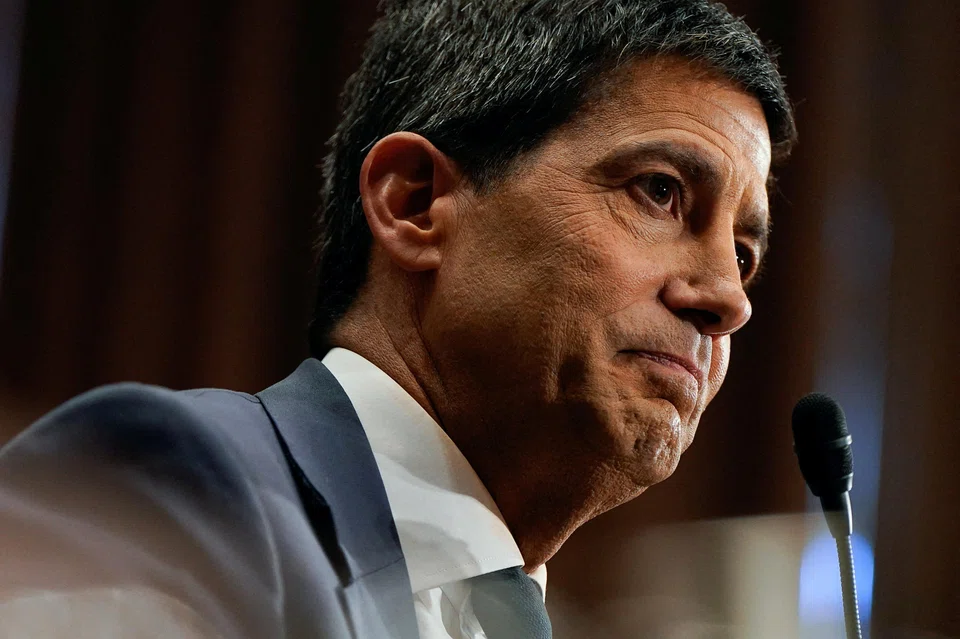
    • Having cleared the Senate Banking Committee on a 13-11 party-line vote, Fed chair nominee Kevin Warsh is poised to succeed Jerome Powell after May 15. PHOTO: REUTERS
    Published Thu, May 7, 2026 · 06:30 AM

    KEVIN Warsh arrives at the Eccles Building at one of the more fraught moments in the US Federal Reserve’s modern history.

    Having cleared the Senate Banking Committee on a 13-11 party-line vote, the first fully partisan committee tally for a Fed chair nominee, he is poised to succeed Jerome Powell after May 15.

    The vote itself tells a story: The post-Volcker convention that monetary policy stands above politics is now openly contested.


    On paper, Warsh is well-credentialed. He served on the Board of Governors from 2006 to 2011, navigating the financial crisis from inside the institution he now plans to remake.

    His agenda is more ambitious than any chair’s in a generation. Warsh wants to abandon flexible average inflation targeting and return to a strict 2 per cent goal.

    He wants to retire forward guidance and the dot plot, arguing they have substituted choreography for judgment. (The dot plot shows Fed officials’ projections of short-term interest rates.)

    He wants a materially smaller balance sheet, contending that the Fed’s US$6.7 trillion footprint distorts long-term yields and blurs the line between monetary and fiscal policy.

    A regime change

    And he seeks what he calls a “regime change”, a Fed that uses fewer tools, communicates less and answers more narrowly for inflation.

    There is a serious case for much of this. The Fed’s post-2020 framework underestimated inflation, the balance sheet did expand beyond what crisis conditions justified, and forward guidance has at times boxed policymakers into commitments overtaken by data.

    A chair willing to interrogate the institution’s recent mistakes is not, by itself, a problem. It may be overdue.

    The risks lie elsewhere. The first is independence. Warsh told senators he would not be the president’s “sock puppet”, but he was nominated by a White House that has repeatedly demanded lower rates, pursued a now-shelved criminal probe of the sitting chair, and tried to remove a sitting governor.

    Markets have so far given Warsh the benefit of the doubt. Long-term inflation expectations remain anchored. But that confidence is borrowed, not earned.

    His first dissent from the administration’s preferences will be the one that matters.

    The second risk is execution. Almost nothing on Warsh’s list is a chair’s decision alone. Rate paths, balance-sheet run-off and framework reviews all require the Federal Open Market Committee.

    A chair who promises transformation but delivers only what 12 voting members will tolerate may find the gap between rhetoric and reality unforgiving, particularly with inflation still running above target and an Iran-related supply shock complicating the picture.

    Warsh could turn out to be the disciplined reformer his supporters describe, or the politically convenient appointment his critics fear.

    The early signals to watch are narrow and concrete: his first decision on the dot plot, the pace he sets for balance-sheet run-off, and how he responds the first time the White House publicly disagrees with him.

    Those choices, more than any speech, will define whose Fed this becomes.