Let’s not rush into WWIII
I’VE always been sceptical of the conventional wisdom. Like when after Saddam Hussein was ousted in 2003, the champions of the conventional wisdom assured us that Iraq would turn into a democracy and freedom would spread across the Middle East. What became of the region, instead, was one big mess.
Which explains perhaps that after lessons learnt, politicians and pundits are refraining from promoting similar cheerful scenarios now that Syria’s Bashar al-Assad has been overthrown, and more realistic expectations about that country’s future are being drawn.
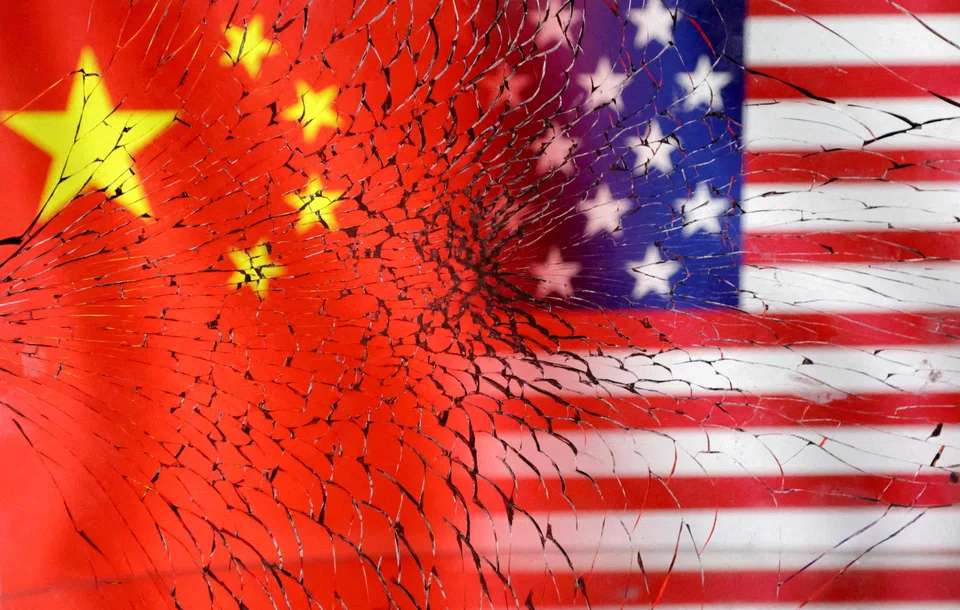
Unfortunately, the conventional wisdom is drawing us into another dangerous direction as it advances the notion that we are heading now into World War III, with China, Russia, Iran and North Korea on one side and the US-led West on the other.
Indeed, according to this narrative, the international system is increasingly split into two rival camps. The war in Ukraine, the fighting in the Middle East, tensions in East Asia – conflicts that may seem to be disconnected – have now merged into the start of the third world war.
From that perspective, consider that not so long ago Russia and Iran had joined hands in Syria to rescue the Assad regime. But then after America’s partner, Israel, delivered a major blow to Iran’s “circle of resistance” and Assad was overthrown, we could propose that in the context on the ongoing WWIII, the West has won an important battle against the axis of autocracies.
On another front, the recent arrival of North Korean troops to fight for Russia in Ukraine demonstrated the supposed alliance between Moscow and Pyongyang. In a way, Russia is fighting in Ukraine with the indispensable Chinese support and weapons from North Korea and Iran. Moscow and North Korea have signed a mutual defence treaty, while finishing touches are being put on a similar treaty between Tehran and Russia.
It’s true that Russia and Chinese are revisionist powers seeking to restore their sphere of influence, while Iran and North Korea are pursuing regional supremacy, with lesser powers like Belarus and Venezuela joining this axis.
It’s therefore tempting to draw this kind of neat geopolitical outlines to explain what is happening in the world today, assuring us that every development – whether it’s the fall of the Assad regime or continuing Sino-American tensions over Taiwan or the Russian threat to Ukraine democracy – is all part of a struggle between the “good guys” (Democratic West) and the “bad guys” (axis of autocracies). All we need do now is to prepare for WWIII.
The problem is the realities of the international system are far more complex. Some of America’s allies, like Saudi Arabia and the United Arab Emirates, are autocracies while democratic India has refrained from challenging Russia’s policies in Ukraine.
In fact, one can argue that the partnerships among Russia and Iran and North Korea, or even the ties between Beijing and Moscow, are based on tactical and not strategic considerations. Russia and China were previously strategic rivals that almost went to war against each other, while China’s geoeconomic interests remain dependent on its ties with the US.
If anything, the WWIII narrative has the power of a self-fulfilling prophecy and runs contrary to America’s long-term interests that lie in creating divisions among its rivals, as opposed to forcing China and Russia into each other’s arms.