

Luxury mooncakes won’t go away – nor will plastic waste
The irrepressible popularity of such gifts is a sign of how ungovernable consumer tastes can be
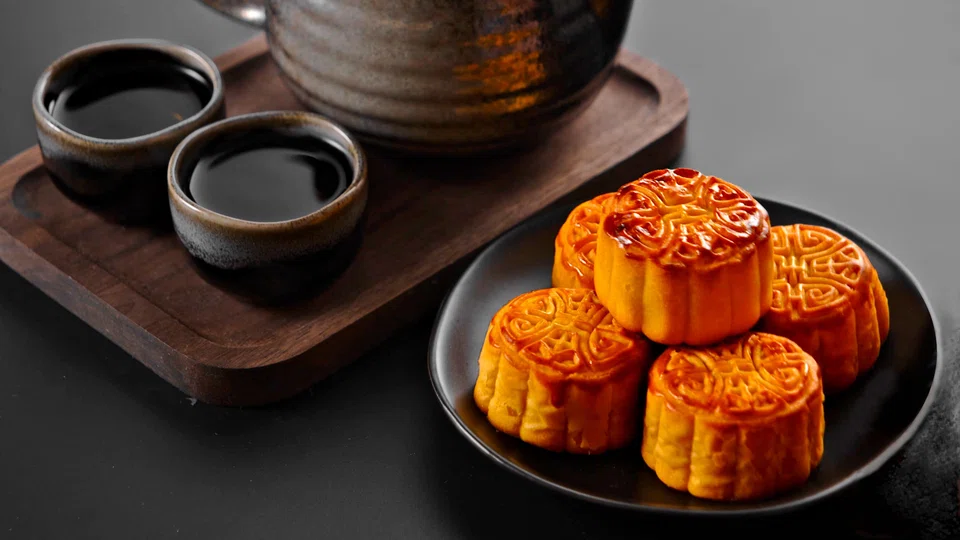
IF THERE is one force that has shaped the past few decades, it is the relentless willpower of the Chinese Communist Party.
Beijing’s efforts to control its environment have levelled mountains, tamed mighty rivers, reshaped global trade flows, and sparked a fourth industrial revolution in clean energy. But there is one immovable object that even this unstoppable force cannot shift: the mooncake.
The sweet, decorated pastries – traditionally eaten to mark the Mid-Autumn Festival, which was celebrated on Monday (Oct 6) this year – have long been an object of official concern. During President Xi Jinping’s early years in power, they were a target of anti-corruption campaigns, due to the informal gift economy that sees millions of lavishly packaged cake boxes exchanged between friends, employees and business partners.
More recently, the focus has shifted from graft to a general anxiety about excessive consumption, at a time when many are facing straitened circumstances. Regulations introduced in 2022 forbade packaging made of expensive materials such as precious metals or rosewood, banned fancy fillings such as shark fin and bird’s nest, and warned of inspections for products costing more than 500 yuan (S$91).
In 2023, new rules prohibited packaging costing more than 15 per cent of the total purchase price for lower-end products. This year, several top ministries have joined forces to “investigate and punish illegal and irregular behaviours”, and “maintain a clean and upright festival atmosphere”.
As with similar global efforts to rein in excessive consumption, such exhortations are doomed to failure. Pangdonglai, a supermarket chain that has cultivated a viral online following, sparked debate recently following rumours that it had paid a Hong Kong designer 10 million yuan to develop its 2025 mooncake packaging. (Not so, Pangdonglai said, the cost was a mere 3.7 million yuan.)
In Hong Kong itself and among overseas diaspora communities, the starting price for higher-end mooncake boxes is around the 500-yuan level, and the sky is the limit for the more expensive gift sets. That loophole means there is an active trade in exports from Hong Kong to the mainland, as well as in fake exports made just over the border in Guangdong.
The joke with mooncakes is that the packaging is often far more prized than the pastry itself, whose sickly sweet richness tends to get mixed reviews. The irrepressible popularity of such gifts, however – despite official disapproval and flagging Chinese household spending – is a sign of how ungovernable consumer tastes can be.
That should be troubling to those of us who hope the world might be able to rein in its addiction to wasteful consumption. United Nations officials have twice over the past year failed to reach an agreement on a proposed global treaty to end plastic pollution, most of it driven by our unending drive to use more polymers, especially in packaging.
It is hard to get a handle on precisely how much China’s booming consumption is contributing to the growth of this demand, but the figure is unlikely to be small. Output of polyethylene, a key plastics raw material, has almost doubled since 2018, and is still rising fast. Express-delivery volumes (another decent proxy for packaging usage) were about double those for the whole of 2019 in the first eight months of the year alone.
Out of 105 industrial products tracked by the government’s statistics agency, the best performer so far this year is not high-speed trains, electric vehicles or robots, but packaging equipment.
Some 1.2 million sets were produced through August, an increase of 32.2 per cent from a year earlier, far outpacing the 4.6 per cent increase in retail sales. Though plastic is far from a prestige material for the exterior of mooncake gift boxes, it is still almost indispensable for the pouches, trays and silica sachets used to keep their contents fresh.
When will this hunger for luxury packaging ease? Every fashion trend eventually dies. The current craze for mooncake boxes in many ways parallels the 19th-century British vogue for selling cookies in decorative tins, which declined during the 20th century as plastic overtook metal as the most popular material for food packaging.
China, moreover, may be approaching levels at which plastics consumption levels off. It is already likely to be using polymers at levels similar to Japan, according to one recent study.
Wealthier consumers tend to be more environmentally aware, too. China’s largest packing company is Shenzhen Yuto Packaging Technology, which uses 100 per cent renewable energy to make the origami-like, recyclable paperboard boxes that Apple iPhones come in. Many of the most expensive mooncake boxes, too, are made of high-end paper and board.
Waiting for consumer tastes to get more sustainable does not feel like much of a strategy if you are concerned about the rising tide of plastic waste. It may be what we are stuck with, however.
Attempts to stop conspicuous consumption date back to at least as far as a 7th-century BC Greek lawgiver, who attempted to restrict the wearing of gold jewellery and purple-hemmed gowns to courtesans. They rarely work. Chinese Communist Party officials, and those from the UN, are in a similarly futile battle. BLOOMBERG
TRENDING NOW
Companies still in search of AI use cases with worthwhile ROI, says Broadcom’s CEO
Malaysian king buys stake in Singapore-listed mining firm expanding into rare earths

Once staunchly pro-China, Malaysian Chinese businesses are now distancing themselves from Beijing
Singapore’s wealth management success should extend to everyday families

