

Marketing to the Max is not for free
USING a celebrity in advertising, product merchandising and other commercial contexts is likely to have a positive effect on consumers’ brand perceptions and purchasing decisions; this is commonly referred to as the “positive halo effect” within branding and marketing research. In buying a product associated with a celebrity, the consumer can buy into some of the glamour of the charmed life of a movie star or into the athleticism and success of a sporting icon.
This is evident in the multimillion-dollar endorsement contracts that globally recognised actors and athletes sign each year with brands as diverse as American Express, Louis Vuitton, Nike, Rolex and Gillette. For instance, Rihanna appears in the ad campaign of Louis Vuitton, and Rolex has Roger Federer and Tiger Woods in its corner. However, not all ads crudely portray the celebrity next to the company’s products or its logo; some more subtly take the form of congratulatory ads.
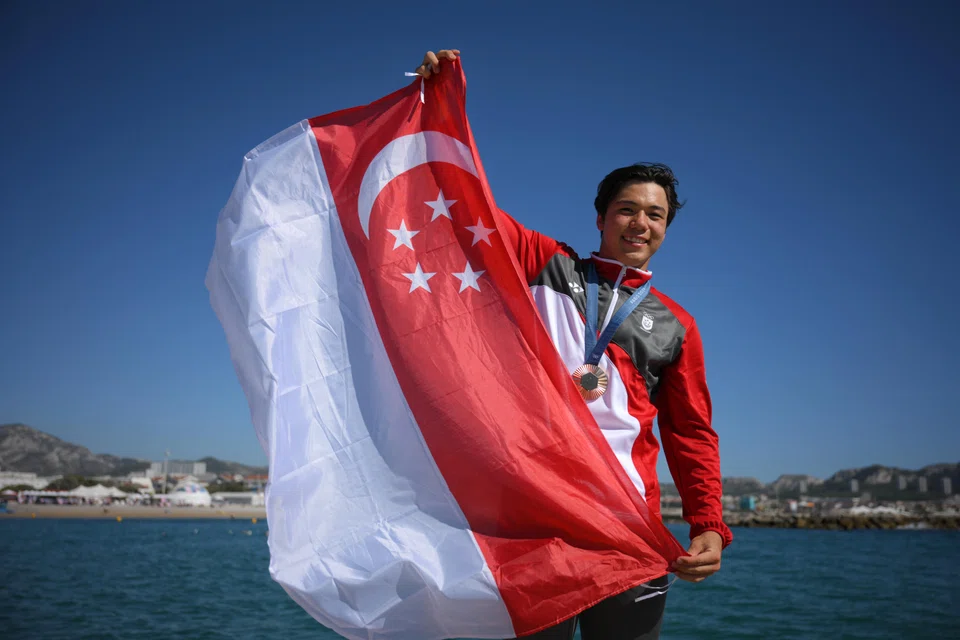
On Aug 18, Leung Kai Fook Medical Company (LKF) published an ad in The Straits Times (page A9) congratulating Maximilian Maeder for winning the bronze medal at the Paris Olympics. Interestingly, unlike DBS and Yeo’s which placed similar congratulatory ads, LKF appears to have no prior sponsorship arrangement in place with Maeder. When Carlos Alcaraz won Wimbledon, his sponsor Rolex took out a full-page ad in The Straits Times to congratulate him. Other brands such as Pizza Hut took to social media to offer their congratulations to Maeder using the well-known phrase “To The Max”.
Do these ads and social media posts suggest to the public that Maeder has commercial connection with the brands?
In Singapore, the tort of passing-off action is capable of protecting the goodwill or valuable reputation of a person/business against any unauthorised association or connection by another (what’s known as “promotional goodwill”). The passing-off action protects goodwill as the attractive force which brings in customers by preventing a trader from gaining an unfair competitive advantage through misrepresenting its association with a well-known personality, such as an Olympic medallist.
It is settled law that unauthorised uses of the celebrity persona in advertising is likely to be misleading as to imply sponsorship, endorsement or association. It is generally accepted that consumers are often influenced in their choice of products because of a perceived association between those products and a celebrity personality.
As an Australian federal court judge remarked, the use of celebrities in advertising seeks to foster favourable inclination towards the product, a good feeling about it, an emotional attachment to it, such that the product is better in the eyes of consumers than a comparable product without such an association.
The typical celebrity claims made in passing-off actions are that the use of name, likeness, voice or other indicia of identity mislead a significant proportion of consumers by implying: (i) that the celebrity approved of the advertiser/trader or its product; (ii) that the celebrity consented to the use of his/her identity by the advertiser/trader; or (iii) that there is some connection or association between the celebrity and the advertiser/trader.
In the United States, the Seventh Circuit Court of Appeals in 2014 found that the supermarket chain Jewel-Osco’s congratulatory ad was really capitalising on Michael Jordan’s fame to enhance the attractiveness of its own brand. Jewel-Osco had published a full-page image in a special commemorative edition of Sports Illustrated, congratulating Jordan on being inducted into the Hall of Fame.
The court was of the view that the ad was really a promotional device for the advertiser, which was to enhance the Jewel-Osco brand in the minds of consumers, and Jewel-Osco was ordered to pay compensation to Jordan.
Another court decision focused on whether the individual in question has the ability to attract the public’s attention and evoke a desired response in a particular customer audience. If the answer is “yes”, then the positive response by the public may be construed by the court as a kind of “recognition value” generated by the famous individual which merits legal protection.
In 2016, Joseph Schooling became a national hero when he won the first-ever Olympic gold medal by a Singaporean for the 100 metre butterfly swimming event. Overnight, corporations rushed to place congratulatory ads in the major print newspapers, and many businesses with no prior relationship with Schooling capitalised on his iconic victory to offer special promotions that would inevitably lead to an increase in sales. Some of these advertisements featured the corporate logos prominently alongside Schooling’s name or achievement, in a manner not different from Jewel-Osco’s Michael Jordan congratulatory ad.
Guideline 13.1 of the Singapore Code of Advertising Practice states that “advertisements should not explicitly portray or refer to any person or his property unless his prior permission has been obtained”.
It is unlikely that a number of these brands in recent weeks obtained the permission of Maeder for either featuring his photo so prominently in a congratulatory ad or offering promotions on social media that make reference to him.
Advertisers who have no prior sponsorship relationship with athletes should exercise caution when invoking the names and images of athletes in Singapore without permission. Otherwise there may be an impermissible associative use where the company has directly exploited the athlete’s identity to improve brand perception or sell products.
Don’t fall foul of the law, but, more importantly, don’t begrudge our hardworking athletes a licence fee when you draw on their promotional goodwill.
The writer is a professor who teaches entertainment law at the National University of Singapore (NUS), and is the head (intellectual property) at the NUS’ EW Barker Centre for Law & Business






