MAS review group disappoints, then delivers
Some market watchers may worry demand-side measures such as the S$5 billion EQDP are the wrong place to start, but the review group has made it clear it will not stop there

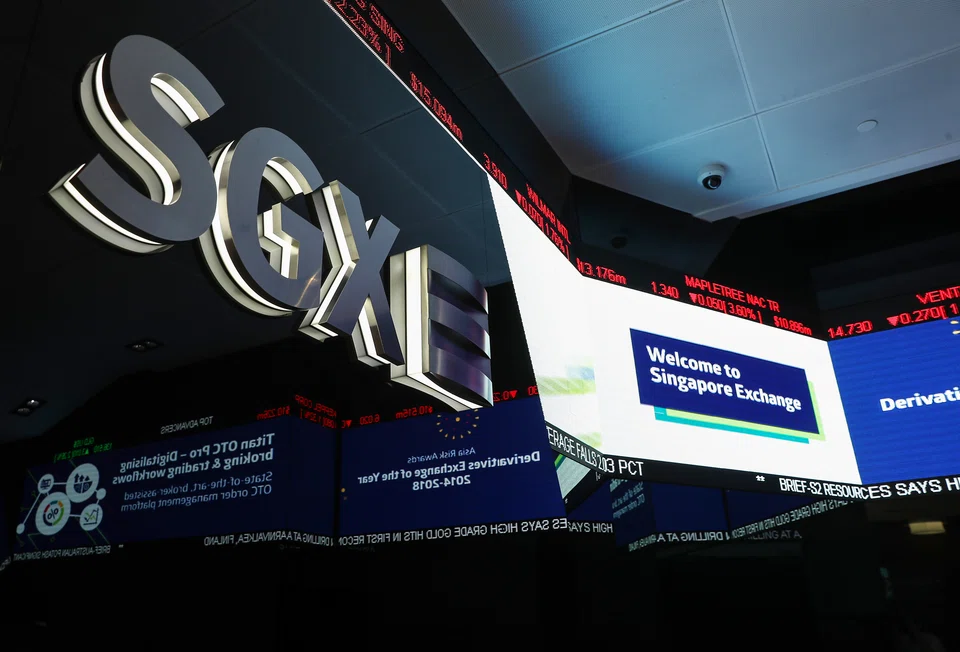
THE acid test for the first set of measures to revitalise the Singapore market could be whether the local bourse operator’s share price rebounds this week.
The Singapore Exchange (SGX) has been on a roller-coaster ride over the past month. Its shares shot up following a strong earnings report on Feb 6, but subsequently fell back on concerns about the equities market review group formed by the Monetary Authority of Singapore (MAS).
Specifically, the worry was that the review group would deliver little more than tax incentives to draw listing candidates and investors to the local market.
SGX closed on Friday (Feb 21) at S$12.80, down 8.5 per cent from its recent closing peak of S$13.99 on Feb 7. Even after taking account of the shares trading ex-dividend on Feb 13 for an interim payout of S$0.09, investors would still have suffered an effective pullback of 7.9 per cent.
Yet, the measures that the review group announced after the market closed on Friday were not a disappointment, in my view. In particular, MAS said that it will farm out S$5 billion to fund managers investing in Singapore stocks. The fund managers must have a good track record, venture beyond index component stocks, and be willing to expand their operations in Singapore.
The purpose of this Equity Market Development Programme (EQDP) is to build up Singapore’s fund management industry, boost trading liquidity in the local market, and enable well-run companies to garner healthy valuations.
Another significant demand-side measure announced on Feb 21 was that the Global Investor Programme (GIP) will be tweaked to drive more capital flows into the Singapore market. Specifically, GIP applicants setting up single-family offices must allocate S$50 million of the required S$200 million in assets under management to equities listed on Singapore-approved exchanges.
GIP applicants were previously allowed to invest this S$50 million in a broader range of assets, including debt securities and non-listed Singapore-based companies.
Together with these demand-side initiatives, the tax incentives mooted earlier by the review group seem more interesting. For instance, complementing the EQDP, there will be tax exemptions on fund managers’ qualifying income arising from funds investing substantially in Singapore stocks.
In addition, newly listed companies in the Republic will get corporate tax rebates of 20 per cent; and fund management outfits that list and pay dividends will be given an enhanced concessionary tax rate of 5 per cent.
Other measures announced on Feb 21 included more grants to subsidise equities research; financing support for local enterprises that may list one day; a more streamlined listing process; and a more targeted approach to post-listing queries, alerts and trading suspensions.
Lingering scepticism
Given that the MAS review group’s first set of measures was not the anticlimax many feared, should investors bet that SGX’s shares will quickly bounce back?
First, some bad news: My sense is that there is still a great deal of doubt in the market regarding whether the MAS review group will ultimately succeed.
Some of this scepticism is well-founded. The strong performance of the US market has made it an overwhelmingly powerful magnet for listing aspirants and investors from around the world, including Singapore. This is going to be hard to overcome.
Furthermore, the surge in availability of private equity capital over the past couple of decades has led to startups remaining private for longer, and achieving significantly greater operational scale than their predecessors before going public.
As a result, the pace of new public listings has slowed around the world, including in the US.
Another problem is that people simply have different views on why the Singapore market has performed so poorly, and, consequently, on what the review group’s priorities ought to be.
For instance, this column has previously asserted that companies should do more to unlock value and improve their profitability. I can’t help feeling disappointed that the review group did not recommend some specific “value-up” initiatives.
Then, there is the accumulated cynicism in the market after years of unsuccessful attempts to draw more new listings – including through subsidies to defray the cost of going public; the S$1.5 billion Anchor Fund @ 65 to shepherd promising enterprises to a local listing; and the belated introduction of special purpose acquisition companies.
Holistic approach
My own view is that Singapore stands a good chance of turning its stock market around, and that SGX probably has years of growth ahead of it.
Here’s what I think the sceptics are missing: The long-term underperformance of the Singapore market is the result of several interrelated factors. Problems such as the dearth of exciting new listings, the shortage of good-quality equities research, and even the lack of attention to corporate governance issues are all symptoms as well as causes of the general dysfunction.
My observation is that the MAS review group is now taking a holistic approach to fixing everything that is broken. While some market watchers may worry that the S$5 billion EQDP is the wrong place to start, or that adjusting the GIP to drive capital flows into the local market may have unintended consequences, the review group has made it clear that it will not stop there.
Besides the initiatives announced on Feb 21, the MAS review group also provided a laundry list of measures it is still studying. Gratifyingly for me, these include getting companies to sharpen their focus on shareholder value and shareholder engagement.
The review group is also looking into better enabling investors to seek recourse and recompense for losses due to market misconduct.
Other initiatives that might be in the offing include a possible shake-up of the Catalist board, the modernisation of the Central Depository’s post-trade custody infrastructure, and even adjustments to the board lot size. In short, just about everything is on the table.
The big question, perhaps, is whether the MAS review group’s initiatives garner a sustained positive reaction in the market. Clearly, a broad advance of stock prices – even if it is partly supported by capital flows to this region – would help galvanise support for long-overdue reforms in the local market.
The writer owns Singapore Exchange shares