MAS review group should build on market’s track record, seek to strengthen big local companies
While investors should not be shielded from the risk of losing money, their apparent lack of confidence in the local market ought to be addressed

ONE afternoon in the early 1990s, when I was working in a Malaysian brokerage firm, I overheard one of my senior colleagues trying to convince the controlling shareholder of a mid-sized company that it was a good idea to sell some of his shares to our institutional clients.
With more shares in the hands of public investors, there would be more demand for research coverage, and a strong chance of the market price of the shares floating higher, my colleague explained.
My colleague spoke to this controlling shareholder quite frequently, providing feedback from the market, offering ideas on how to better promote the company to institutional investors, and seeking access to the company’s tightly held shares.
Brokerage commissions were much higher than they are now, but brokers back then did not just execute trades for investors. They often played a role in making companies investible. They were salespeople, investor relations advisers and market makers all rolled into one.
Markets in this region are more developed now, of course. Here in Singapore, there is a Code of Corporate Governance against which companies can benchmark their policies and practices.
It is also much easier for companies to disseminate information about their business activities and financial performance than it was 30 years ago.
Investors can now trade shares of these companies online, paying very low brokerage fees.
Yet, the Singapore market seems less vibrant now than it was during the bad old days.
Many stocks are trading at low valuations, and a string of companies have been taken private in recent years. There has also been a notable lack of exciting new listings.
Why is the public market ecosystem not functioning as it once did? What will it take to restore its dynamism?
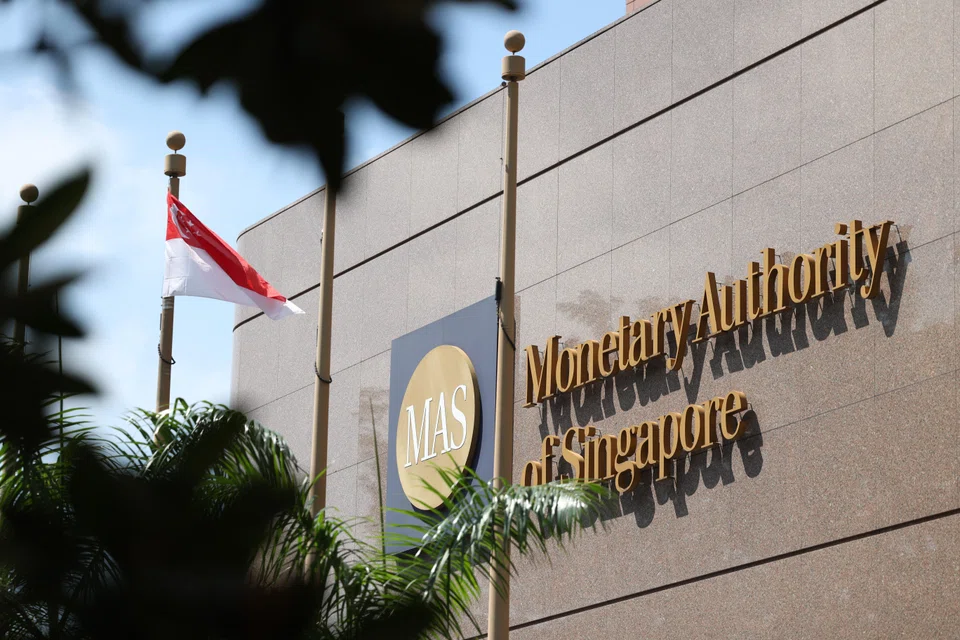
These are questions the equities market review group set up by the Monetary Authority of Singapore (MAS) is trying to answer.
On Aug 27, MAS said the review group – which is chaired by Second Minister for Finance Chee Hong Tat – had identified “priority areas” for its two workstreams.
The enterprise and markets workstream will look into encouraging new listings, boosting investor participation and liquidity, and helping listed companies garner fair valuations.
The regulatory workstream will study ideas to streamline the regulatory framework, improve the listing process and the effectiveness of our disclosure-based regime, and strengthen corporate governance standards, investor access and recourse.
MAS said the review group and its two workstreams will hold industry roundtables and focus group discussions to gather feedback and ideas, and provide periodic updates on their considerations and recommendations.
Focus on existing strengths
The way I see it, the review group ought to come to a view on what sort of global listings the Singapore market can reasonably be expected to attract, before the two workstreams get into the minutiae of how to draw listing aspirants, boost investor participation and streamline the listing process.
It seems unlikely to me that the Singapore Exchange will ever supplant Nasdaq as the listing venue of choice for big technology-oriented companies. Similarly, the biggest and most exciting companies in Asia are more likely to list in their home markets than come to Singapore.
The Singapore market does, however, have a good track record in the field of real estate investment trusts (Reits). This is largely due to the success of Reits backed by sponsor groups such as CapitaLand Investment, Frasers Property and Mapletree Investments.
With global interest rates on a downward trajectory, this sector is now drawing strong interest from investors – creating a conducive backdrop to bring a new crop of Reits to market.
The review group and its two workstreams should perhaps engage international property investment groups such as Blackstone, Lendlease and even GIC, to find out how the Singapore market can better support their activities and boost its own competitiveness as a global listing hub for Reits.
Consolidation, global expansion
This column said last month that Singapore-listed companies could spark investor excitement by proposing value unlocking initiatives and clear growth plans; and suggested that we take a leaf from the Tokyo Stock Exchange by requiring companies trading at low valuations to explain how they plan to turn things around.
The MAS review group should perhaps also study whether the capacity for some local companies to expand internationally may be improved if they were to enlarge themselves through mergers with their peers.
Singapore’s banks, for instance, went through a spate of mergers in the early 2000s. With greater heft and larger domestic market shares, the three remaining local banks – DBS, OCBC and UOB – have managed to fend off foreign banks on their home turf and expand around the region.
Domestic competition is not a bad thing, of course. It can lead to lower prices and more choice for consumers. But it can also erode corporate profitability and destroy shareholder value.
Some investors will remember that Singtel competed aggressively against StarHub for the broadcast rights to the English Premier League matches during the years it was trying to build up its pay-TV business – which arguably benefited neither consumers nor investors.
Would consolidating the number of telecoms players be positive for investors as well as consumers in the long term? Are the persistent rumours of a merger between StarHub and M1 a sign of things to come?
For that matter, would further consolidation in the banking sector be beneficial for investors as well as consumers? Would another local bank merger enhance the profitability of the remaining players, and improve their ability to expand beyond Singapore?
Would a merger of CapitaLand Group and Mapletree Investments create a more globally competitive real estate giant? Would their combined Reit platform be able to grow any faster?
My own view is that consolidation in some industries could boost Singapore’s corporate sector, and put some of the most prominent companies in the local market in a stronger position to expand internationally.
The MAS review group should perhaps study ways to encourage this process. The more exciting Singapore’s leading companies become to global investors, the more attractive the local market will be as an international listing venue.
Address the apathy
This brings me back to my reminiscences about the brokerage industry back in the 1990s. The point I was making was not that things were better 30 years ago, but that it could be useful to critically assess the manner in which the public market ecosystem functions.
This could be crucial in coming up with remedies for the apparent lack of investor confidence in the local market.
One gripe I hear about the disclosure-based regime is that it protects issuers and their paid advisers rather than investors.
To be clear, I am not suggesting that regulators should try to shield investors from the risk of losing money. But they should be concerned that the perceived risks of investing in the local market seems to have turned so many investors off.
The review group should look into why many companies have not taken more decisive action to address the sagging market value of their shares. Are they out of touch with investors? Is there nothing they can do? Or, are they planning to go private?
In the end, restoring the vibrancy of the local market is about getting investors excited again.