‘McNuggetisation’ is coming for the Chinese diet
The story of the modern Chinese diet is one of scarcity, boom and bust
MANY of the older generation still have memories of desperate penury under Mao Zedong, when history’s greatest famine left tens of millions dead, and tens of millions more surviving on tree bark, leaves and vermin.
Those born in the 1970s and 1980s have a more triumphant tale to tell. In 1990, the first McDonald’s restaurant opened in Shenzhen, across the border from Hong Kong. At about the same time, China became the world’s biggest consumer of meat, buoyed by rising incomes and the efficiency unleashed by allowing private enterprise into farming.
By 2020, the country was consuming half of the world’s pork and a third of all seafood, while Kweichow Moutai – whose baijiu firewater is synonymous with conspicuous consumption at banquets – overtook Coca-Cola to become the world’s biggest beverage company.
A new phase is emerging. With spending stagnating and a more health-conscious, atomised younger generation choosing food delivery over banqueting halls, diners are trading down.
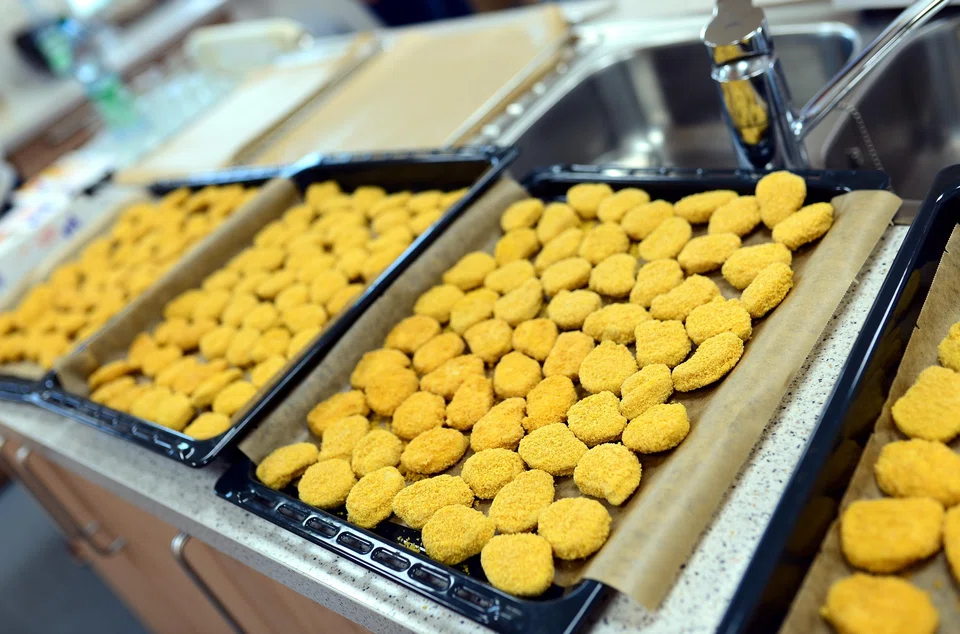
In market cap terms, Coca-Cola has been back on top all year. Analysts expect Kweichow Moutai’s profit growth to hit its slowest pace since 2015. China’s appetites appear to be changing, too. “McNuggetisation” – the moment America hit in the 1980s, when meat ceased to be aspirational, and became sort of cheap and trashy instead – is on its way.
After growing for 13 years straight, consumption of beef in China will decline this year and fall again in 2026, according to the US Department of Agriculture. In some cities, sales to restaurants and takeaways have declined as much as 50 per cent.
Pork has hit a “structural plateau” too, despite prices falling to around their lowest levels since the 2000s. The egg market is glutted, despite stagnant costs that allow consumers to buy half a dozen for the price of a single egg in the US.
“Health-conscious consumers, particularly in urban areas, are incorporating a broader range of proteins, alongside pork, into their diets,” the United States Department of Agriculture wrote recently.
The winner so far appears to be chicken – but even there local tastes are looking more austere. A decade ago, Chinese diners overwhelmingly favoured the yellow-hair – a slow-growing, dark-fleshed breed that was typically picked and slaughtered live at a wet market and eaten the same day.
That taste, and a matching disdain for faster-growing white-feathered American-style broilers, extends through much of the wider diaspora. Singapore suffered something close to a national crisis in 2022 when neighbouring Malaysia banned exports of poultry amid local shortages. Diners struggled to decide which was worse: Giving up on Hainan chicken rice, the city-state’s de facto national dish, or trying to make it with inferior frozen birds from the US.
Even that redoubt is now falling. Sales of yellow-hair meat comprised just 17.5 per cent of the total last year, while the flock shrank 7.3 per cent. White-feather varieties, which are about half the price, made up almost all of the remainder.
Domestic farmers who see cheaper meat as the future have been working hard to develop white-feathered breeding stock to reduce their dependence on imported genetic bloodlines.
The gradual closure of live poultry markets, to prevent the spread of bird flu, is accelerating the trend: Shanghai this year banned all such trade until 2028. Consumers don’t seem too bothered. If you’re eating your chicken in a wonton soup delivered to your door, rather than jointed whole as the centrepiece of a family meal, you’re likely going to be a lot less picky about its provenance.
This change may not delight gourmands, but it’s likely to be a positive for the environment. Agriculture in China accounts for nearly a billion tonnes a year of carbon dioxide-equivalent pollution, similar to the total emissions from Indonesia’s 287 million people.
Costlier meats are the ones with the bigger carbon footprints. As diners trade down from carbon-intensive beef to low-emitting chicken, we’re providing more grams of protein for each ton of greenhouse gases. Even the shift in chicken breeds helps: Yellow-hair broilers take twice as long to reach slaughter weights, requiring twice as much feed, and twice as much fertiliser to grow it.
We’re not going to solve the problems of a warming planet by dietary changes alone –especially in places like China, where the relative novelty of red meat makes beef far less of a staple than in the ranching cultures of the Americas.
Still, small moves towards a less lavish style of dining can collectively help reduce the burden of our lifestyles on the planet. “McNuggetisation” happens because people are short of cash, rather than conscience-stricken about the environment. The effect on the atmosphere, however, is identical.